
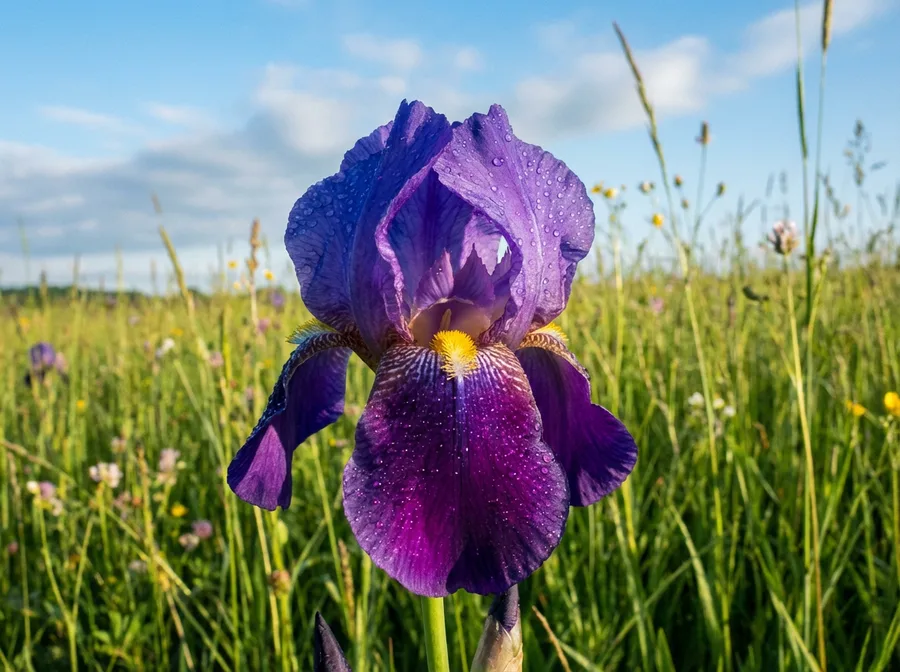
Iris
Iris
An unpretentious perennial decorative flower with bright inflorescences. Great for sunny borders and rockeries.
Stages of growth
Calendar in the garden
How to care
Moderate watering at the root as the soil dries out.
- •Remove weeds at the “backs” of rhizomes - they need sun.
- •Do not allow water to stagnate: drainage is required.
Difficulty growing
Suitable for beginners. Minimal maintenance, error-resistant.
Growing conditions
Nice neighbors.
Unwanted Neighbors
Soil preparation
Planting parameters
💡Preparation Tips
- •Dig the bed to a depth of 25-30 cm
- •Add compost or humus (5-10 kg per m²)
- •If necessary, adjust pH with lime or peat
Frequently asked questions(3)
The best time is the end of summer, usually August: overgrown 4–5-year-old bushes are divided.
Often the reasons are: the bush has not been divided for more than 5 years, the rhizome is planted too deep (should be near the surface), or the shade is too dense.
Mature bearded and Siberian irises are winter-hardy and cover-free. For the winter, mulch is left only for young divisions from the August planting; it is removed in the spring.
Role in the garden
Decorative culture; Some species are used in perfumery (iris oil). In folk medicine, dried rhizomes are valued as a mild sedative (information for reference, not medical advice).
*For reference: the plant is grown primarily as an ornamental.
Do you like the plant card?
In the application you will receive personal tasks and a plan for the season specifically for your garden.