
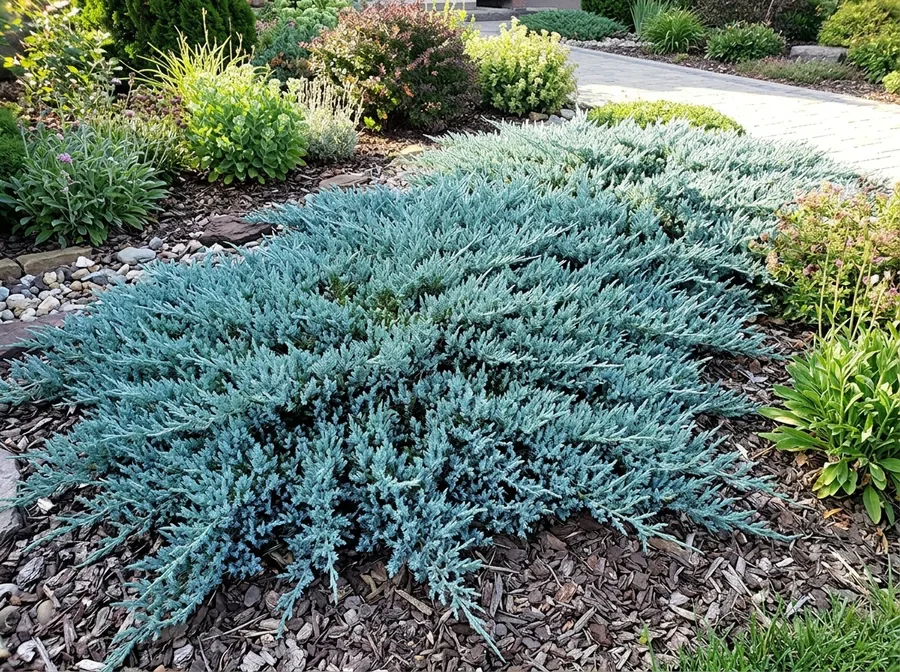
Juniperus horizontalis 'Blue Chip'
Juniperus horizontalis 'Blue Chip'
An evergreen creeping cultivar with a dense “carpet” and scaly blue-silver needles; In winter, the shade often takes on purplish-violet notes. The annual growth in height is moderate (on the order of several centimeters); the width of the crown eventually reaches approximately 1.5–3 m, depending on conditions. Frost resistance according to catalogs is usually in the range of USDA zones 4–9 (guideline up to approximately −30…−35 °C). Unpretentious to the soil provided there is drainage; does not tolerate waterlogging and stagnation of water. Used in rockeries, on slopes, as a ground cover plant in the sun.
Stages of growth
Calendar in the garden
How to care
Transplant in autumn or early spring with a lump; Improve heavy loam with sand or bark chips.
Regular moderate watering for the first 4–8 weeks before rooting; no overflow.
- •Bark mulch retains moisture and suppresses weeds in the young clone.
- •After planting, do not leave a “bowl” of soil at the neck - stagnation of water is destructive.
Difficulty growing
Suitable for beginners. Minimal maintenance, error-resistant.
Growing conditions
Nice neighbors.
Unwanted Neighbors
Soil preparation
Planting parameters
💡Preparation Tips
- •Dig the bed to a depth of 25-30 cm
- •Add compost or humus (5-10 kg per m²)
- •If necessary, adjust pH with lime or peat
Frequently asked questions(5)
Common causes: lack of light, waterlogging of the soil or excess nitrogen fertilizing. Less commonly, fungal pathogens or pests; inspect the shoots and, if necessary, show photos to a specialist.
The growth in height is moderate (on the order of several centimeters per year), in width the shoots lengthen more actively and over the years form a dense spot of up to several meters.
An adult plant in the middle zone is usually not covered. After autumn planting, a young seedling can be covered with lutrasil from the spring sun and wind for the first season without a dense “cocoon” over the crown.
With good drainage, it can be used as a ground cover on dry land in the sun; It is advisable to reduce salt splashes in winter from road services and dust (continuous watering, re-examination of the site if necessary).
The mass of needles is not used for food; Some parts of juniper contain irritating oils. Decorative observation is safe; do not use pine needles as pet food.
Role in the garden
Year-round decorative background of the site and stabilization of light slopes with root canopy; improves the microclimate with low litter. Does not contain medical indications; If you are allergic to pollen, a reaction may occur during the flowering period of the bush.
*For reference: the plant is grown primarily as an ornamental.
Do you like the plant card?
In the application you will receive personal tasks and a plan for the season specifically for your garden.