
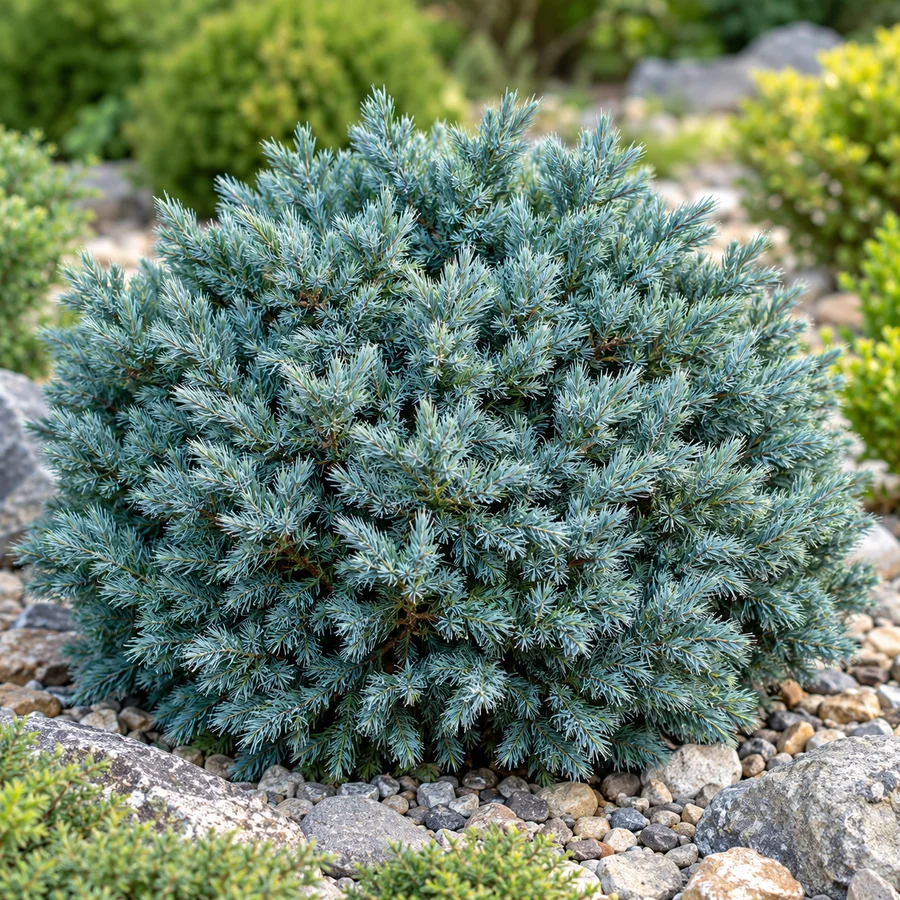
Flaky juniper
Juniperus squamata
Compact evergreen coniferous shrub with silvery-blue foliage and unusual scale-like leaves. Decorative year-round, ideal for rock gardens, containers, and low hedges. Requires minimal care and tolerates adverse conditions well. Warning: the plant is not edible — the foliage, shoots and berry-like cones contain essential oils and are toxic if eaten by people or animals (cats, dogs, birds, rodents); keep it away from children and pets and wear gloves when pruning, as the sap may irritate the skin.
Stages of growth
Calendar in the garden
How to care
Abundant watering after planting (5–10 liters per bush). Keep soil moisture for the first 2–3 weeks.
- •Prepare a planting hole deeper than the root ball with gravel drainage at the bottom
- •Do not bury the root collar — it should be level with the soil
- •Protect from direct sun for the first few days with light fabric
Difficulty growing
Suitable for beginners. Minimal maintenance, error-resistant.
Growing conditions
Nice neighbors.
Unwanted Neighbors
Soil preparation
Planting parameters
💡Preparation Tips
- •Dig the bed to a depth of 25-30 cm
- •Add compost or humus (5-10 kg per m²)
- •If necessary, adjust pH with lime or peat
Frequently asked questions(5)
Yes, it is a hardy shrub for zones 3–8. Without protection it tolerates frosts down to –35°C. In snowy regions, it is best to tie the crown with twine to prevent breakage under snow weight. Wrap young plantings with mulch or evergreen branches for their first winter.
This can be caused by: (1) overwatering — waterlogged soil causes root rot; improve drainage; (2) disease (rust, phytophthora) — spray with fungicide in spring; (3) chlorosis on alkaline soil — apply nitrogen fertilizer and sulfur; (4) winter foliage burn — this is normal, new needles will grow in spring.
After planting (first season), water weekly. A mature bush requires watering only during drought. Fertilize once per month in spring–summer; no feeding needed in autumn or winter. Best to use slow-release conifer fertilizer or compost mulch.
Prune in spring (March–April) or late summer (August–September). Remove dead and damaged branches, but do not cut more than 1/3 of annual growth. Juniper recovers poorly if cut into old wood. Better to regularly pinch young shoots.
Choose a sunny spot (at least 6 hours of direct sun daily) for rich color. In partial shade the bush loses ornamental appeal. Prepare loose, well-drained, sandy or rocky soil. Avoid clay, swampy areas and low spots where water accumulates.
Role in the garden
Benefit information coming soon
Do you like the plant card?
In the application you will receive personal tasks and a plan for the season specifically for your garden.


