
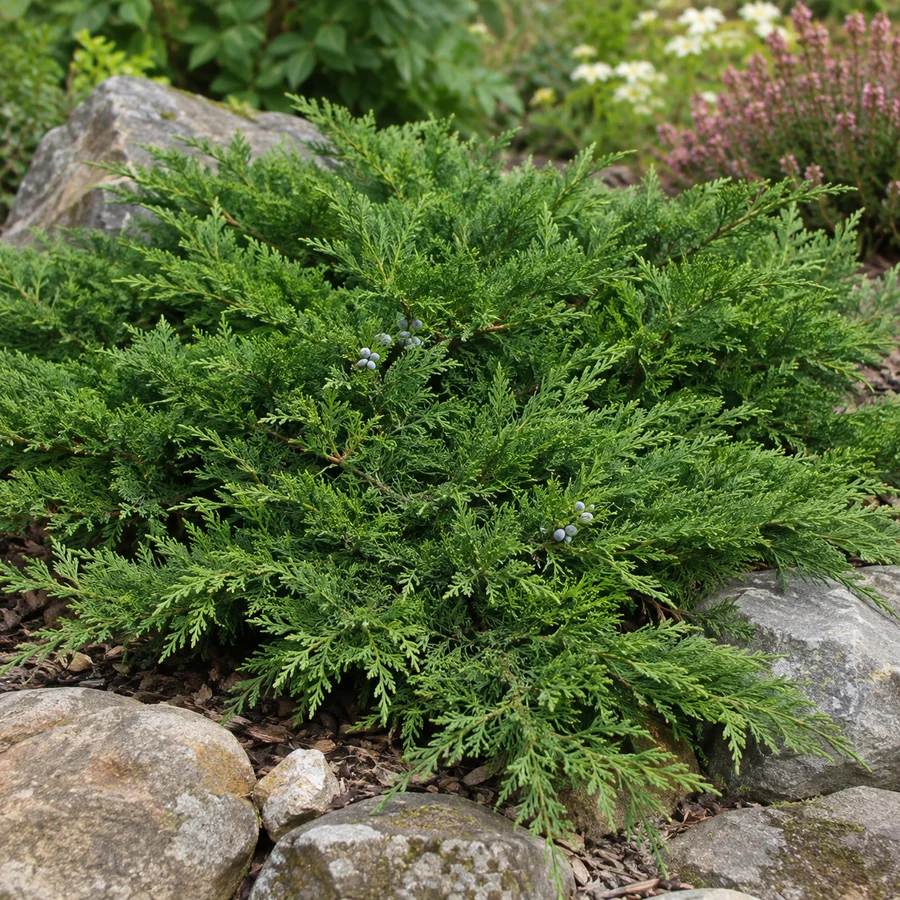
Savin juniper
Juniperus sabina
A prostrate ornamental shrub with unique dark-green foliage, extremely hardy and resistant to drought, frost and air pollution. Ideal for rock gardens, alpine slopes and difficult sites. Grows slowly, forming a dense, low mat 0.5–1.5 m tall and up to 3–4 m wide. Warning: the whole plant is poisonous — foliage, shoots and berry-like cones contain sabinol and podophyllotoxin; the fruits are NOT edible (unlike common juniper), never use them for food or self-treatment, keep away from children and pets, and wear gloves when pruning.
Stages of growth
Calendar in the garden
How to care
First month: abundant watering 1–2 times weekly depending on weather. Maintain soil moisture, but avoid waterlogging. After planting, mulch the root circle with a 5 cm layer (wood chips, gravel).
- •Do not fertilize in the first month — allow the plant to adapt
- •Shade young seedlings for the first 2 weeks during intense heat
- •Check drainage: excess moisture is harmful to juniper
Difficulty growing
Suitable for beginners. Minimal maintenance, error-resistant.
Growing conditions
Soil preparation
Planting parameters
💡Preparation Tips
- •Dig the bed to a depth of 25-30 cm
- •Add compost or humus (5-10 kg per m²)
- •If necessary, adjust pH with lime or peat
Frequently asked questions(6)
Spring (March–April, before buds break) or autumn (September–October). Container seedlings can be planted in summer, but careful watering is required. Avoid planting in the depths of winter or during hot summer days.
Critically important! Juniper cannot tolerate waterlogging and root rot. On clay soils, create a drainage layer of gravel 10–15 cm deep. On sandy soils, drainage is natural. Make the planting hole no deeper than the container — the root collar must be at soil level.
For the first month after planting: 1–2 times weekly. Then only during prolonged drought (more than 2 weeks without rain). Adult plants need almost no watering. Better to underwater than overwater.
Savin juniper grows slowly and naturally forms a beautiful shape. Pruning is minimal: remove only dead, damaged, or diseased shoots. In spring (March–April), perform sanitary pruning. No shaping required. Prune only with gloves: sap and needles are toxic and cause skin and mucous membrane irritation; cut branches cannot be burned indoors or fed to animals.
The main problem is root rot from overwatering (especially dangerous in snowless winters with thaws). Also susceptible to spider mites (in drought), scale insects, and juniper gall midges. If detected, treat with insecticide (Phosdrin, Karbofos) or fungicide (Copper sulfate, Fundazole).
In the CIS region, these cultivars thrive: Tamariscifolia (low, 0.5 m, compact), Rockery Gem (miniature, 0.3 m), Blue Danube (bluish tint, 0.5 m), Mas (upright shrub, 1.5–2 m). All are hardy to –40°, drought-tolerant, and long-lived.
Role in the garden
Highly ornamental spreading shrub with dark green foliage, excellent for alpine gardens, rock gardens, and slope landscaping. Extremely drought, frost, and air pollution tolerant.
*For reference: the plant is grown primarily as an ornamental.
Do you like the plant card?
In the application you will receive personal tasks and a plan for the season specifically for your garden.


