
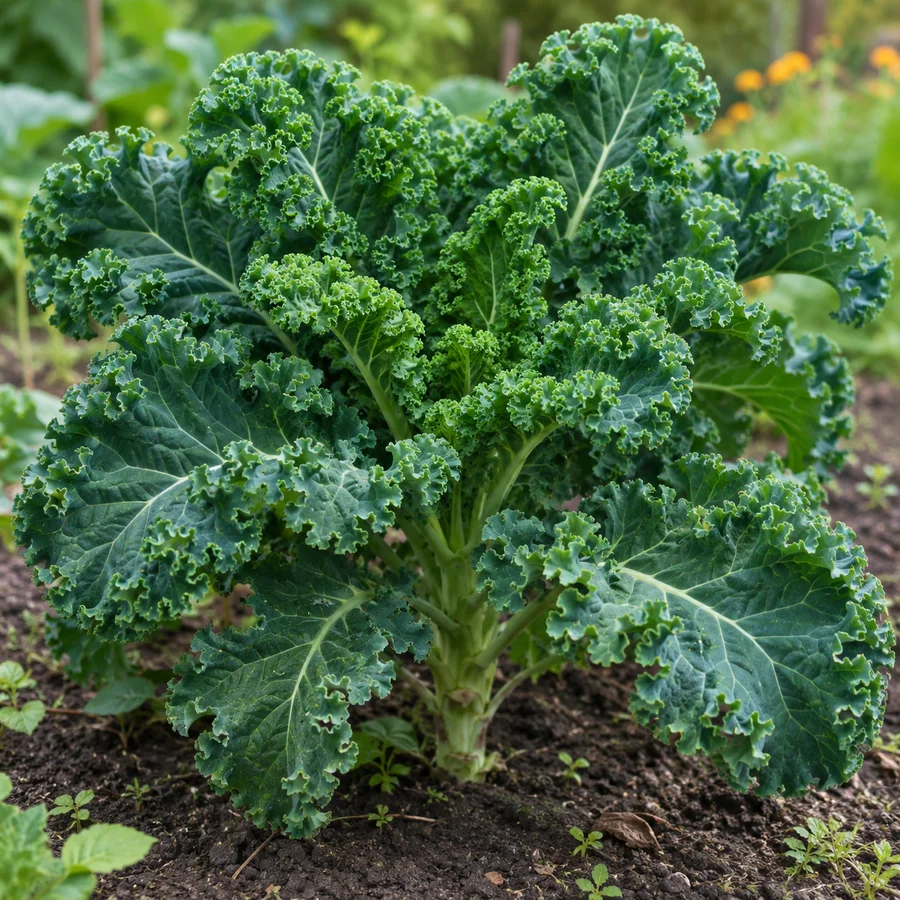
Kale Curly
Brassica oleracea var. acephala
Frost-resistant curly kale with deeply cut leaves in intense green. Easily tolerates frosts down to −15°C; flavour becomes sweeter after cold exposure. Highly productive throughout the season with regular leaf stripping—this practice stimulates the formation of new compact side shoots in the leaf axils.
Stages of growth
Planting calendar
How to care
Keep substrate moist but not waterlogged. Mist with a spray bottle until sprouts emerge.
- •Soak seeds for 20–30 minutes before sowing
- •Optimal temperature 18–20°C
- •Ensure good ventilation to prevent mold
Difficulty growing
Suitable for beginners. Minimal maintenance, error-resistant.
Growing conditions
Nice neighbors.
Unwanted Neighbors
Soil preparation
Planting parameters
💡Preparation Tips
- •Dig the bed to a depth of 25-30 cm
- •Add compost or humus (5-10 kg per m²)
- •If necessary, adjust pH with lime or peat
Frequently asked questions(5)
Transplant seedlings in May–June. With May planting, the first leaf harvest is possible by late July–August. The plant is productive from mid-summer through late fall, including the post-frost period.
Remove leaves from bottom to top, starting with the lowest leaves. This stimulates compact side shoots to form in the leaf axils. Never touch the growing tip—it drives overall plant growth. Regular harvesting (1–2 times per week) maximizes productivity.
Kale is one of the most frost-hardy brassicas, surviving frosts down to −15°C and lower. After the first frost, leaves become sweeter as starch converts to sugars. In mild climates, you can harvest through fall and winter.
Main pests: cabbage root fly (larvae damage roots), cabbage looper (caterpillars eat leaves), and flea beetles (damage seedlings). Prevention: cover with spunbond, mulch heavily, remove damaged leaves, and use insecticides (pyrethrin, Fitoverm) if needed.
Yes, nitrogen feeding is essential for leaf development (every 2 weeks during growth phase) and potassium–phosphorus fertilizers during active harvest to ensure strong new shoots. Organic matter (compost, manure tea) is ideal.
Benefits and nutrition
Benefit information coming soon
Do you like the plant card?
In the application you will receive personal tasks and a plan for the season specifically for your garden.


