
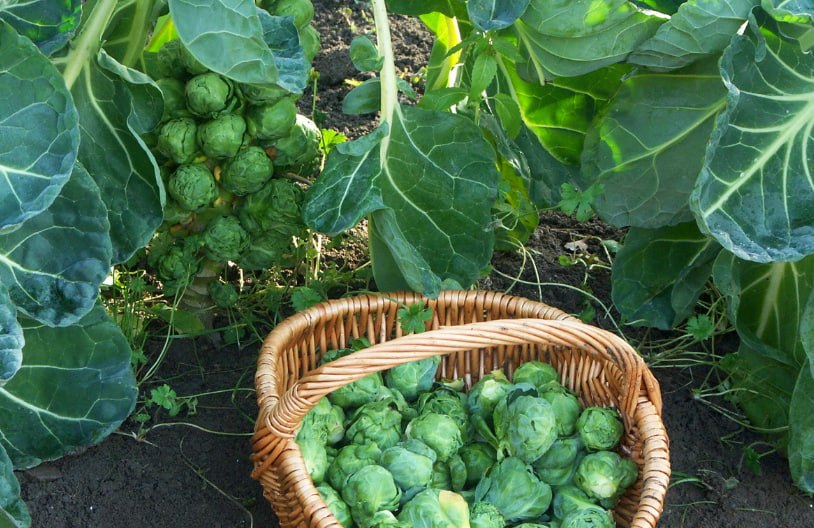
Brussels Sprouts
Brassica oleracea var. gemmifera
A cold-hardy cruciferous vegetable with small, dense sprouts along the stalk. Matures in autumn and winter, with improved flavor after the first frosts. Requires a long growing season and nutrient-rich, well-draining soil.
Stages of growth
Planting calendar
How to care
Soak seeds for 20 minutes in warm water, then dry them
- •Use seeds stored for no more than 3-4 years
- •Check seed germination before sowing
- •Choose quality seeds from trusted suppliers
Difficulty growing
Requires basic knowledge and regular care.
Growing conditions
Nice neighbors.
Unwanted Neighbors
Soil preparation
Planting parameters
💡Preparation Tips
- •Dig the bed to a depth of 25-30 cm
- •Add compost or humus (5-10 kg per m²)
- •If necessary, adjust pH with lime or peat
Frequently asked questions(5)
Seeds are sown for seedlings in late February – early March in containers. Seedlings are transplanted into soil in late April – early June when they reach 4-5 true leaves. The crop requires a long growing season (120-160 days from planting to harvest).
The plant prefers full sun (minimum 6 hours per day), fertile soil with pH 6.0-7.5, good drainage, and protection from strong winds. Optimal temperature is 15-20°C. Cold-hardy, tolerates frost down to -5°C, and flavor improves after frost.
Water 2-3 times per week, keeping soil evenly moist. Fertilize every 2-3 weeks with balanced fertilizer during leaf growth, then switch to phosphorus and potassium for sprout development. On poor soils, add compost or aged manure to planting holes.
Main threats are cabbage white butterflies, cabbage aphids, cruciferous fleas, and sawflies. For prevention, use mesh, row covers, and regular plant inspection. If pests are detected, apply neem oil or bio-insecticides.
Start harvesting in September-October when sprouts reach 2-3 cm (walnut size). Cut them with pruners from bottom to top, leaving the stalk. After the first frost (at -5°C), flavor significantly improves. The plant continues producing new sprouts into late autumn.
Benefits and nutrition
Benefit information coming soon
Do you like the plant card?
In the application you will receive personal tasks and a plan for the season specifically for your garden.