
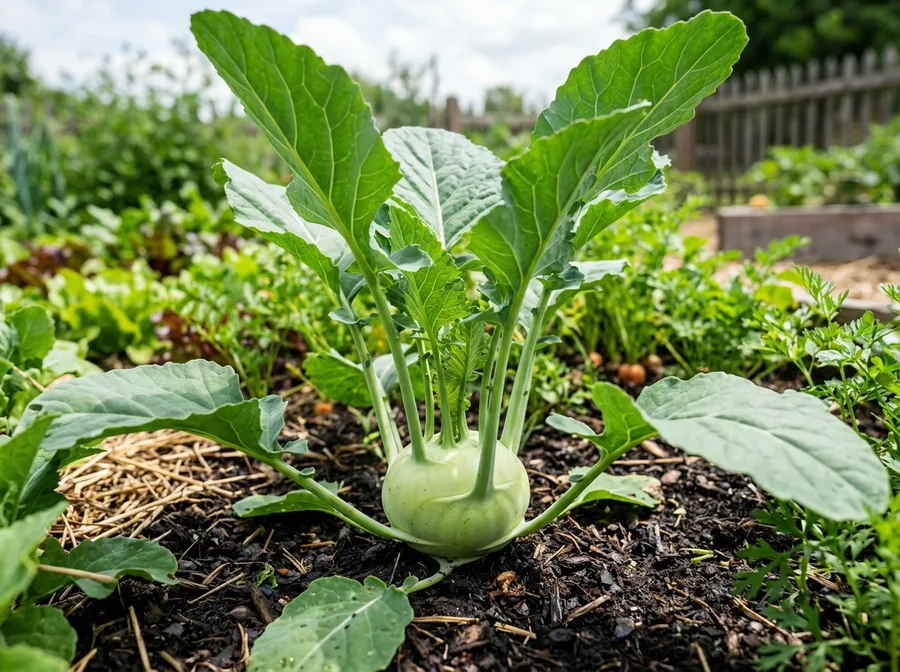
Brassica oleracea var. gongylodes
Brassica oleracea var. gongylodes
Edible thickened stem fruit with juicy pulp; cold-resistant cabbage crop. In the CIS climate, they usually grow seedlings (early) or add a second sowing in late spring - early summer; the crop is harvested until the stem fruit becomes coarse.
Stages of growth
Planting calendar
How to care
- •South (Ukraine to the south, Southern Kazakhstan, Central Asia): early planting of seedlings from the end of March - April; into the ground at stable +8…+10 °C. Re-sowing until mid-July.
- •Middle zone and Volga region: sowing for seedlings from mid-March to April 10; landing May 10 - mid-June; seedlings 30–45 days (4–6 true leaves).
- •North and Ural: only seedling method; sowing April - early May; planting when the threat of return frosts has passed (often the end of May - June 10).
Difficulty growing
Suitable for beginners. Minimal maintenance, error-resistant.
Growing conditions
Nice neighbors.
Unwanted Neighbors
Soil preparation
Planting parameters
💡Preparation Tips
- •Dig the bed to a depth of 25-30 cm
- •Add compost or humus (5-10 kg per m²)
- •If necessary, adjust pH with lime or peat
Frequently asked questions(5)
For seedlings - from mid-March to April 10–15; They are usually planted in open ground from May 10 to mid-June, when the soil is warmed up and return frosts have passed. For the autumn table, you can sow/replant until July 1–15 (depending on the weather and the ripening period of the variety).
For planting - 30–45 day old seedlings with 4–6 true leaves without elongation and without thickening of the stem to the point of “woodiness”. Seedlings that are too mature are less likely to form a juicy tuber.
Often over-ripening, heat and drying of the soil, or a sharp transition from drought to abundant watering. Timely harvesting and even watering soften the pulp.
Good neighbors: peas, beans, onions, carrots, beets, lettuce, cucumber, potatoes, celery, dill. Tomatoes, strawberries, fennel, parsley - usually not nearby.
Yes, the young stem fruit is often lost or chopped into salads; the leaves of young plants are suitable as greens after washing.
Benefits and nutrition
Low in calories, vitamin C, potassium and fiber; suitable for light salads and soups (general nutritional properties of the vegetable, not for medical purposes).
*The information is for informational purposes only and does not constitute medical advice.
Nutritional value
(per 100 g)| Vitamin C | Notable content in raw tuber | — |
| Fiber | Moderately | — |
| Potassium | Contained in pulp | — |
% of daily value
Do you like the plant card?
In the application you will receive personal tasks and a plan for the season specifically for your garden.