
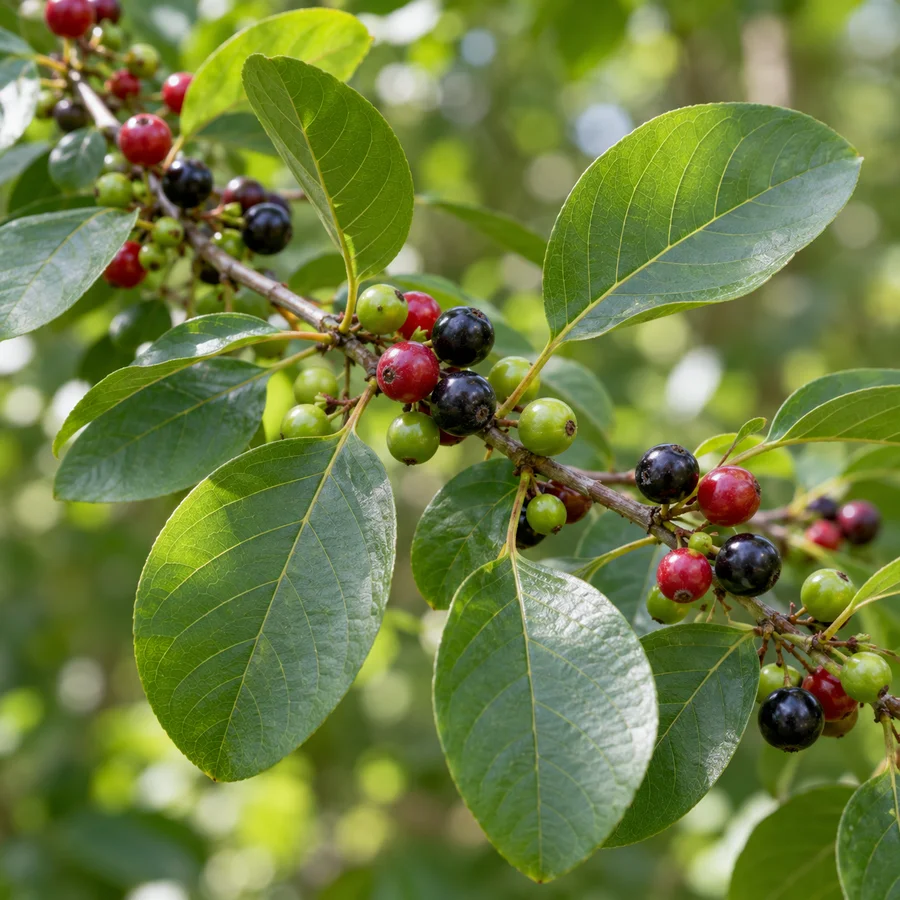
Alder Buckthorn
Frangula alnus
Ornamental deciduous shrub native to the European part of the CIS. Valued for its delicate lacy foliage and decorative fruits that change colour from red to black. Grows well in partial shade and on moist soils. Fruits are toxic to humans but attractive to birds. The bark (especially fresh), leaves and seeds are toxic as well — keep the plant away from children and pets.
Stages of growth
Calendar in the garden
How to care
Difficulty growing
Suitable for beginners. Minimal maintenance, error-resistant.
Growing conditions
Soil preparation
Planting parameters
💡Preparation Tips
- •Dig the bed to a depth of 25-30 cm
- •Add compost or humus (5-10 kg per m²)
- •If necessary, adjust pH with lime or peat
Frequently asked questions(5)
Alder buckthorn grows well in partial shade and even in full shade under a tree canopy. It prefers moist soils and is ideal for planting at the edge of a pond or near a fence in a shady spot. In full sun it requires more water.
Yes, the fruits are toxic and unsuitable for food. They contain anthraquinone glycosides (frangula-emodin, glucofrangula) that cause severe vomiting, stomach cramps, diarrhoea, and dehydration; even a few berries are dangerous for a child. The bark and leaves are also toxic: fresh bark causes especially severe vomiting and is not used for medicinal purposes. The plant is dangerous for cats, dogs, horses, and rodents. However, the fruits are safe for wild birds and are not dangerous to touch. Keep away from young children who might taste the berries.
Alder buckthorn holds its shape well without frequent pruning. Sanitary pruning in spring is recommended — remove broken, diseased, and crossing branches. Formative pruning is carried out after flowering to maintain the decorative appearance of the shrub.
The easiest way is to collect seeds from ripe black fruits in autumn, rinse them, and sow directly in the soil to a depth of 1-2 cm. Seeds require cold stratification (overwintering in soil). You can also propagate with green cuttings in summer (root in sand with added peat under film) or with hardwood cuttings in spring.
Alder buckthorn is moisture-loving, especially in hot weather. During the active growing season, water 1-2 times per week; if there is rainfall, water less often. Good drainage prevents waterlogging, but drying out the soil is undesirable. Mulching helps retain moisture.
Role in the garden
Benefit information coming soon
Do you like the plant card?
In the application you will receive personal tasks and a plan for the season specifically for your garden.


