
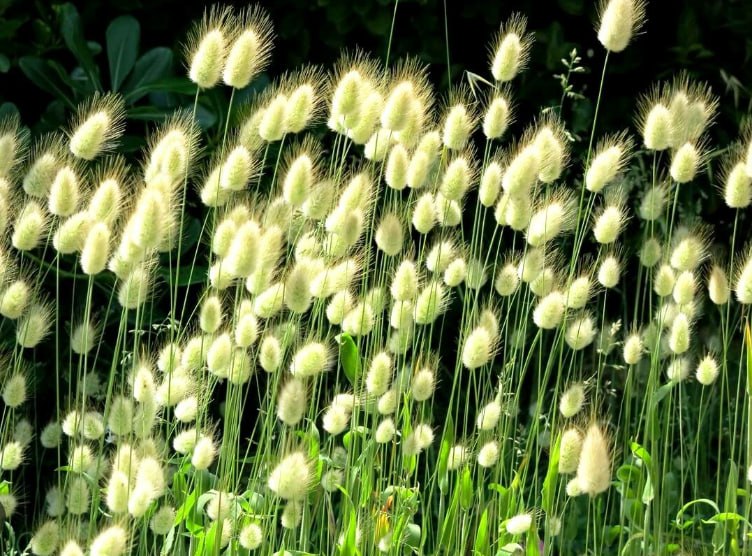
Hare's Tail Grass
Lagurus ovatus
A decorative annual grass with soft, fluffy flower heads resembling a hare's tail. Undemanding, sun-loving, ideal for cutting and dried bouquets. Height 40–50 cm, blooms from July to September.
Stages of growth
Calendar in the garden
How to care
Moisten the soil before sowing, but do not overwater
- •Prepare well-drained, loose soil
- •Seeds are very fine — mix with sand for even distribution
- •Sow directly into open ground after the last frosts
Difficulty growing
Suitable for beginners. Minimal maintenance, error-resistant.
Growing conditions
Soil preparation
Planting parameters
💡Preparation Tips
- •Dig the bed to a depth of 25-30 cm
- •Add compost or humus (5-10 kg per m²)
- •If necessary, adjust pH with lime or peat
Frequently asked questions(5)
Sow seeds directly into open ground in April–June, after the last frost danger passes. For the temperate zone, optimal timing is late April or May.
Hare's tail grass seeds are very fine and need light to germinate. Do NOT bury them — simply scatter over moist soil and press lightly. You can mix with sand for even distribution.
During active growth (May–July), water 2–3 times per week if there is no rain. During inflorescence formation and ripening — 1–2 times per week. Soil should be moist but not waterlogged.
Cut inflorescences in August–September when fully formed and have acquired a cream-white color, but before they start shedding. Cut early in the morning and dry upside down in a ventilated, dark place for 1–2 weeks.
Yes, it is an annual plant. After harvesting inflorescences, the plant dies. If you want to decorate your garden next year, you will need to resow in April–May.
Role in the garden
Benefit information coming soon
Do you like the plant card?
In the application you will receive personal tasks and a plan for the season specifically for your garden.