
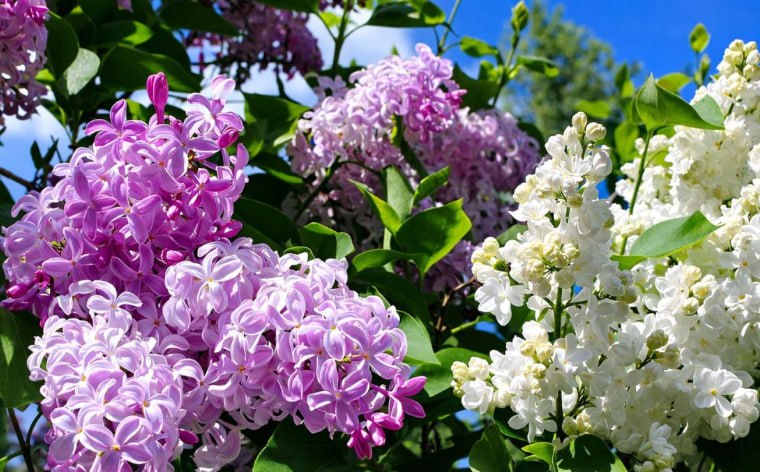
Common lilac
Syringa vulgaris
Ornamental deciduous shrub with fragrant white, pink or lilac flowers that bloom in April-May. Undemanding of growing conditions and reaches 3-6 metres in height. Ideal for protective hedges and windbreaks.
Stages of growth
Calendar in the garden
How to care
Plant in autumn (October-November) or early spring (March-April) in a 50×50 cm hole with organic matter
При посадке и весной
компост, перепревший навоз
Regular watering to strengthen root system, soil should be moist but not waterlogged
- •Mulch the root circle with 5-10 cm
- •Do not prune in the first year
- •Shade new plants in hot weather
Difficulty growing
Suitable for beginners. Minimal maintenance, error-resistant.
Growing conditions
Soil preparation
Planting parameters
💡Preparation Tips
- •Dig the bed to a depth of 25-30 cm
- •Add compost or humus (5-10 kg per m²)
- •If necessary, adjust pH with lime or peat
Frequently asked questions(5)
Optimal planting time is autumn (October-November) or early spring (March-April). Autumn planting is preferable as the plant will establish better before spring.
Reasons can vary: insufficient light (needs full sun), excess nitrogen (stimulates foliage), young age of bush (flowers from 3-5 years), frost during flowering period. Also check if flower buds are not damaged by pests.
Prune immediately after flowering (May-June). Remove faded flowers, weak and crowding branches. For rejuvenation of old bushes, cut old trunks low to the ground. In spring, prune only frost-damaged branches.
In spring use nitrogen fertilizers for leaf growth, in summer - complex fertilizers, in autumn - phosphate-potassium fertilizers for strengthening and winter preparation. Add compost or aged manure to poor soils.
Lilac is frost-hardy to -40°C, tolerates temperate zone winters well. Young seedlings in the first year can be covered with spruce branches. Adult bushes don't require protection, but may suffer in winter from spring frosts that can damage open flower buds.
Role in the garden
Benefit information coming soon
Do you like the plant card?
In the application you will receive personal tasks and a plan for the season specifically for your garden.