
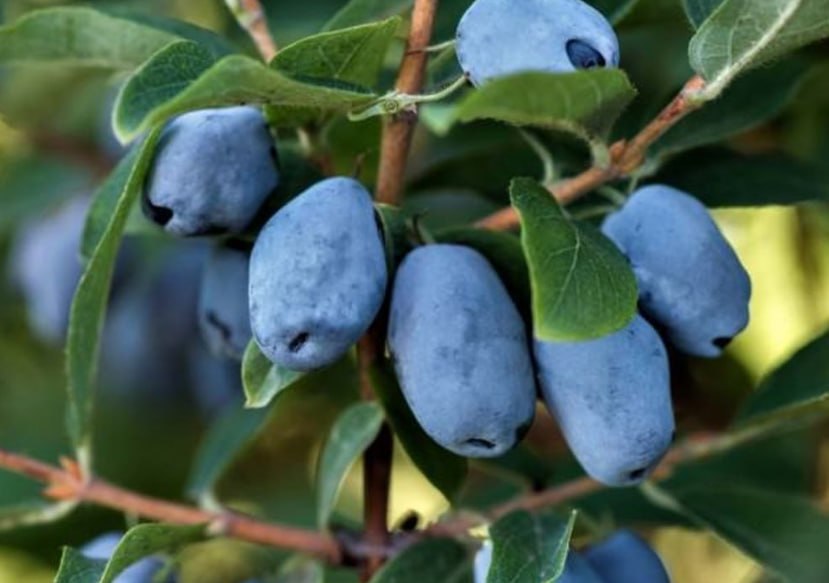
Honeysuckle Tundra
Lonicera caerulea var. kamtschatica 'Tundra'
Hardy berry shrub with sweet blue berries and excellent cold resistance. Early harvest in June, self-fertile, no cross-pollinator needed. Perfect for northern and central CIS regions.
Stages of growth
Planting calendar
How to care
Plant in prepared hole with compost and peat
один раз при посадке
органические удобрения
Moderately, maintain soil moisture at 60-70%
- •Mulch the base circle immediately after planting
- •Protect young shrub from direct sun for first 2-3 weeks
Difficulty growing
Suitable for beginners. Minimal maintenance, error-resistant.
Growing conditions
Nice neighbors.
Soil preparation
Planting parameters
💡Preparation Tips
- •Dig the bed to a depth of 25-30 cm
- •Add compost or humus (5-10 kg per m²)
- •If necessary, adjust pH with lime or peat
Frequently asked questions(5)
Best planting times are early spring (March-April) or fall (September-October). Avoid summer planting. The shrub establishes quickly in nutrient-rich, well-drained soils.
No, this variety is completely self-fertile and sets fruit without cross-pollination. However, presence of other honeysuckle varieties increases yield by 30-50%.
During growing and fruiting period — once every 7-10 days. In hot summers water more frequently (twice weekly). Reduce watering in fall. Winter watering not needed.
Perform sanitary pruning in early spring (removing dry, diseased branches) and formative pruning in fall. Prune young shrubs lightly, mature ones at 25-30% of height every 3-4 years.
One of the most cold-hardy varieties (survives to -40°C). No special protection needed. Simply mulch the base circle with peat or leaves in low-snow regions.
Benefits and nutrition
Benefit information coming soon
Do you like the plant card?
In the application you will receive personal tasks and a plan for the season specifically for your garden.