
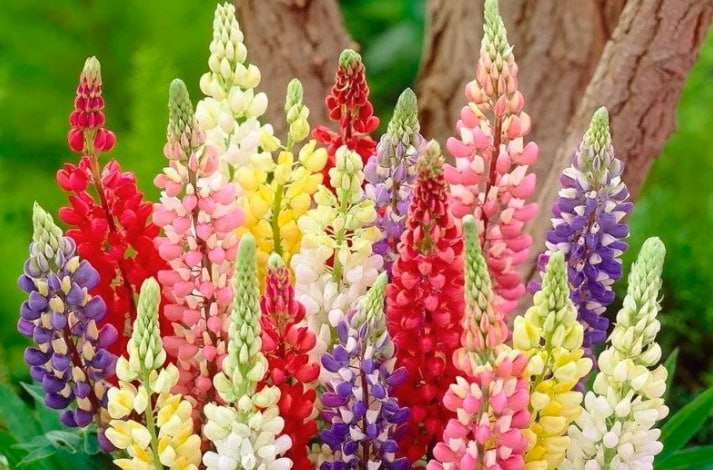
Lupine
Lupinus
Lupine is a perennial plant with tall flowering spikes in vibrant colors. Blooms in early summer and attracts bees and other pollinators. Undemanding soil tolerance and spreads quickly.
Stages of growth
Calendar in the garden
How to care
Moisten soil before sowing
- •Soak seeds for 24 hours to accelerate germination
- •Use fertile seed-starting mix
- •Provide a temperature of 18-20°C
Difficulty growing
Suitable for beginners. Minimal maintenance, error-resistant.
Growing conditions
Nice neighbors.
Soil preparation
Planting parameters
💡Preparation Tips
- •Dig the bed to a depth of 25-30 cm
- •Add compost or humus (5-10 kg per m²)
- •If necessary, adjust pH with lime or peat
Frequently asked questions(5)
Lupine is best planted in spring (March-May) or fall (September-October). Seeds can be sown directly into the ground in April or grown as seedlings indoors in March-April.
Lupine prefers moderate watering. After transplanting, water regularly but do not overwater. Established plants are more drought-tolerant and only need watering during prolonged dry spells.
Yes, deadheading spent flower spikes stimulates repeat blooming and extends the ornamental period. If you want to collect seeds, leave a few spikes to mature at the end of the season.
Lupine is a frost-hardy perennial that overwinters without protection in temperate zones. The plant dies back in winter and regrows from the root crown in spring.
Yes, lupine readily reproduces from self-seeding if allowed to mature seeds. Control self-seeding by removing excess seedlings or collecting seeds promptly.
Role in the garden
Benefit information coming soon
Do you like the plant card?
In the application you will receive personal tasks and a plan for the season specifically for your garden.


