
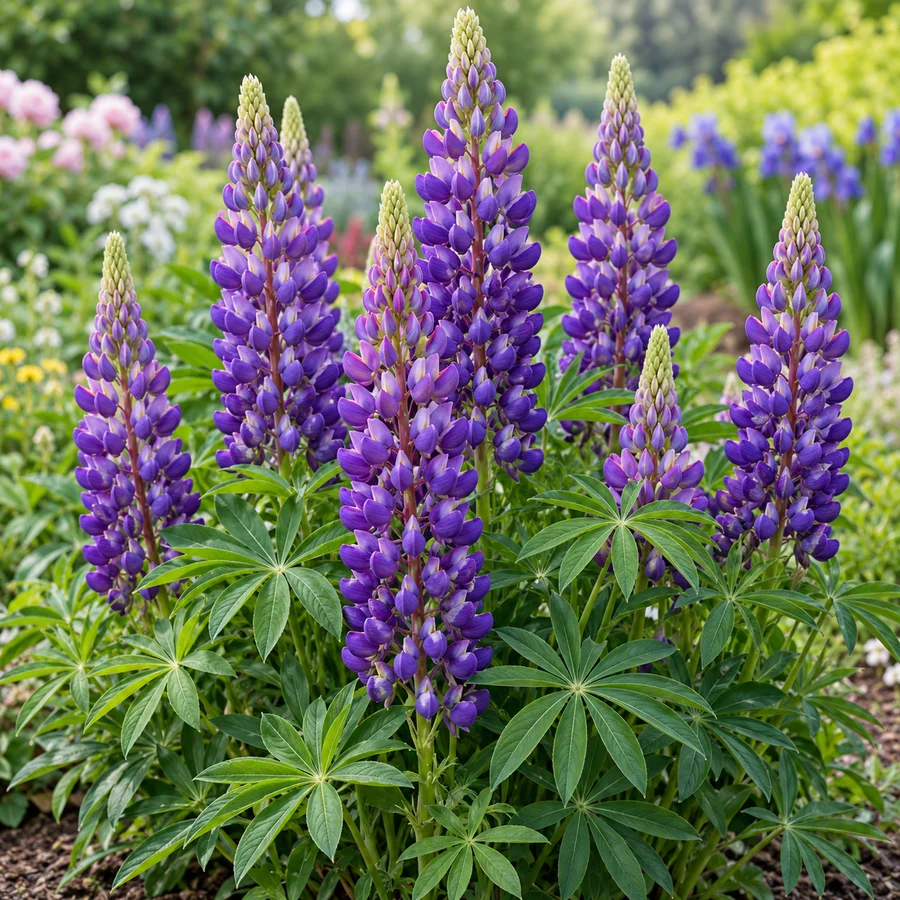
Hybrid Lupine
Lupinus x hybridus
An ornamental perennial (rarely annual) plant with vibrant flower spikes 50–80 cm tall. Flowers are arranged in dense racemes of purple, pink, red, white and yellow shades. Palmate foliage with 7–10 leaflets. Excellent green manure crop, enriches soil with nitrogen, phosphorus and organic matter. Sowing rate 200 g per 10 m². Warning: all parts of the plant, especially the seeds and pods, are toxic due to quinolizidine alkaloids — never eat them and keep the plant away from children and pets (dogs, cats, horses, birds).
Stages of growth
Calendar in the garden
How to care
Not required at this stage
Keep the substrate moist but not waterlogged. Seeds can be soaked for 12 hours before sowing to improve germination.
- •Lightly scarify the seed surface with sandpaper
- •Germination occurs at 15–20°C
- •Use a light seed-starting mix or peat and perlite blend
Difficulty growing
Suitable for beginners. Minimal maintenance, error-resistant.
Growing conditions
Nice neighbors.
Soil preparation
Planting parameters
💡Preparation Tips
- •Dig the bed to a depth of 25-30 cm
- •Add compost or humus (5-10 kg per m²)
- •If necessary, adjust pH with lime or peat
Frequently asked questions(5)
Lupines are sown in spring (March–May) or autumn (September–October) directly into the soil at a depth of 1–2 cm, or indoors as seedlings 6–8 weeks before transplanting. Seeds can be pre-scarified (rubbed with sandpaper) or soaked for 12 hours. Space plants 30–40 cm apart. For green manure use, sow at a rate of 200 g per 10 m².
Lupines prefer open, sunny locations with 6–8 hours of direct sun daily. Part shade is acceptable, but flowering will be less abundant. In heavy shade, plants become leggy and flower poorly.
Both annual and perennial lupine varieties exist. Hybrid lupines are often grown as annuals for ornamental purposes, but many can overwinter in place (zones 3–9). Blue lupines are most cold-hardy; less-adapted colors may eventually freeze out or be outcompeted. Perennials require minimal care once established.
Lupines prefer well-drained loamy or sandy-loam soil with a pH of 5.5–7.0. They do not tolerate overly alkaline (chalky) soils. The soil should be fertile; add compost or well-rotted manure before sowing.
Lupines enrich soil with nitrogen through symbiosis with nitrogen-fixing bacteria in root nodules. After flowering, plants are mowed and incorporated into the top 15–20 cm of soil (this is called green manuring). This organic matter boosts soil fertility and structure for subsequent crops.
Role in the garden
Benefit information coming soon
Do you like the plant card?
In the application you will receive personal tasks and a plan for the season specifically for your garden.


