
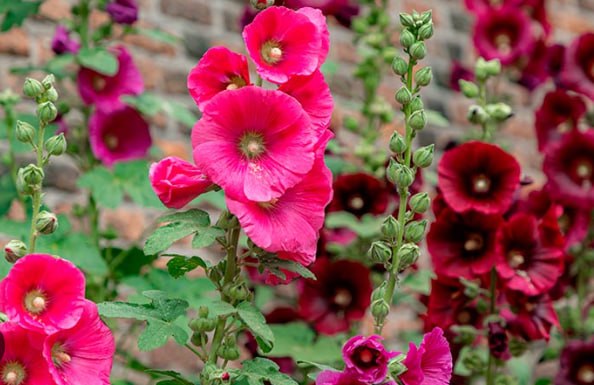
Musk Mallow
Malva sylvestris
Musk Mallow is a biennial plant with pink, purple or white flowers that beautifies the garden from June to September. Undemanding, grows well in sun and partial shade, attracts bees. Perfect for naturalistic compositions and cutting.
Stages of growth
Calendar in the garden
How to care
Not required at this stage
не требуется
Keep soil moist, but not waterlogged. Mist seeds with a spray bottle.
- •Seeds germinate best at temperatures of 18-20°C
- •Scarify seeds with sandpaper before sowing to improve germination
- •Seedlings appear in 10-14 days
Difficulty growing
Suitable for beginners. Minimal maintenance, error-resistant.
Growing conditions
Nice neighbors.
Soil preparation
Planting parameters
💡Preparation Tips
- •Dig the bed to a depth of 25-30 cm
- •Add compost or humus (5-10 kg per m²)
- •If necessary, adjust pH with lime or peat
Frequently asked questions(5)
Mallow seeds can be sown in open ground in April-May or before winter in September-October to get flowering plants next year. For flowers in the first year, grow seedlings in February-March (in this case, flowering will be later and less abundant).
Musk Mallow is a biennial plant. In the first year it forms a leaf rosette, in the second year it flowers and fruits. After seeds ripen, the plant dies. However, it self-seeds easily, so in the garden it will appear to be a perennial if you leave some plants for self-seeding.
Tall mallow varieties (100 cm and over) may need to be tied to a support, especially in windy locations or poor soils. On well-fertilized soils, stems are stronger and can do without support. Use soft material for tying to avoid damaging stems.
Mallow can be affected by leaf rust (especially in wet seasons), powdery mildew, aphids and red spider mites. For prevention, ensure good air circulation, avoid excessive foliage wetting when watering. Use insecticides for pests, fungicides for fungal diseases.
Mallow can grow in partial shade, but prefers full sun for abundant flowering (minimum 6-8 hours of direct sun per day). In shaded areas, blooming will be less intense and stems may become elongated.
Role in the garden
Benefit information coming soon
Do you like the plant card?
In the application you will receive personal tasks and a plan for the season specifically for your garden.