
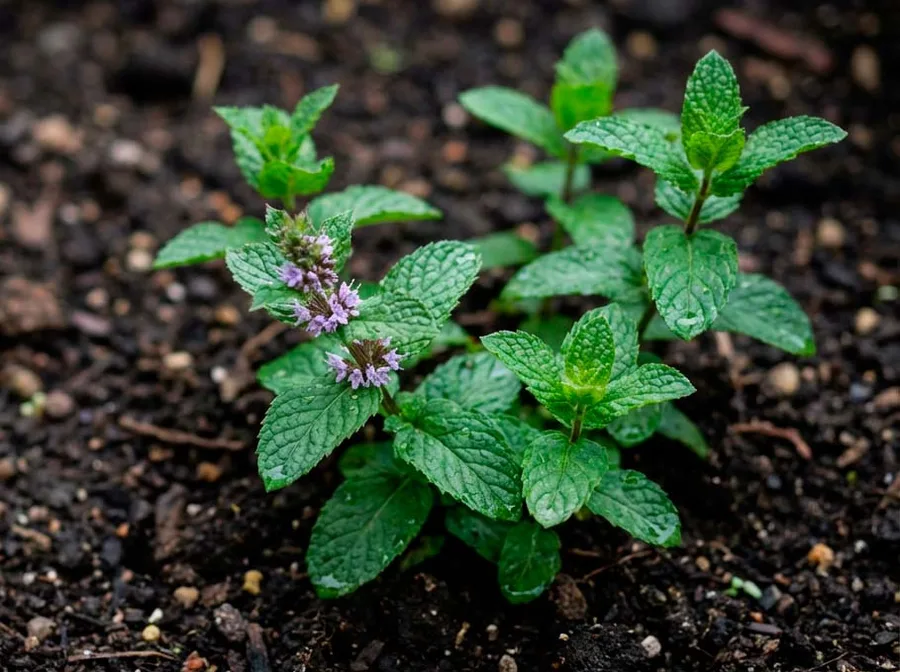
Mentha piperita
Mentha piperita
Peppermint is a cold-hardy perennial with a refreshing flavor and menthol; is actively growing and requires restriction.
Stages of growth
Planting calendar
How to care
- •To limit growth, plant in bottomless buckets or iron hoops
- •After planting, water 2-3 times a week until established.
Difficulty growing
Suitable for beginners. Minimal maintenance, error-resistant.
Growing conditions
Nice neighbors.
Soil preparation
Planting parameters
💡Preparation Tips
- •Dig the bed to a depth of 25-30 cm
- •Add compost or humus (5-10 kg per m²)
- •If necessary, adjust pH with lime or peat
Frequently asked questions(8)
Peppermint is planted in open ground in April–April. Optimal temperature for growth: Tolerates cool temperatures, grows best in moderate heat. Sowing depth: Rhizomes are placed in prepared furrows. Distance between plants: 50 × 50 cm.
Peppermint requires regular watering, especially during the period of active growth and expansion of green mass. Water with warm water at the root, avoiding getting on the leaves. Lighting conditions: full sun. In hot weather, watering is increased; in cool weather, watering is reduced. Mulching helps retain moisture in the soil.
Peppermint grows best in moist, fertile soils. Optimal acidity (pH): 6.0-7.0. Before planting, it is recommended to add compost or humus. Planting pattern: 50 × 50 cm. Good drainage is important to prevent water stagnation.
Peppermint grows well next to: white cabbage, tomatoes. Proper proximity helps protect against pests and improve yields.
Peppermint is harvested between June and August. Greens are cut off as they grow, preventing flowering. Do not overexpose the crop in the garden - this reduces the overall yield and quality.
Peppermint is an unpretentious crop suitable for beginning gardeners. It does not require complex care and tolerates minor mistakes in agricultural technology.
The main problems when growing peppermint: fungal diseases (powdery mildew, late blight), aphids, spider mites. For prevention, follow crop rotation (do not plant peppermint in one place for 2 years in a row), provide good ventilation, and water at the root. At the first signs of illness, use biological products (Fitosporin, Trichodermin).
Peppermint can be dried, frozen, or used to make seasonings. To dry, cut the shoots, tie them into bunches and hang them in a dark, ventilated place. To freeze, chop the greens and place in bags or ice cube trays. Dried and frozen greens retain their flavor for up to 12 months.
Benefits and nutrition
Contains menthol with a disinfectant and analgesic effect; The decoction calms the nerves; the infusion is used to gargle. Suitable for tea and meat dishes.
*The information is for informational purposes only and does not constitute medical advice.
Do you like the plant card?
In the application you will receive personal tasks and a plan for the season specifically for your garden.