
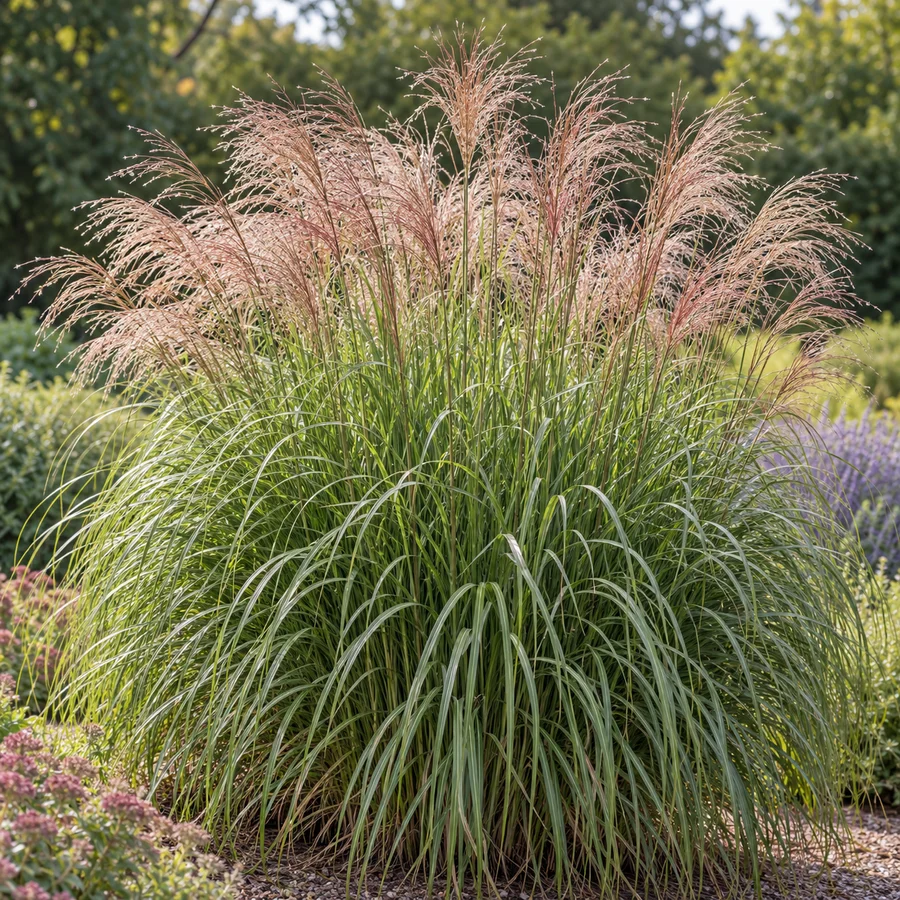
Chinese Miscanthus
Miscanthus sinensis
An elegant perennial grass with narrow, arching leaves and silvery panicle flowers. In CIS climates, it blooms in late summer and autumn, creating decorative effect until the first frosts. Unpretentious, winter-hardy in temperate zones, ideal for ornamental grass gardens and mixed borders.
Stages of growth
Calendar in the garden
How to care
Не требуется
Water regularly for the first 2–3 weeks, keeping soil moist but not waterlogged
- •Dig a hole 2–3 times larger than the root ball
- •Add compost or well-rotted manure to the soil
- •Water thoroughly after planting and mulch around the base
Difficulty growing
Suitable for beginners. Minimal maintenance, error-resistant.
Growing conditions
Nice neighbors.
Soil preparation
Planting parameters
💡Preparation Tips
- •Dig the bed to a depth of 25-30 cm
- •Add compost or humus (5-10 kg per m²)
- •If necessary, adjust pH with lime or peat
Frequently asked questions(5)
Optimal timing is April–May, when soil warms to 10–12°C. September planting is possible, but spring planting is preferable for root establishment before winter.
Main cutting is done in early spring (March–April), before new shoots emerge. In central regions, this is necessary to remove old frost-damaged stems. Some gardeners leave stems over winter for ornamental value and to protect the rhizome from frost.
Yes, Chinese Miscanthus is winter hardy in zones 5–9 (central and southern CIS regions). In northern regions (zones 3–4), mulch the base circle with sawdust or leaves to 10–15 cm depth before sustained cold arrives.
Possible reasons: (1) young plant—typically flowers from year 2–3 of growth; (2) insufficient light—needs at least 6 hours of direct sun; (3) poor soil or lack of feeding; (4) short summer season for your region. To improve blooming, choose a bright location and feed with phosphorus and potassium in July–August.
Primary method is spring division (April–May). Dig up the clump, divide it into sections with 2–3 renewal buds each, and plant in prepared soil. Stem cuttings are less reliable and require greenhouse conditions.
Role in the garden
Benefit information coming soon
Do you like the plant card?
In the application you will receive personal tasks and a plan for the season specifically for your garden.


