
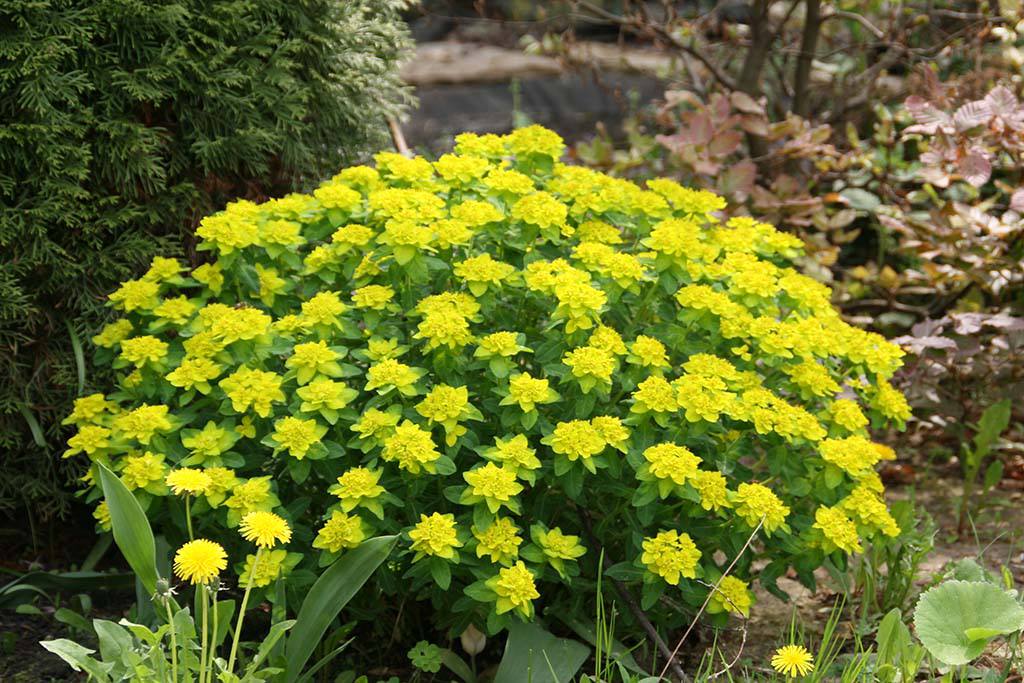
Cushion Spurge (Euphorbia polychroma)
Euphorbia polychroma
Ornamental perennial spurge with bright yellow bracts (inflorescences) in April–June. Compact bush 40–60 cm tall, emerald-green leaves turning red in autumn. Undemanding, drought-tolerant, decorates the garden for 20–30 years.
Stages of growth
Calendar in the garden
How to care
First time at 2–3 true leaves into pots Ø 6–8 cm. Second time into Ø 10 cm two weeks before planting out.
Every 10 days starting from 2nd leaf appearance
weak mineral fertilizer solution (NPK 10:10:10)
Keep soil moist but not waterlogged. Mist with spray 1–2 times daily.
- •Seedlings love light: grow lights 12–14 hours daily at 10–15 cm distance.
- •Germination temperature 18–20 °C, after sprouting 16–18 °C (cool prevents stretching).
- •After 2–3 true leaves, acclimate seedlings to fresh air (ventilation).
Difficulty growing
Suitable for beginners. Minimal maintenance, error-resistant.
Growing conditions
Nice neighbors.
Soil preparation
Planting parameters
💡Preparation Tips
- •Dig the bed to a depth of 25-30 cm
- •Add compost or humus (5-10 kg per m²)
- •If necessary, adjust pH with lime or peat
Frequently asked questions(5)
Plant end April – early May when frost danger passes and soil warms to +10…+12 °C. Plant seedlings in holes with compost, spacing 40–50 cm apart. Water daily first 2 weeks. Polychroma spurge can also be divided in late September.
Possible causes: insufficient light (need 6+ hours sun daily), excess nitrogen (promotes foliage), cold spring (needs stable 18–20 °C), young plant (needs a year to flower). If first-year seedling, wait; if mature – revise soil and apply phosphate fertilizer.
Yes, it's normal. Polychroma spurge naturally changes color from emerald-green in summer to red and orange in fall, adding ornamental interest. Winter kills the aerial parts (herbaceous perennial), then regrows from rhizomes in spring. Leaf drop is natural.
Spurge contains poisonous milky sap causing skin and mucous irritation. Wash skin if touched; seek medical help if ingested. The plant is safe to grow if not eaten. For families with small children and pets, plant in inaccessible locations (raised beds, fence corners).
In autumn (late Sept–Oct) cut stems to 5–10 cm above soil, leaving rhizomes for winter. Spring (March–April) remove dead debris. Summer during bloom remove faded bracts and broken stems. Otherwise no pruning needed. Wear gloves – sap is toxic.
Role in the garden
Benefit information coming soon
Do you like the plant card?
In the application you will receive personal tasks and a plan for the season specifically for your garden.


