
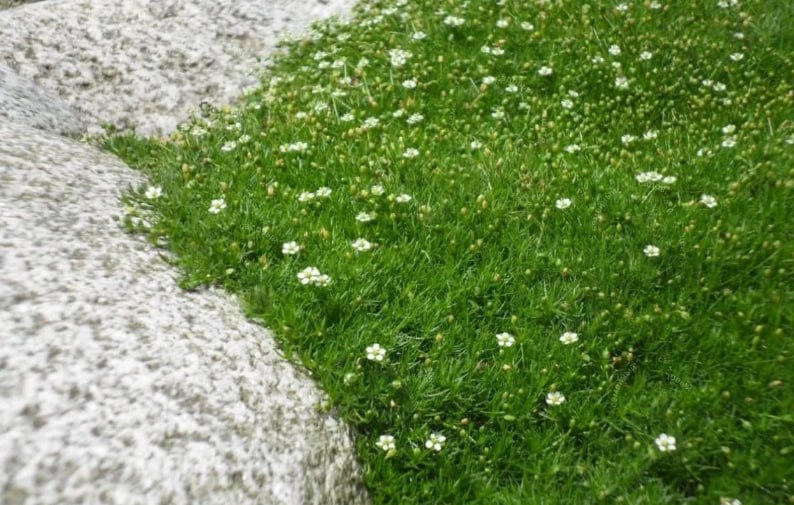
Sagina moss, Pearlwort
Sagina subulata
A groundcover plant with delicate moss-like structure, forming dense mats. Undemanding, grows well in partial shade and loose soils, ideal for alpine rockeries and paved pathways.
Stages of growth
Calendar in the garden
How to care
Move to open ground or container with loose soil when roots appear (10-14 days)
Keep substrate moist but not waterlogged. Mist 2-3 times daily to accelerate rooting
- •Use sand-peat mixture for cuttings
- •Provide dappled light without direct sun
- •Cuttings root well in a cold frame
Difficulty growing
Suitable for beginners. Minimal maintenance, error-resistant.
Growing conditions
Nice neighbors.
Soil preparation
Planting parameters
💡Preparation Tips
- •Dig the bed to a depth of 25-30 cm
- •Add compost or humus (5-10 kg per m²)
- •If necessary, adjust pH with lime or peat
Frequently asked questions(5)
Plant in spring (April-May) or fall (September-October). Sagina multiplies easily by dividing mats or cuttings. Press planting material lightly into moist, loose soil without burying. Space plants 15-20 cm apart.
Sagina loves moisture and tolerates drought poorly. In sunny spots it bleaches and weakens. Plant it in partial shade and water regularly, especially on hot days. In extreme heat, mist foliage with water for cooling.
Sagina doesn't require heavy pruning. Thin overgrown mats in early summer, remove dead stems and weeds. Regular thinning promotes denser, healthier growth.
Sagina is cold-hardy (down to -30°) and overwinters well under snow. For insurance in areas with little snow, mulch plantings with compost or peat 3-5 cm thick in late October. In spring, lightly aerate the mulch.
Sagina is undemanding and doesn't need frequent feeding. Apply balanced fertilizer (NPK 10:10:10) in spring, feed monthly in summer with dilute solution. Organic amendments (compost, aged manure) improve soil structure, which sagina loves.
Role in the garden
Benefit information coming soon
Do you like the plant card?
In the application you will receive personal tasks and a plan for the season specifically for your garden.