
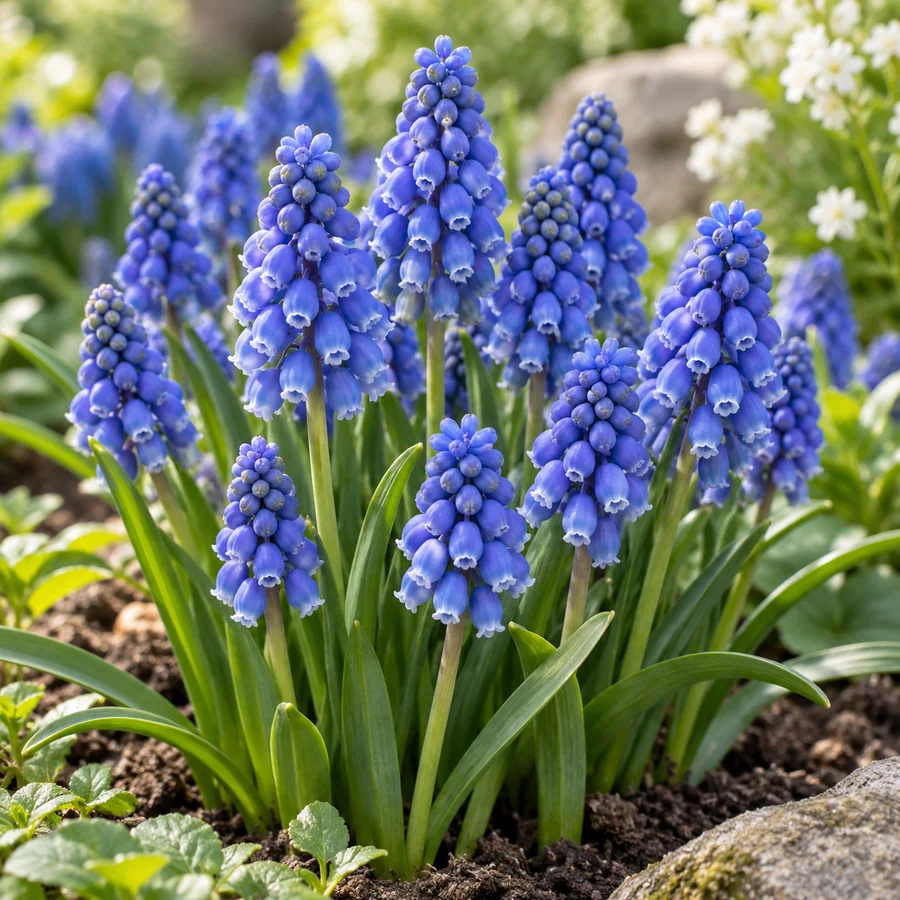
Muscari
Muscari
Beautiful spring-flowering bulbous plants with tiny bell-like flowers arranged in dense spikes. Bloom in vibrant blue, purple, or white shades. Very low-maintenance, self-seed readily, perfect for rock gardens and borders. Warning: the plant is toxic — the bulbs (and also leaves, flowers and seeds) contain saponins and cause vomiting and digestive upset if eaten by people or pets; never use any part as food and keep it away from children, cats and dogs.
Stages of growth
Calendar in the garden
How to care
Plant bulbs 5-8 cm deep in well-drained soil. Space 10-15 cm apart.
At planting, incorporate compost or bone meal at the bottom of the planting hole
balanced low-nitrogen bulb fertilizer
Moderate watering after planting, then rainwater. Oversaturation is unacceptable due to rot risk.
- •Choose a well-draining location to avoid waterlogging
- •Plant bulbs in groups of 10-20 for better visual impact
- •In cold-winter regions, mulch plantings with leaves to 5-10 cm depth
Difficulty growing
Suitable for beginners. Minimal maintenance, error-resistant.
Growing conditions
Nice neighbors.
Soil preparation
Planting parameters
💡Preparation Tips
- •Dig the bed to a depth of 25-30 cm
- •Add compost or humus (5-10 kg per m²)
- •If necessary, adjust pH with lime or peat
Frequently asked questions(5)
Muscari is an autumn-planted bulb. Plant from September through November, 4-6 weeks before hard frost, allowing bulbs to root before winter. In mild-winter regions, planting can extend into December.
After fall planting, water moderately; rainfall usually suffices. In spring (March–May), water weekly if dry. The key is not to overwater—waterlogged soil causes rot. After flowering, reduce watering.
Main causes: (1) bulbs planted too shallow or too deep (correct depth 5-8 cm); (2) insufficient light (needs full sun or light shade); (3) poor soil (spring feeding helps); (4) young divisions from newly split clumps often skip flowering the first year. Confirm bulbs are healthy and large (diameter ≥0.8 cm).
Muscari are very winter-hardy (to –20°C) and overwinter well outdoors. In cold regions (hardiness zone <4), mulch plantings with leaves or peat to 5–10 cm. Mild-winter areas need no protection. Remove mulch gradually as temperatures rise in spring.
Two methods: (1) division – after flowering, dig crowded nests, separate into individual bulbs, and replant in fresh soil; (2) self-seeding – muscari readily self-sow; new seedlings appear annually around established clumps. Seedlings (or small divided bulbs) typically flower in year 2–3.
Role in the garden
Benefit information coming soon
Do you like the plant card?
In the application you will receive personal tasks and a plan for the season specifically for your garden.


