
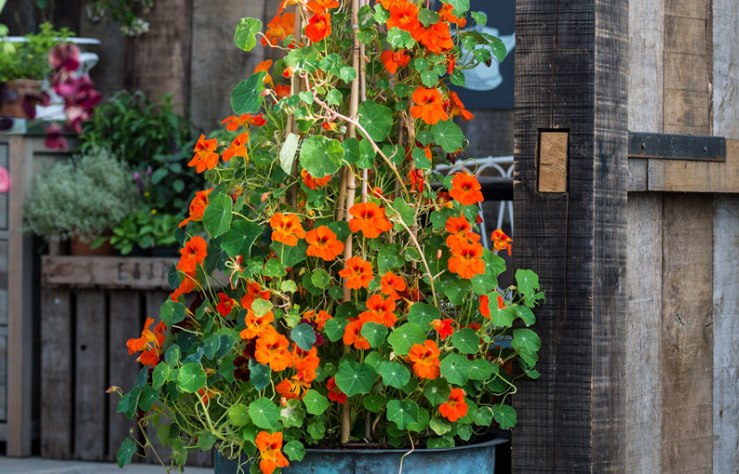
Nasturtium
Tropaeolum majus
Annual climbing plant with vibrant orange, red or yellow flowers. Grows quickly and decorates arbours and fences beautifully. Leaves are edible with a peppery taste.
Stages of growth
Calendar in the garden
How to care
Soak seeds in warm water for 24 hours before sowing
- •Scarify seed coat for better germination
- •Use room temperature water for soaking
Difficulty growing
Suitable for beginners. Minimal maintenance, error-resistant.
Growing conditions
Nice neighbors.
Soil preparation
Planting parameters
💡Preparation Tips
- •Dig the bed to a depth of 25-30 cm
- •Add compost or humus (5-10 kg per m²)
- •If necessary, adjust pH with lime or peat
Frequently asked questions(5)
Plant in late May — early June, after the risk of night frosts and when soil warms to +15°C. In warmer regions, sowing is possible in April. For early flowering, you can grow seedlings in April and transplant in May.
Probably excess nitrogen in the soil. Stop nitrogen fertilizing and switch to phosphorus-potassium fertilizers. Ensure the plant receives at least 6 hours of direct sun daily. Infrequent watering can also promote flowering.
Leaves and flowers are edible. Harvest young leaves and freshly opened flowers from July through September. Use them fresh in salads — they provide a peppery, piquant taste. Seeds can be preserved like capers.
Main enemies are aphids and whiteflies. When they appear, spray with soap solution or insecticide. Nasturtium attracts aphids, protecting other plants. Excess moisture can cause fungal diseases — improve drainage and ventilation.
In CIS climate it is grown as an annual as it cannot survive winter. In tropics it's a perennial vine. In autumn plants die with the first frosts. You can collect seeds for sowing next year.
Role in the garden
Benefit information coming soon
Do you like the plant card?
In the application you will receive personal tasks and a plan for the season specifically for your garden.