
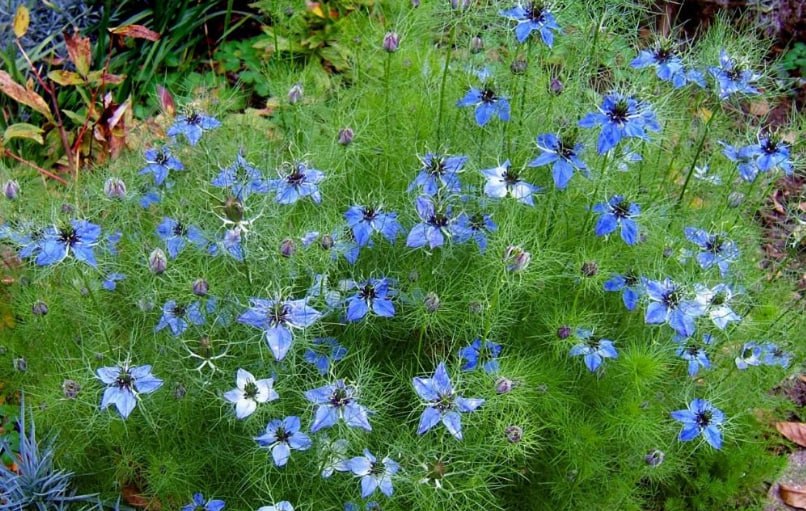
Love-in-a-mist
Nigella damascena
Annual ornamental plant with feathery foliage and delicate double flowers in shades of blue, white, or pink. Love-in-a-mist attracts pollinators and is excellent for cut flowers. After flowering, it produces decorative seed pods.
Stages of growth
Calendar in the garden
How to care
Not required
Moisten soil before sowing
- •Prepare light, well-drained soil
- •Choose a sunny location in the garden
- •Sow seeds directly into soil at depth of 2-3 cm
Difficulty growing
Suitable for beginners. Minimal maintenance, error-resistant.
Growing conditions
Nice neighbors.
Soil preparation
Planting parameters
💡Preparation Tips
- •Dig the bed to a depth of 25-30 cm
- •Add compost or humus (5-10 kg per m²)
- •If necessary, adjust pH with lime or peat
Frequently asked questions(5)
Nigella can be sown in April-May directly into open ground after the last frost, or in autumn (October) for winter sowing to get early spring blooms. Autumn sowing produces stronger plants that flower earlier.
Nigella does not tolerate transplanting well due to its fragile roots. It's best to sow seeds directly into the garden in May or in autumn for winter sowing. If raising from seedlings, use peat pots and transplant with them into the ground.
Leave several unopened flowers. When seed pods turn brown (August-September), cut them whole and dry in a cool, well-ventilated place. Seeds easily fall out of dried pods.
Yes, nigella self-seeds well if you leave some flowers to mature. Young plants will appear in spring of the following year.
Nigella grows on loamy, sandy loam, and well-draining soils with neutral pH (6.0-7.0). It tolerates less fertile soils well. The main thing is to avoid waterlogging and heavy clay soils.
Role in the garden
Benefit information coming soon
Do you like the plant card?
In the application you will receive personal tasks and a plan for the season specifically for your garden.