
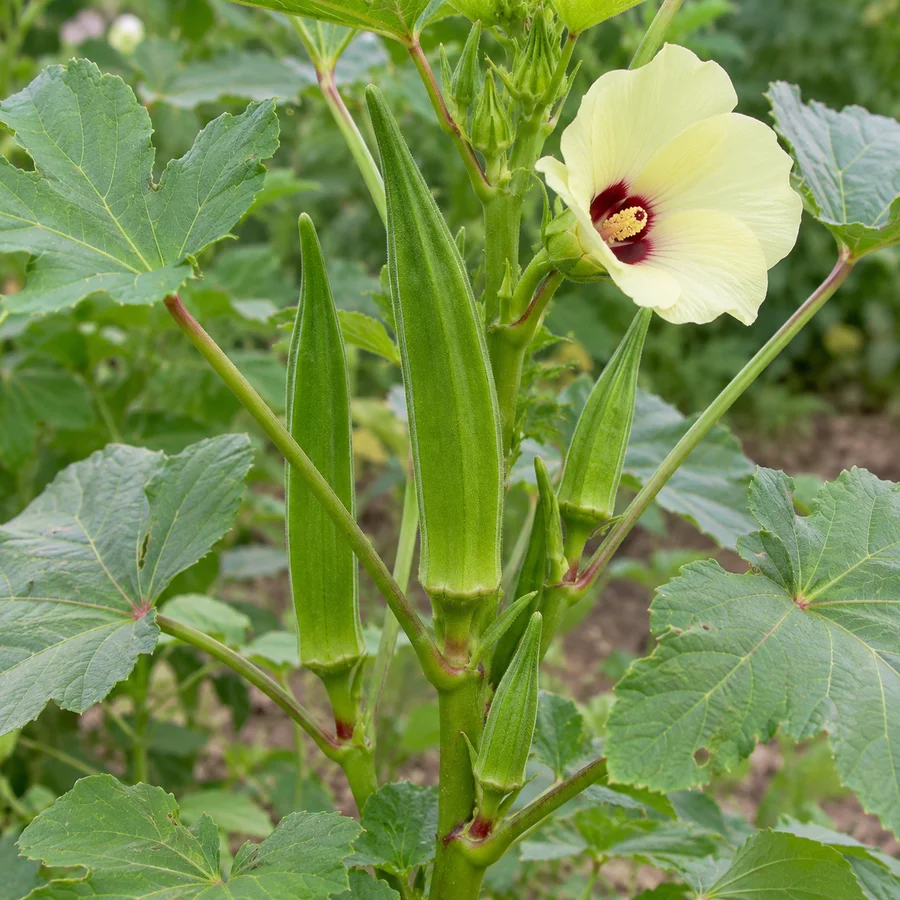
Okra
Abelmoschus esculentus
Annual vegetable rich in vitamins and minerals. Young seed pods (4–8 cm) are harvested before hardening and cooked as a side dish. Heat-loving crop requiring fertile soil and regular watering.
Stages of growth
Planting calendar
How to care
Keep soil moist but not waterlogged. Regularly mist seeds until seedlings emerge.
- •Soak seeds for 12 hours before sowing to improve germination
- •Sow at a depth of 2–3 cm, spacing 30–40 cm apart
- •Soil must be warm (at least 20°C)
- •Germination takes 7–14 days
Difficulty growing
Requires basic knowledge and regular care.
Growing conditions
Nice neighbors.
Soil preparation
Planting parameters
💡Preparation Tips
- •Dig the bed to a depth of 25-30 cm
- •Add compost or humus (5-10 kg per m²)
- •If necessary, adjust pH with lime or peat
Frequently asked questions(6)
Sow seeds directly in the ground or transplant seedlings in late May to early June, when soil has warmed to 20–22°C and frost risk has passed. Okra is very heat-loving.
Soak seeds in warm water for 12 hours before sowing. This increases germination by 20–30%. Always sow into warm soil (at least 20°C).
Main pests are aphids, spider mites, and whiteflies. Prevention: regular plant inspection, mulching, and spraying with insecticidal soap when pests are detected.
Harvest young pods 4–8 cm long when they are still tender and pale green. Overripe pods become hard and stringy. Picking every 1–2 days stimulates new pod formation.
Flowers drop due to stress: insufficient moisture, temperature fluctuations (below 20°C or above 35°C), or excess nitrogen. Ensure regular watering, stable warmth, and balanced fertilization.
Young pods are used in salads, soups (they thicken the liquid), and stewed dishes. Boil, fry, bake, or preserve them. The flavor is mild, somewhat similar to young beans.
Benefits and nutrition
Benefit information coming soon
Do you like the plant card?
In the application you will receive personal tasks and a plan for the season specifically for your garden.


