
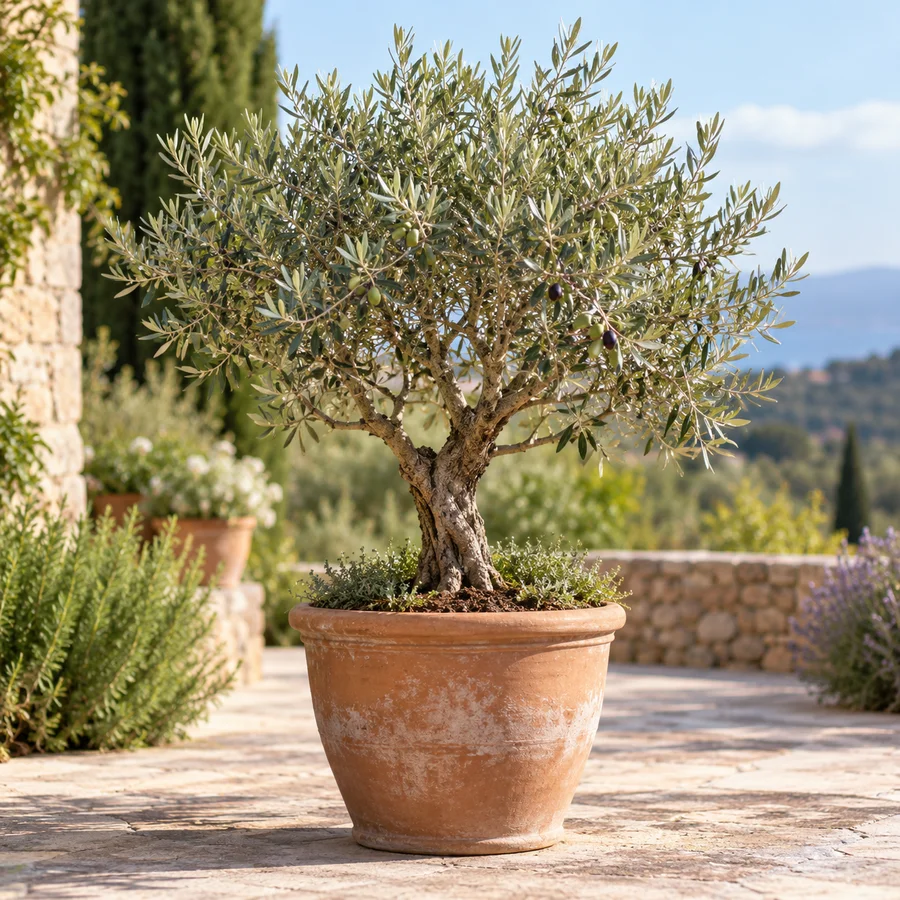
Olive tree
Olea europaea
Evergreen fruit tree with silvery-green foliage. Grown mainly in containers indoors or in mild-climate regions. Bears small to medium olives, requires pollination. Lives 50–100+ years, slow-growing, decorative year-round.
Stages of growth
Planting calendar
How to care
If the sapling is purchased in a pot, transplant it into a container of 10–15 litres with good drainage (ceramic chips at the bottom). Soil: citrus mix or universal potting soil + sand.
For the first 2–3 weeks after planting, water frequently to keep the soil moist but not waterlogged. Then switch to moderate watering: the soil should dry slightly between waterings.
- •Protect the young tree from drafts and sharp temperature fluctuations during the first month
- •When growing indoors, keep it away from radiators (minimum 1–2 metres)
- •Periodically check for spider mites (especially during the heating season)
Difficulty growing
For experienced gardeners. Requires special conditions and attention.
Growing conditions
Soil preparation
Planting parameters
💡Preparation Tips
- •Dig the bed to a depth of 25-30 cm
- •Add compost or humus (5-10 kg per m²)
- •If necessary, adjust pH with lime or peat
Frequently asked questions(6)
Yes, but with conditions: the tree requires a lot of light (6–8 hours of direct sun daily), moderate humidity, good air circulation, and protection from hot radiator air. It is best placed on a south or south-west facing window. In poor lighting conditions, the tree will grow slowly and may not produce fruit.
Reasons: 1) lack of pollinator — need to plant a second tree of a different variety or conduct manual pollination; 2) insufficient light; 3) tree too young (begins fruiting at 3–5 years); 4) improper watering (excess or lack); 5) low temperatures during flowering (below 10–12°C); 6) deficiency of potassium and boron. Improve conditions and wait.
In regions with winters warmer than −10…−15°C, olives can overwinter in open ground with protection: cover with conifer branches, burlap, or spunbond in two layers. In harsher climates (Moscow region, Belarus, much of Ukraine), a potted tree is moved to an unheated cellar or greenhouse at temperatures +2…+10°C and watering is reduced. In an apartment, the tree can overwinter if kept away from radiators and not overheated.
Light, well-draining soil: universal + sand in a 2:1 ratio, or special citrus potting mix. At the bottom of the pot, be sure to place a layer of drainage (ceramic chips, gravel) 5–10 cm. The pot must have drainage holes.
Young trees (up to 5 years) are repotted in spring annually, increasing the pot volume by 2–3 cm each time. Mature trees are repotted every 3–5 years or when roots start growing through the drainage hole. The best time is early spring (March–April).
Olive leaves and unripe fruit contain polyphenols and may cause digestive upset if eaten. However, serious toxicity has not been documented. Ripe olives are not poisonous, but they are not eaten fresh: they are extremely bitter due to oleuropein and are only suitable for consumption after processing — soaking in water with daily changes, pickling in brine, or lye treatment. The hard pit is a choking hazard for a child or small pet. Nevertheless, keep the plant away from small children and curious pets that might nibble the leaves. If large amounts of leaves are ingested, seek medical attention.
Benefits and nutrition
Benefit information coming soon
Do you like the plant card?
In the application you will receive personal tasks and a plan for the season specifically for your garden.


