
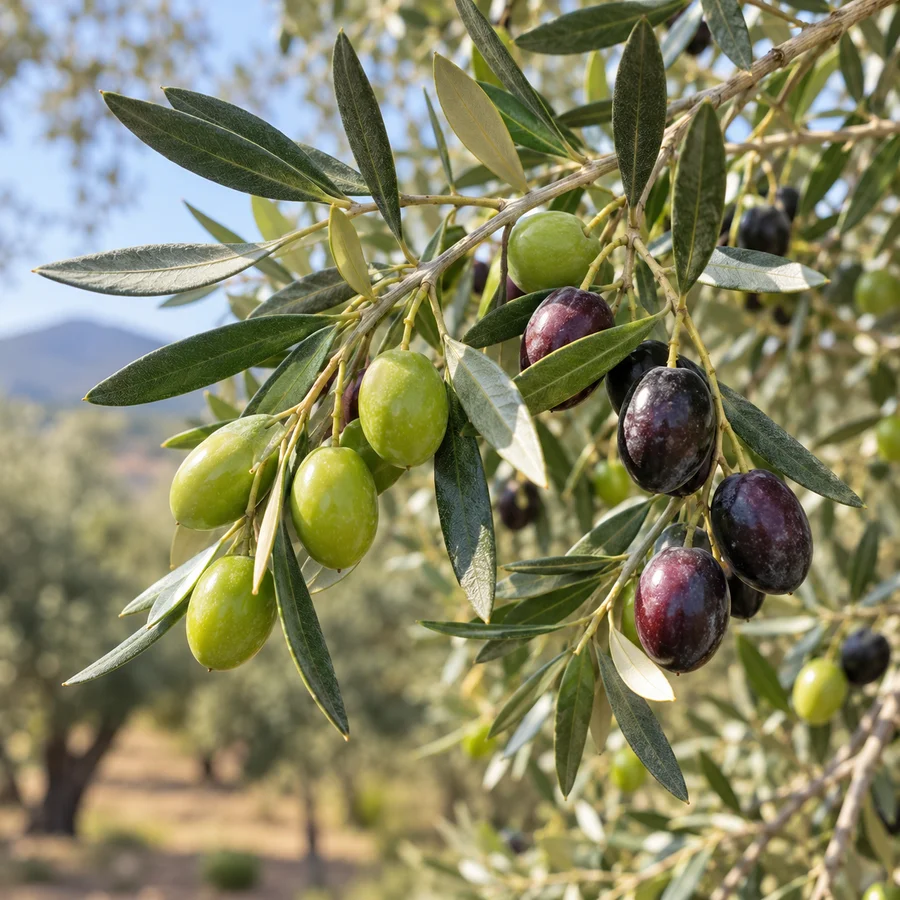
Turkish Olive (Türkiye)
Olea europaea 'Türkiye'
Turkish olive — a fruiting tree with evergreen leaves, grown for olives and oil. A cultivar of medium winter hardiness, adapted to the middle belt and southern regions of the CIS. Requires a warm location and well-draining soil. Can be grown as a houseplant in containers.
Stages of growth
Planting calendar
How to care
Once every 3 weeks
biohumus, comprehensive fertilizer
Water daily for the first two weeks, then transition to moderate watering 2–3 times per week
- •Protect the young tree from direct sun in the first 2 weeks
- •Mulch the root zone with straw or wood chips
- •Check soil moisture — it should be moist but not waterlogged
Difficulty growing
Requires basic knowledge and regular care.
Growing conditions
Nice neighbors.
Soil preparation
Planting parameters
💡Preparation Tips
- •Dig the bed to a depth of 25-30 cm
- •Add compost or humus (5-10 kg per m²)
- •If necessary, adjust pH with lime or peat
Frequently asked questions(5)
Turkish olive grows successfully in southern regions (Crimea, Kuban, Podolia, southern Kazakhstan) and can be grown in protected locations in central regions with winter protection. In northern and central regions, container cultivation with moving indoors for winter is recommended.
First fruits appear 3–4 years after planting. Full fruiting is achieved at 7–10 years. To accelerate fruiting, choose grafted saplings.
Green olives are harvested in September (for pickling), ripe black olives in October–November (for oil and pickling). Harvest fruits by hand, supporting the branches. Olives are only used for food after special lye treatment; fresh fruits are bitter.
Yes, Turkish olive grows excellently in a large container (40–60 litres) with bright lighting (6–8 hours of sun per day), regular watering, and good drainage. In winter, keep the potted plant in a cool place (10–15°C).
In southern regions, cover young trees with non-woven fabric or burlap if frost below −10°C is forecast. Adult trees (older than 5–7 years) tolerate short-term frosts down to −15°C. In pots, move trees to an unheated basement or greenhouse if temperature drops below −5°C.
Benefits and nutrition
Benefit information coming soon
Do you like the plant card?
In the application you will receive personal tasks and a plan for the season specifically for your garden.


