
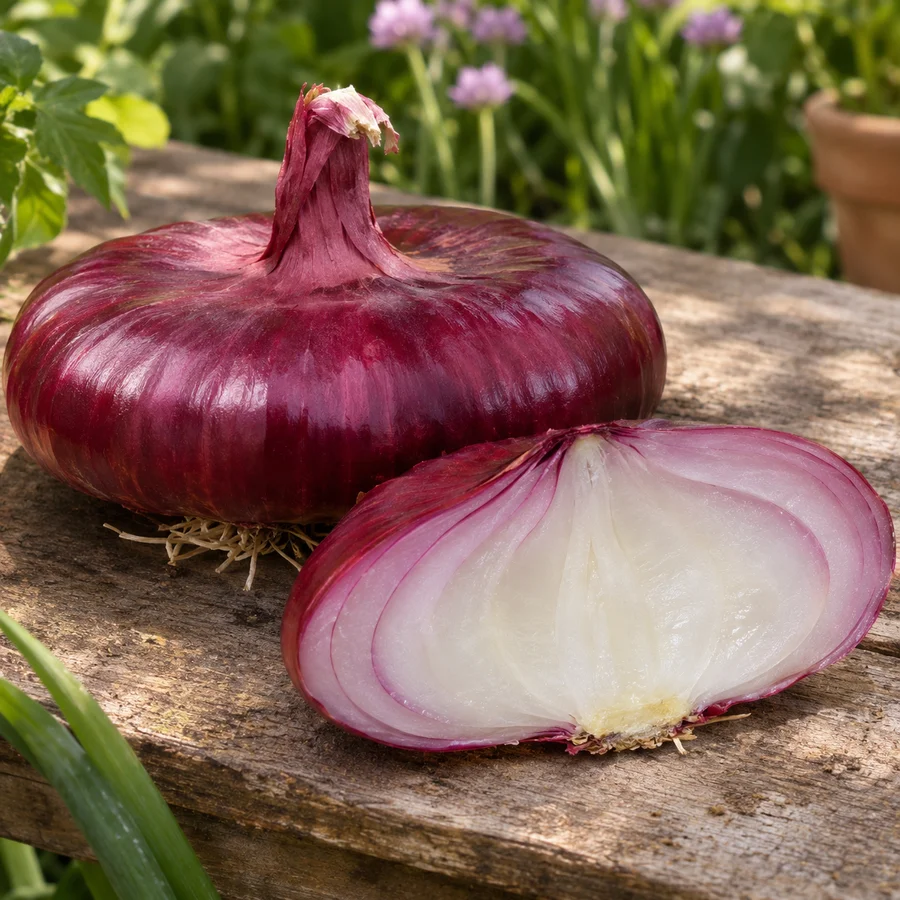
Red onion Yalta
Allium cepa 'Yaltinskii'
A legendary Yalta sweet onion with flat large bulbs and tender sweet flesh. A classic salad variety of southern origin (Crimea), almost without sharpness. Perfect for fresh salads, but requires good light and warmth. Warning: onion (bulbs, green tops, skins) is toxic to cats, dogs, horses and birds — it causes haemolytic anaemia, so never feed it to pets raw or cooked.
Stages of growth
Planting calendar
How to care
Не требуется
Abundant watering immediately after planting. Soil should be moist to a depth of 20 cm
- •Use the seedling method (sow seeds in February–March for seedlings)
- •Better to use large black sets or avoid sets altogether (Yalta onion often bolts due to storage issues)
- •Mulch soil with compost in a 2–3 cm layer
Difficulty growing
Requires basic knowledge and regular care.
Growing conditions
Nice neighbors.
Unwanted Neighbors
Soil preparation
Planting parameters
💡Preparation Tips
- •Dig the bed to a depth of 25-30 cm
- •Add compost or humus (5-10 kg per m²)
- •If necessary, adjust pH with lime or peat
Frequently asked questions(5)
Yalta is a southern variety requiring plenty of light (minimum 8–9 hours), warmth (20–25 °C), and moisture. It tends to bolt if damaged or improperly stored sets are used. It is recommended to grow exclusively from seeds using the seedling method.
Almost pure sweetness — the taste resembles pears with a light spicy note. The bulb is loose, with slightly mucous sweet flesh. Perfect for fresh salads but unsuitable for canning and culinary processing.
Sets (especially low-quality or improperly stored) often cause bolting. It's better to grow the variety from seeds through seedlings or direct sowing in the ground in April–May. If using sets, only choose large ones (2–3 cm) and check quality.
This is a salad variety with poor storage life. Store in refrigerator at 2–4 °C and 80–90% humidity for a maximum of 3–4 months. For longer storage, wrap each bulb in paper. Unlike sharp varieties, it is not suitable for storage at room temperature.
Minimum 8–9 hours of direct sun daily. In shaded areas, bulbs will be small and less sweet. This is a heat-loving variety — plant in the sunniest, wind-protected beds. In central regions, planting times are April–May.
Benefits and nutrition
Benefit information coming soon
Do you like the plant card?
In the application you will receive personal tasks and a plan for the season specifically for your garden.


