
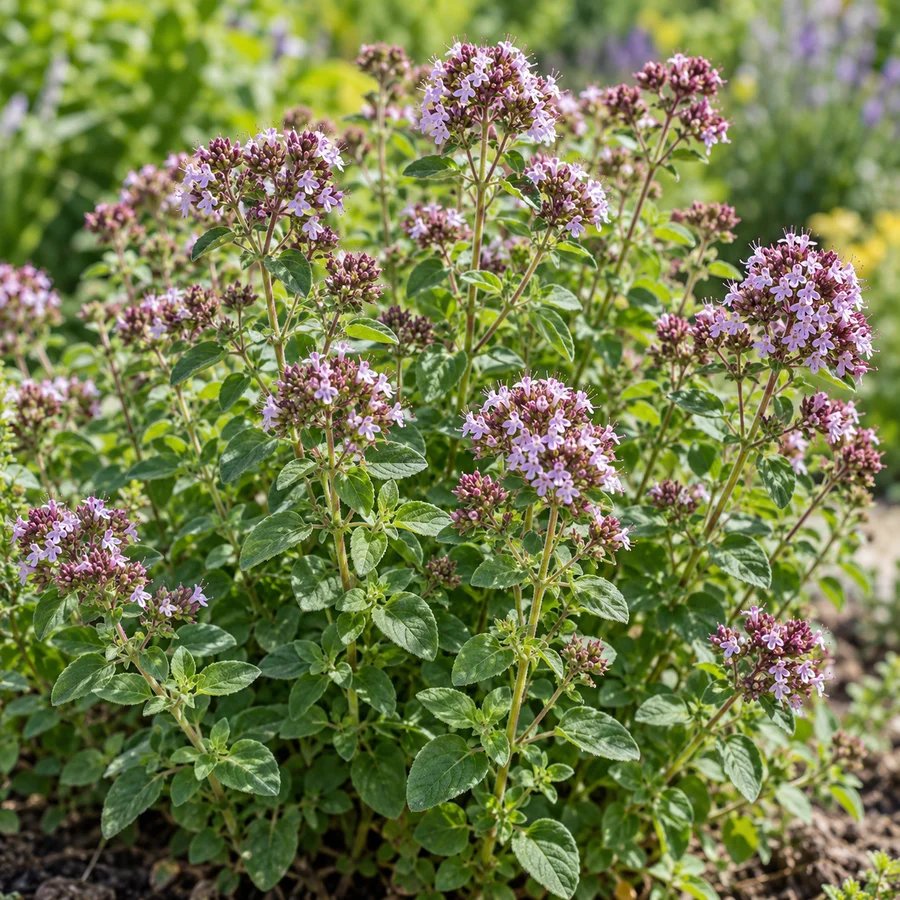
Wild oregano
Origanum vulgare
Perennial aromatic herb with a pleasant fragrance, known as oregano. Leaves are rich in essential oils and used in cooking, medicine and tea. Grows easily in sunny locations with well-drained soil. Safe as a culinary spice, but concentrated infusions and essential oil should be avoided during pregnancy, and per the ASPCA the plant is toxic to cats and dogs (vomiting, diarrhoea) — keep pets from eating it.
Stages of growth
Planting calendar
How to care
Keep soil slightly moist but not waterlogged. Use a spray bottle for even moisture.
- •Seeds are very fine — don't plant deep, simply scatter across the surface and press gently
- •Cover the container with plastic or glass to create greenhouse conditions
- •Germination temperature 20–24°C
- •Germination takes 7–14 days
Difficulty growing
Suitable for beginners. Minimal maintenance, error-resistant.
Growing conditions
Nice neighbors.
Soil preparation
Planting parameters
💡Preparation Tips
- •Dig the bed to a depth of 25-30 cm
- •Add compost or humus (5-10 kg per m²)
- •If necessary, adjust pH with lime or peat
Frequently asked questions(5)
Leaves contain peak essential oils during flowering, especially in July–August. Harvest mid-morning after dew dries but before strong heat. Young leaves from shoot tips are most aromatic.
In late autumn, cut stems 10–15 cm above ground. Mulch the base thickly (5–7 cm) with leaves, peat, or dry grass. In harsh winters the plant may get frost damage, but usually recovers from the root system in spring.
Yes, it grows well in 3–5 liter pots on a sunny windowsill or balcony. Use loose, well-draining soil, water regularly, and feed once monthly. You can move the container outdoors in summer.
Most likely cause is overwatering and root rot. Oregano prefers drier conditions. Ensure the soil is well-draining and avoid standing water. In pots, make drainage holes.
Yes, completely edible. Leaves and flowers are used in cooking, tea, and infusions. They have a pleasant aroma and slight bitterness. Dried leaves store well and retain their scent. Culinary quantities are safe, but strong medicinal oregano infusions are not recommended during pregnancy. Cats and dogs should not eat the herb — according to ASPCA it causes vomiting and diarrhea in pets.
Benefits and nutrition
Benefit information coming soon
Do you like the plant card?
In the application you will receive personal tasks and a plan for the season specifically for your garden.


