
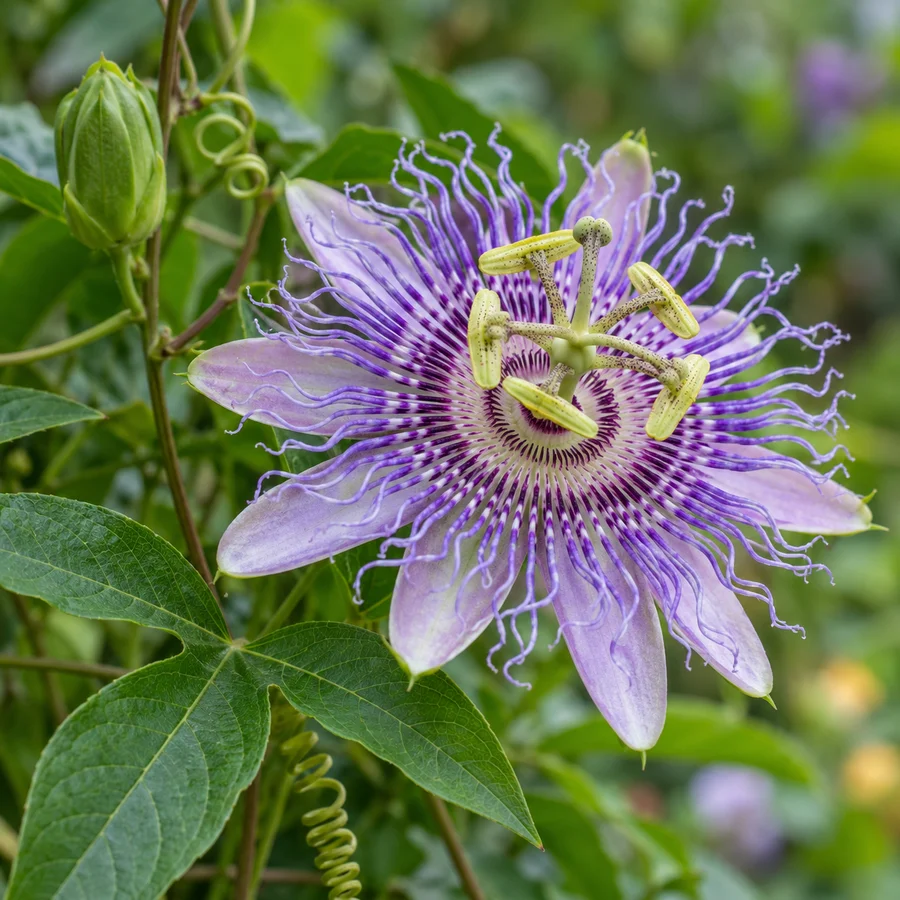
Northern Passionflower (Purple Passionflower)
Passiflora incarnata
Heat-loving perennial vine with stunning purple flowers and an unusual crown of delicate filaments. In warmer CIS regions it can survive as a perennial; in cooler areas it overwinters in a basement or is grown as an annual. Attracts pollinators and serves as a host plant for butterflies. Caution: the leaves, stems and unripe green fruits contain cyanogenic glycosides and are toxic to people and pets — only the pulp of fully ripe fruits is edible.
Stages of growth
Calendar in the garden
How to care
Keep substrate moist but not waterlogged. Use a mister.
- •Scarify seeds with sandpaper to improve germination
- •Soak seeds in warm water for 24 hours
- •Use moist peat substrate or peat–perlite mix
- •Cover container with film to retain moisture
- •Germination at 20–25°C takes 2–4 weeks
Difficulty growing
Requires basic knowledge and regular care.
Growing conditions
Nice neighbors.
Soil preparation
Planting parameters
💡Preparation Tips
- •Dig the bed to a depth of 25-30 cm
- •Add compost or humus (5-10 kg per m²)
- •If necessary, adjust pH with lime or peat
Frequently asked questions(5)
Plant passionflower in open ground after the danger of frost has passed, usually in late April–May (depending on climate zone). In southern CIS regions (Krasnodar region, southern Ukraine), the plant can overwinter in soil with protection; in central regions, it is grown as an annual or dug up as a perennial for winter storage.
Passionflower is propagated from seeds (scarify, soak in warm water) and cuttings (spring or summer, rooted in peat–sand mix at 20–25°C). Root tubers can also be planted if they formed during vegetation.
Lack of blooms is caused by insufficient light (needs minimum 6–8 hours of direct sun), excess nitrogen in soil (promotes leafy growth), young plant age (flowers in year 2–3), or inadequate cold dormancy in winter. Provide full sun, balanced fertilizer (more phosphorus and potassium), and cool winter rest.
In zones 5–6, northern passionflower does not survive exposed ground without protection. In autumn (October), dig up tubers, dry them, and store in a cool cellar (5–10°C) in dry peat or sawdust until spring. Alternatively, bring a potted plant into the cellar and water sparingly. In southern zones (7–8), mulch the base of the plant with 10–15 cm of mulch.
Leaves, stems, and unripe (green) fruits of passionflower contain cyanogenic glycosides and are toxic to humans, cats, dogs, birds, and rodents. Only the flesh of fully ripe, yellow, and slightly wrinkled fruits is edible; it is best not to give to children, and keep the plant away from small children and pets. Risk of poisoning is low from casual contact, but it is safer to keep the plant away from young children and animals prone to chewing plants.
Role in the garden
Benefit information coming soon
Do you like the plant card?
In the application you will receive personal tasks and a plan for the season specifically for your garden.


