
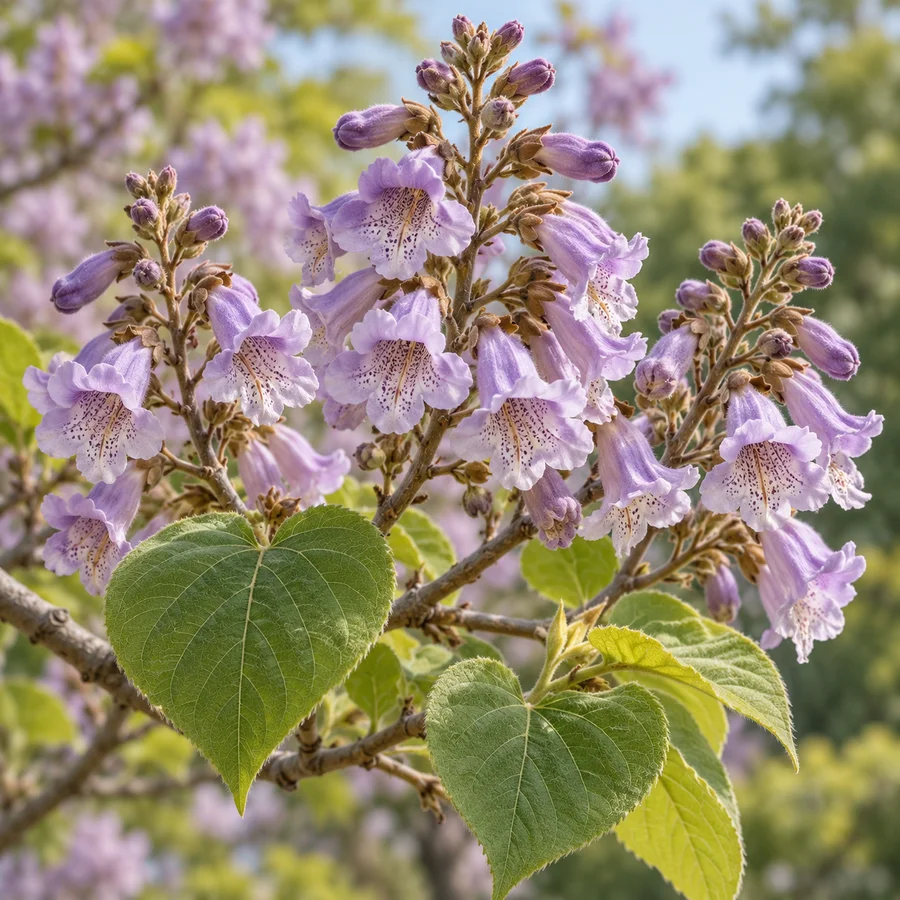
Princess Tree, Foxglove Tree
Paulownia tomentosa
Paulownia tomentosa is a fast-growing ornamental tree (15–20 m tall) with a powerful canopy, large heart-shaped leaves, and beautiful fragrant lilac flowers clustered in panicles. Blooms in spring. In CIS countries it thrives in southern regions; in Ukraine it may overwinter in a sheltered location but often suffers frost damage in severe winters.
Stages of growth
Calendar in the garden
How to care
Once at planting
Compost or manure in planting hole, NPK 10-10-10 for root establishment
Abundant watering for the first 2 weeks (daily or every other day), then transition to moderate watering. Avoid waterlogging.
- •Mulch the root zone with a 5–7 cm layer
- •Install a support stake for wind protection
- •Minimize formative pruning in the first year
Difficulty growing
Requires basic knowledge and regular care.
Growing conditions
Soil preparation
Planting parameters
💡Preparation Tips
- •Dig the bed to a depth of 25-30 cm
- •Add compost or humus (5-10 kg per m²)
- •If necessary, adjust pH with lime or peat
Frequently asked questions(5)
Plant seedlings in spring (March–April) or autumn (October–November) in warm regions. In central climates, spring planting is preferable so the tree has time to establish before cold weather.
Paulownia typically flowers in its 2nd–3rd year. If the tree is young, wait. If older and still not flowering: check that it receives sufficient sunlight (full sun is essential), examine the soil (phosphorus deficiency is possible), and avoid excess nitrogen, which promotes foliage at the expense of flowers.
In southern regions (Crimea, Caucasus, southern Ukraine) it winters well. In central regions, wood may freeze, especially young growth; bark can die back. In the north (above 55° N) it is grown as an annual or in containers indoors for winter. In severe winters, young tree protection is recommended.
By seed (stratify 1–2 months before sowing), green cuttings in summer, or root cuttings from pencil-thickness segments. Seeds are very small and germinate in light at 15–20 °C.
Young trees need formative pruning to develop a strong central leader. Mature trees require sanitary pruning to remove broken and crowding branches in early spring. Avoid heavy pruning, which stimulates excessive shoot formation and weakens crown shape.
Role in the garden
Fast-growing ornamental tree with large heart-shaped leaves and fragrant lilac flowers in spring
*For reference: the plant is grown primarily as an ornamental.
Do you like the plant card?
In the application you will receive personal tasks and a plan for the season specifically for your garden.


