
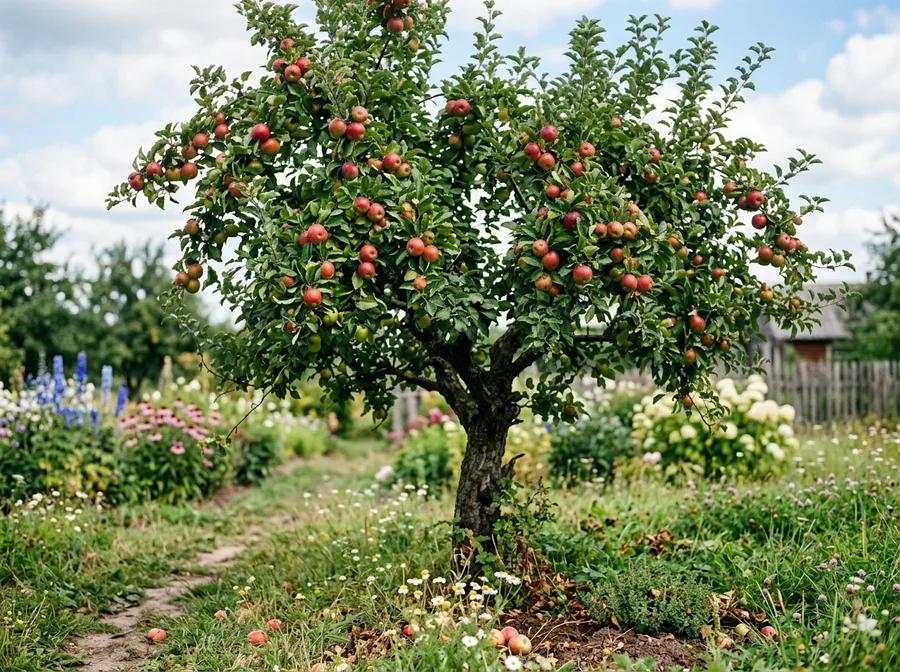
Pear Tree
Pear Tree
The most important fruit crop in the middle zone and south of the CIS. Requires a sunny place, regular pruning and often a pollinator variety; Many varieties are winter-ready and store well.
Stages of growth
Planting calendar
How to care
- •Avoid lowlands and places with stagnant water - pear trees are sensitive to waterlogging
- •Immediately plant 2 varieties with overlapping flowering periods
- •Mulch the trunk circle, but do not sprinkle the neck
Difficulty growing
Requires basic knowledge and regular care.
Growing conditions
Nice neighbors.
Unwanted Neighbors
Soil preparation
Planting parameters
💡Preparation Tips
- •Dig the bed to a depth of 25-30 cm
- •Add compost or humus (5-10 kg per m²)
- •If necessary, adjust pH with lime or peat
Frequently asked questions(3)
Most varieties are partially or completely self-sterile. Plant 1-2 other pear varieties with close flowering nearby; without this, the harvest may be zero.
A common cause is lack of pollination, drought during the flowering period, or excess nitrogen. Also remove some of the flowers in busy years.
Pear is more heat-loving, tolerates dampness and proximity to groundwater worse, and more often suffers from sunburn of leaves in frosty conditions - choose a lighted, but not “scorched” place.
Benefits and nutrition
Pectin and sorbitol improve digestion; potassium and copper are good for the heart; Vitamin C and flavonoids support immunity.
*The information is for informational purposes only and does not constitute medical advice.
Nutritional value
(per 100 g)| Calories | 57 kcal | 3% |
| Fiber | 3 g | 12% |
| Vitamin C | 4 mg | 4% |
% of daily value
Do you like the plant card?
In the application you will receive personal tasks and a plan for the season specifically for your garden.