
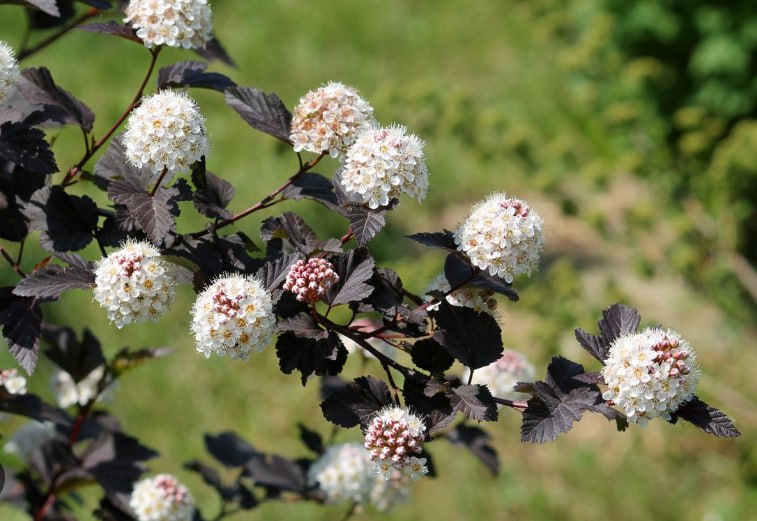
Ninebark
Physocarpus
A deciduous ornamental shrub with small flowers and distinctive inflated seed pods. Known for rapid growth, low maintenance, and attractive foliage that can be green, yellow, or purple depending on the cultivar.
Stages of growth
Calendar in the garden
How to care
Planting in prepared hole with enriched soil
Regular watering to maintain moisture, avoiding waterlogging
- •Mulch the root circle with a 5-7 cm layer
- •If planting in spring, shade from direct sun for the first 2 weeks
Difficulty growing
Suitable for beginners. Minimal maintenance, error-resistant.
Growing conditions
Soil preparation
Planting parameters
💡Preparation Tips
- •Dig the bed to a depth of 25-30 cm
- •Add compost or humus (5-10 kg per m²)
- •If necessary, adjust pH with lime or peat
Frequently asked questions(5)
Ninebark can be planted in spring (April) and fall (October-November). Fall planting is actually preferable — the shrub establishes better. Choose a location with good sun and well-drained soil.
In the first month after planting, water weekly and abundantly. Later, during dry periods, one watering per week to 15-20 cm depth is sufficient. Adult shrubs are drought-tolerant and need watering only in severe heat.
Yes, pruning is important. In spring (March-April), remove frost-damaged and broken branches. In summer or early fall (August-September), do formative pruning to shape the shrub. Ninebark tolerates pruning well and regrows quickly.
Popular varieties: 'Diabolo' (purple foliage), 'Aureus' (yellow leaves), 'Red Queen' (red foliage). All are unpretentious and beautiful. The choice depends on the leaf color you want in your garden.
Ninebark is frost-hardy (to -40°) and overwinters without protection. In severe winters, shoot tips may freeze, but the shrub recovers quickly. No special protective measures required.
Role in the garden
Benefit information coming soon
Do you like the plant card?
In the application you will receive personal tasks and a plan for the season specifically for your garden.