
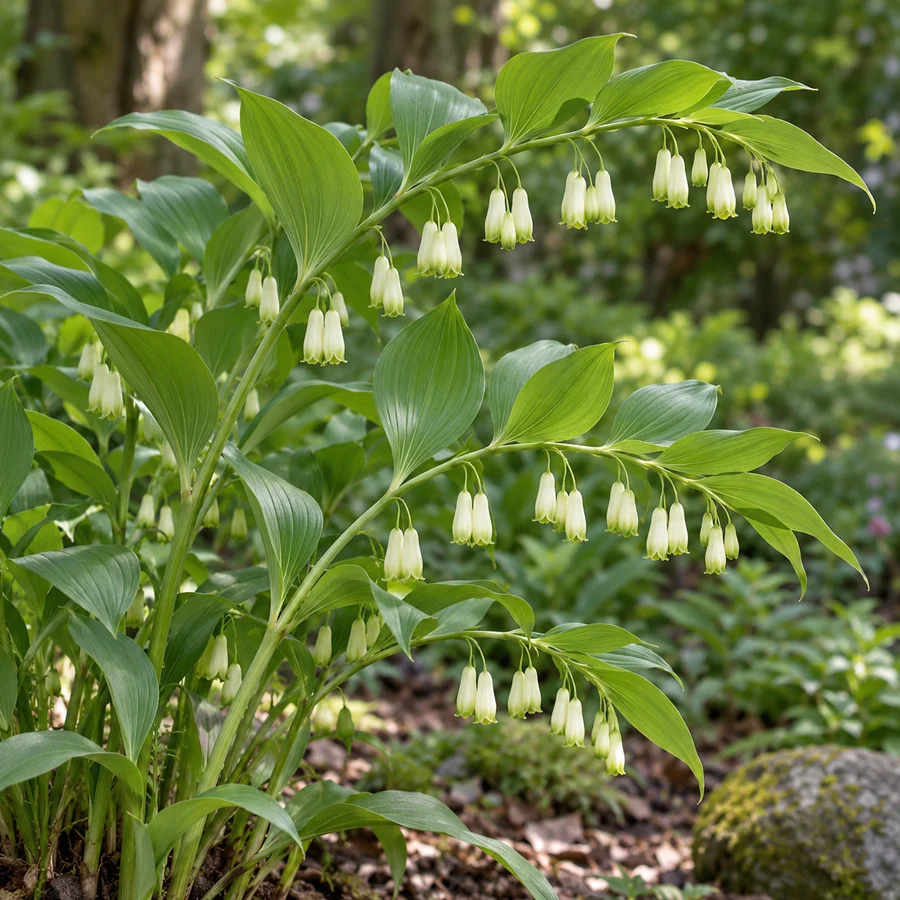
Solomon's Seal
Polygonatum
A perennial with beautifully arching stems and creamy-white bell-shaped flowers hanging beneath the leaves. Shade-tolerant, undemanding, ideal for shaded corners of the garden and under trees. Dark blue berries are decorative in autumn. Warning: all parts of the plant are toxic, especially the berries and rhizomes (saponins) — never eat them, and keep the plant away from children and pets.
Stages of growth
Calendar in the garden
How to care
Water abundantly after planting, then maintain consistent soil moisture
- •Plant rhizomes horizontally at a depth of 5-7 cm
- •Add compost and sand to the planting hole for drainage
- •Choose a location in partial shade or shade
Difficulty growing
Suitable for beginners. Minimal maintenance, error-resistant.
Growing conditions
Nice neighbors.
Soil preparation
Planting parameters
💡Preparation Tips
- •Dig the bed to a depth of 25-30 cm
- •Add compost or humus (5-10 kg per m²)
- •If necessary, adjust pH with lime or peat
Frequently asked questions(5)
Solomon's seal is a forest plant accustomed to growing beneath the canopy of trees. In full sun, leaves often scorch and dry out. In partial shade and shade it develops best, creating a beautiful arching form.
Division is recommended every 4-5 years. The optimal time is early autumn (August-September) or early spring (April). This rejuvenates the plant and prevents overcrowding.
Rhizomes and berries are toxic if ingested and contain saponins. Keep the plant in locations inaccessible to small children and pets. Ingestion will cause nausea and diarrhea.
Best companions are other shade-tolerant plants: hosta, fern, astilbe, pulmonaria, woodland strawberry, hellebore. They create beautiful compositions in shaded garden corners.
On fertile, moist soil, stems are usually flexible and gracefully arch on their own. On poor soil or with insufficient light, light staking or a single stake may be needed for support.
Role in the garden
Decorative shade plant with elegant arching form and fragrant white flowers; dark blue berries provide autumn interest
*For reference: the plant is grown primarily as an ornamental.
Do you like the plant card?
In the application you will receive personal tasks and a plan for the season specifically for your garden.


