
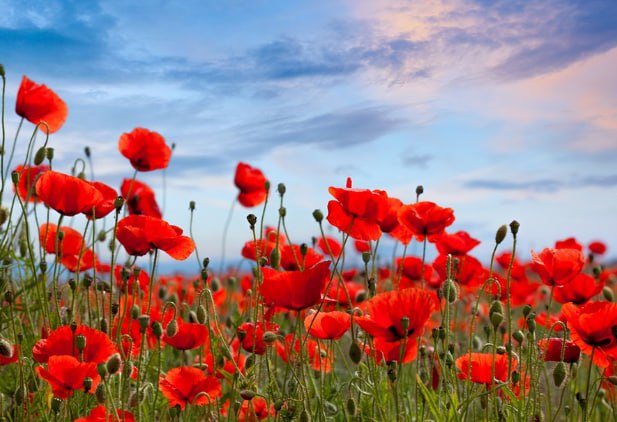
Common Poppy
Papaver rhoeas
Annual poppy with bright red, pink or white flowers. Unpretentious, grows quickly and blooms abundantly throughout summer. Attracts pollinators and looks great in mixed borders and wild gardens.
Stages of growth
Calendar in the garden
How to care
не требуется
Keep soil moist until seedlings emerge
- •Sow seeds in autumn or early spring
- •Seeds do not need to be buried in soil — they require light to germinate
- •Gently press seeds into the ground
Difficulty growing
Suitable for beginners. Minimal maintenance, error-resistant.
Growing conditions
Nice neighbors.
Soil preparation
Planting parameters
💡Preparation Tips
- •Dig the bed to a depth of 25-30 cm
- •Add compost or humus (5-10 kg per m²)
- •If necessary, adjust pH with lime or peat
Frequently asked questions(6)
You can sow poppy in spring (March-May) or autumn (September-October). Autumn sowing is often preferred as poppy germinates in cold weather. Seeds germinate at a temperature of 5-15°C.
Poppy prefers full sun (minimum 6 hours per day) and well-drained soil. The plant is unpretentious and grows on any soil except waterlogged ones. Optimal pH: 6.0-7.5.
Poppy is drought-tolerant. Water moderately 1-2 times per week depending on the weather. In a rainy summer, additional watering may not be necessary. Overwatering leads to root rot.
Poppy does not require frequent feeding. On poor soils, apply complete fertilizer once at the beginning of vegetation. For abundant flowering, fertilize with potassium fertilizer once every 2-3 weeks.
Regularly remove spent flowers — this promotes the formation of new buds. If you allow the plant to set seeds, flowering will stop. Remove spent flowers 2-3 times per week.
Common poppy (Papaver rhoeas) is not poisonous, but opium poppy (Papaver somniferum) is prohibited in some countries. Make sure you are planting the correct species. Common poppy is completely safe.
Role in the garden
Benefit information coming soon
Do you like the plant card?
In the application you will receive personal tasks and a plan for the season specifically for your garden.