
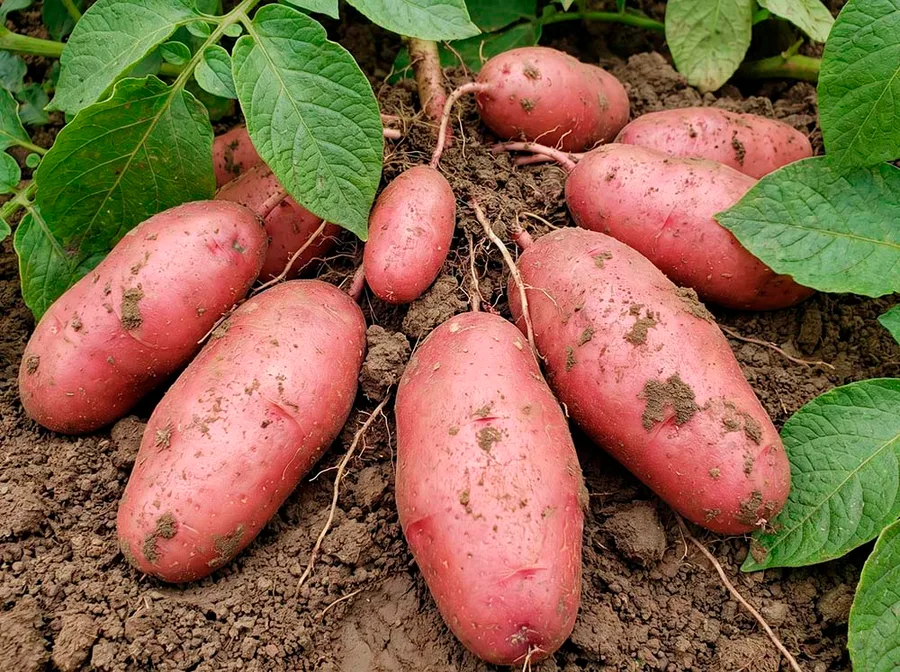
Potato Asterix
Solanum tuberosum 'Asterix'
A mid-late elite variety with red skin and yellow flesh. Requires additional irrigation, but is resistant to golden nematode, potato blight and tuber blight. Great for frying and boiling.
Stages of growth
Planting calendar
How to care
- •Start vernalization 30–35 days before planting in the ground (April).
- •Use healthy planting material without signs of disease.
Difficulty growing
Requires basic knowledge and regular care.
Growing conditions
Nice neighbors.
Unwanted Neighbors
Soil preparation
Planting parameters
💡Preparation Tips
- •Dig the bed to a depth of 25-30 cm
- •Add compost or humus (5-10 kg per m²)
- •If necessary, adjust pH with lime or peat
Frequently asked questions(5)
Yes, this is one of the best varieties for frying and boiling: good taste, the pulp does not darken during processing.
"Asterix" is highly resistant to golden nematode, potato cancer and tuber blight.
Most often due to fresh manure (rapid growth of tops to the detriment of tubers), shade or excess nitrogen in the soil.
Vernalization in April; planting at the end of the first - beginning of the second decade of May; cleaning - mid-September.
pH 5.5–6.5; Loamy, sandy loam or peat soil is suitable. Need full sun.
Benefits and nutrition
Starch, proteins, vitamins C, B1, B2, PP, iron, potassium, calcium. Useful for gastritis, peptic ulcers and anemia (as part of the diet). The yellow pulp is rich in carotene.
*The information is for informational purposes only and does not constitute medical advice.
Nutritional value
(per 100 g)| Calories | ~77 kcal | per 100 g |
| Carbohydrates | ~16.3 g | per 100 g |
| Protein | ~2.0 g | per 100 g |
| Vitamin C | ~20 mg | depends on the season |
| Potassium | ~400 mg | per 100 g |
% of daily value
Do you like the plant card?
In the application you will receive personal tasks and a plan for the season specifically for your garden.