
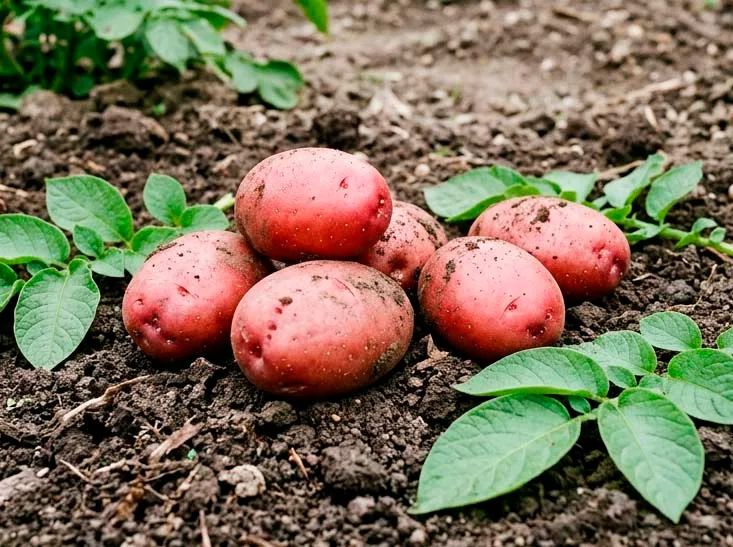
Potato Desiree
Solanum tuberosum 'Desiree'
A mid-late elite variety with red skin and yellow flesh. It is unpretentious to the soil, tolerates drought and heat well. Resistant to mechanical damage; When storing, it is better to cut off the tops and burn them.
Stages of growth
Planting calendar
How to care
- •You can add ash and superphosphate to each well to start feeding.
Difficulty growing
Suitable for beginners. Minimal maintenance, error-resistant.
Growing conditions
Nice neighbors.
Unwanted Neighbors
Soil preparation
Planting parameters
💡Preparation Tips
- •Dig the bed to a depth of 25-30 cm
- •Add compost or humus (5-10 kg per m²)
- •If necessary, adjust pH with lime or peat
Frequently asked questions(4)
Yes: the variety is unpretentious and gives consistently good results on different types of soil.
Relatively resistant to late blight; to ordinary scab - moderately susceptible. Do not apply fresh manure.
Yes: popular for its good drought and heat resistance.
Planting - end of the first - beginning of the second decade of May; for storage - mid-September after the tops have dried.
Benefits and nutrition
The yellow pulp is rich in carotene (provitamin A), vitamins B and C. A source of carbohydrates and potassium; Moderate consumption is compatible with caring for the cardiovascular system within the diet.
*The information is for informational purposes only and does not constitute medical advice.
Nutritional value
(per 100 g)| Calories | ~77 kcal | per 100 g |
| Carbohydrates | ~16.3 g | per 100 g |
| Protein | ~2.0 g | per 100 g |
| Vitamin C | ~20 mg | per 100 g |
| Potassium | ~400 mg | per 100 g |
% of daily value
Do you like the plant card?
In the application you will receive personal tasks and a plan for the season specifically for your garden.