
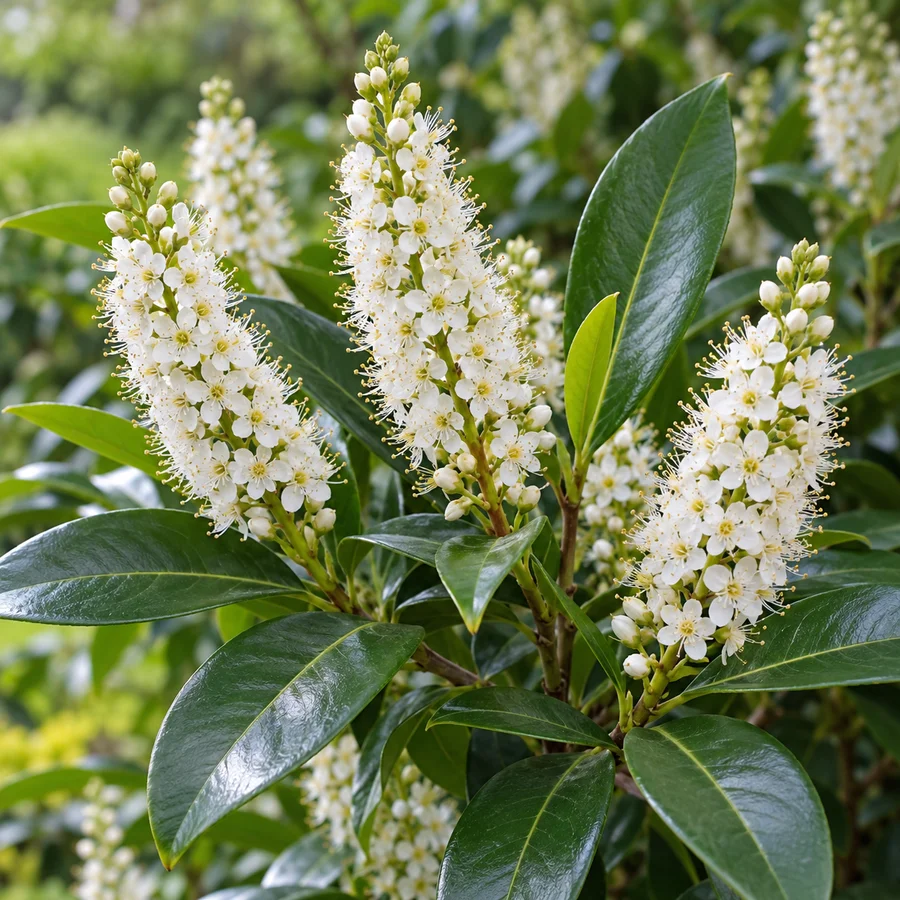
Cherry Laurel
Prunus laurocerasus
Evergreen shrub with glossy, leathery leaves and small, fragrant white flowers arranged in spike-like flower clusters. A hardy, fast-growing plant ideal for hedges and landscape design. In cooler regions, winter protection may be needed; in warmer zones, it thrives as a full garden shrub. Warning: all parts of cherry laurel — leaves, bark, flowers, fruit and especially the seed kernels — contain cyanogenic glycosides and release hydrogen cyanide when chewed; the plant is toxic to people, cats, dogs and horses, must not be eaten and should be kept away from children and pets.
Stages of growth
Calendar in the garden
How to care
Not necessary
Abundant watering on planting day; maintain soil moisture for a week
- •Dig a planting hole 1.5–2 times larger than the root ball
- •Add compost or well-rotted manure to the hole
- •Carefully remove the plant from the pot without damaging roots
- •Water thoroughly after planting
Difficulty growing
Suitable for beginners. Minimal maintenance, error-resistant.
Growing conditions
Soil preparation
Planting parameters
💡Preparation Tips
- •Dig the bed to a depth of 25-30 cm
- •Add compost or humus (5-10 kg per m²)
- •If necessary, adjust pH with lime or peat
Frequently asked questions(5)
Plant cherry laurel in spring (March–April) or autumn (October–November) in well-drained soil in sun or partial shade. Dig a hole 1.5–2 times larger than the root ball, add compost, and water abundantly. Space shrubs 1.5–2 m apart for hedging.
Yes, regular pruning is essential to maintain a compact form and stimulate branching. Prune in late spring (May–June) or late summer (August). Remove dead, damaged, and crossing branches. For hedges, prune 2–3 times per season. Wear gloves: crushed leaves and stems release hydrocyanic acid, so remove clippings immediately and keep them away from children and animals. Do not feed clippings to livestock or burn indoors.
Cherry laurel is hardy in zones 6–9. In colder regions, young plants should be protected with horticultural fleece or burlap. Adult shrubs typically withstand frost down to -15°, though severe winters may cause dieback of shoot tips.
Main pests include aphids, spider mites, and scale insects. Diseases include grey mould (in high humidity) and leaf spots. Prevention: ensure good drainage, adequate air circulation, and timely pruning. Treat infestations with appropriate insecticides or fungicides.
Yes, cherry laurel is an excellent choice for hedging thanks to its fast growth, dense foliage, and evergreen nature. Regular pruning (2–3 times per season) helps maintain a compact form and attractive appearance.
Role in the garden
Benefit information coming soon
Do you like the plant card?
In the application you will receive personal tasks and a plan for the season specifically for your garden.


