
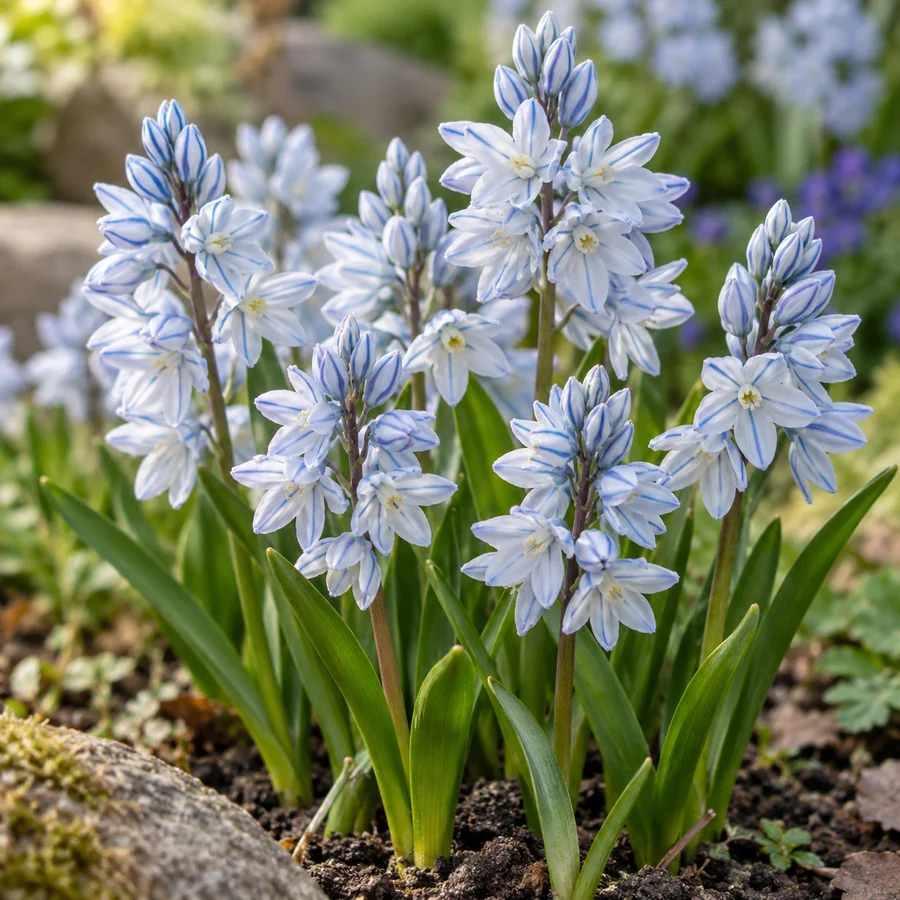
Striped squill, Pushkinia
Pushkinia scilloides
An elegant bulbous flower up to 20 cm tall with pale blue-white flowers decorated with darker blue stripes. Blooms in April–May and is ideal for alpine gardens, rock gardens and border plantings. Very undemanding and frost-hardy variety. Warning: Pushkinia is not edible — its bulbs, leaves and flowers contain saponins and calcium oxalates and cause burning of the mouth, nausea, vomiting and diarrhoea if eaten by people or pets; keep bulbs away from children, cats and dogs, and wear gloves when dividing clumps.
Stages of growth
Calendar in the garden
How to care
Water moderately after planting, keeping soil lightly moist but not waterlogged. In dry autumns, water once weekly.
- •Plant bulbs in well-prepared, loosened soil
- •Ensure good drainage to prevent waterlogging
- •Mulch with a 5 cm layer of leaves or bark for insulation
Difficulty growing
Suitable for beginners. Minimal maintenance, error-resistant.
Growing conditions
Soil preparation
Planting parameters
💡Preparation Tips
- •Dig the bed to a depth of 25-30 cm
- •Add compost or humus (5-10 kg per m²)
- •If necessary, adjust pH with lime or peat
Frequently asked questions(5)
Plant pushkinia bulbs in autumn from September through November in mid-climate zones. Timing shifts south (September–October) or north (October–early November). The key is ensuring bulbs establish roots before soil freezes (usually requiring 3–4 weeks at soil temperatures of +10…+15°C).
Plant pushkinia bulbs at a depth of 8–10 cm (roughly three times the bulb's height). Space bulbs 10–15 cm apart. Planting too shallow causes drying or frost heave; planting too deep results in slow sprouting and possible rot.
Pushkinia is very hardy (to –30°C) and requires no protection in most regions. However, in low-snow winters, a 5–10 cm layer of mulch from leaves, peat or bark is beneficial. In southern regions, permanent mulching may cause waterlogging.
Main causes include incorrect planting depth (too deep), insufficient light (needs sun or partial shade), or excessive moisture in summer after flowering (the bulb must dry out). Disease from waterlogged soil is also possible.
Flowering typically lasts 2–3 weeks depending on weather and variety. In cool springs it may extend a week longer. After flowering, foliage dies back relatively quickly (by late May or early June in mid-climate zones).
Role in the garden
Benefit information coming soon
Do you like the plant card?
In the application you will receive personal tasks and a plan for the season specifically for your garden.


