
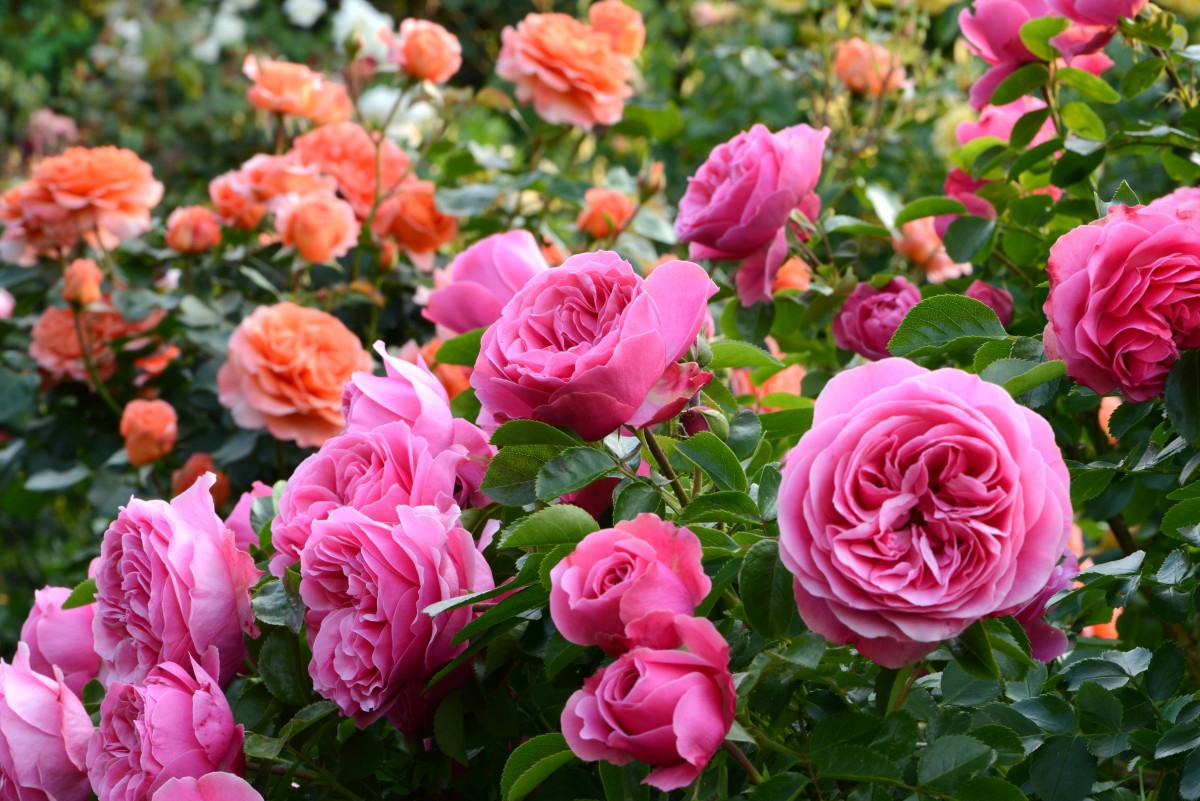
Floribunda Rose
Rosa × floribunda
Floribunda rose is a decorative shrub with numerous flowers grouped in clusters. It blooms continuously from June to the first frost. Perfect for decorating flower beds, borders and hedges in temperate regions.
Stages of growth
Calendar in the garden
How to care
Plant the seedling at the same depth it was growing in the container. Root collar must be at soil level. Compact the soil and water abundantly.
Regular watering once every 2-3 days, keep soil moist but not waterlogged. Avoid drying out.
- •Mulch the base of the bush with 5-7 cm of compost or peat to retain moisture
- •Shade young bush from direct sun for the first few days if planting in spring
- •Avoid fertilizing for the first 2-3 weeks after planting
Difficulty growing
Requires basic knowledge and regular care.
Growing conditions
Nice neighbors.
Soil preparation
Planting parameters
💡Preparation Tips
- •Dig the bed to a depth of 25-30 cm
- •Add compost or humus (5-10 kg per m²)
- •If necessary, adjust pH with lime or peat
Frequently asked questions(5)
The best time to plant in CIS countries is early spring (March-April) and fall (September-October, no later than mid-October). Spring planting is preferable because seedlings have time to root before winter. Container roses can be planted from May to September.
During the growing season, water once every 3-4 days, in hot weather - every other day. During blooming, more frequent watering is needed - 3-4 times a week. Water at the root in the morning, avoid wetting the leaves. The soil should be moist at 15-20 cm deep, but not waterlogged.
Use specialized rose fertilizers with mineral composition. In spring and during shoot growth (May-June), feed with nitrogen fertilizers (N:P:K 20:10:10). In summer during blooming, switch to phosphorus-potassium fertilizers (5:10:10). Feed every 2 weeks during growth and every 10-14 days during blooming. Stop nitrogen feeding from late August.
Floribunda rose in zones 4-6 requires winter protection. Mound the base of the bush with 20-30 cm of dry soil, peat or compost. In severe winters, cover the bush with spunbond (agrotextile) or evergreen branches. After snowmelt, gradually expose the plant and remove mounding. In southern regions (zone 7-9), protection is often unnecessary, but mounding is still recommended.
Common problems: aphids, spider mites, powdery mildew, black spot. Causes: crowded plantings, poor air circulation, excessive moisture, watering schedule violations. Prevention: thin the bush during pruning, avoid watering leaves in the evening, remove damaged foliage. If pests are found, use insecticides (Phytoverm, Aktara); for diseases use fungicides (Skor, Horus).
Role in the garden
Benefit information coming soon
Do you like the plant card?
In the application you will receive personal tasks and a plan for the season specifically for your garden.


