
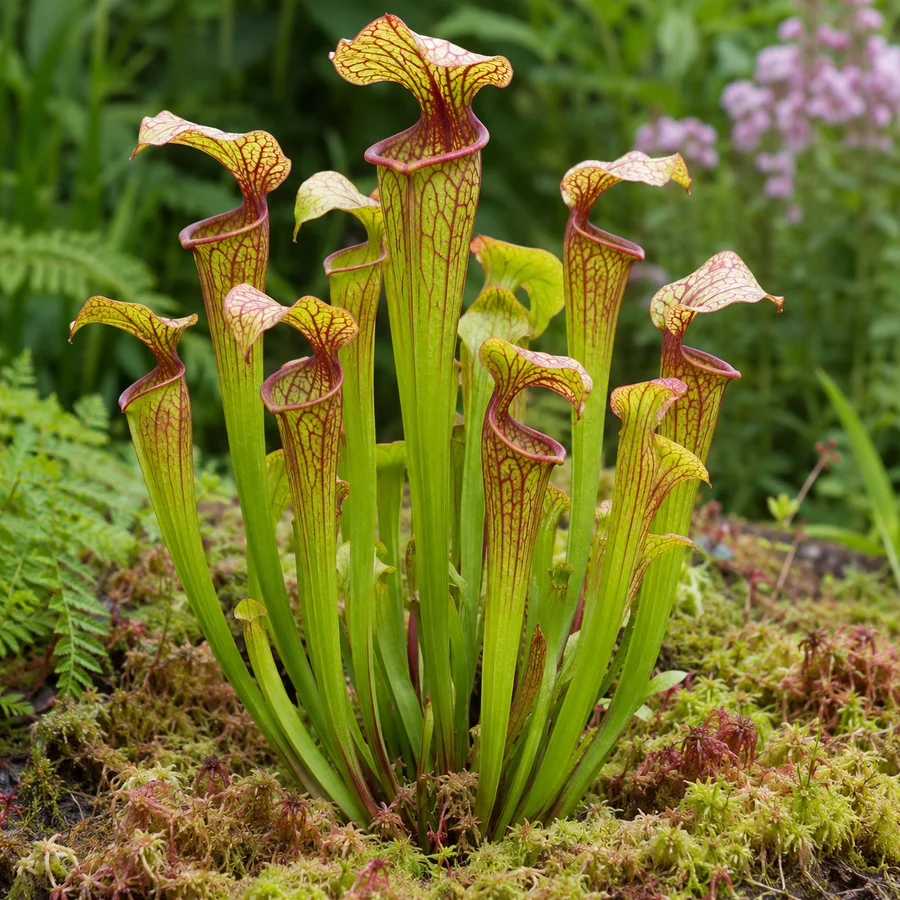
Pitcher plant
Sarracenia
Carnivorous plant with pitcher-shaped leaves that trap insects. Grown in open ground on wet sites or pot culture with constantly moist soil. Requires cold winter dormancy and high air humidity. The plant is not edible: pitchers and flowers must not be eaten — traces of the alkaloid coniine have been found in the nectar of some species.
Stages of growth
Calendar in the garden
How to care
Abundant watering with soft water (rainwater or distilled). Soil should always be moist, but not waterlogged.
- •Repot into fresh substrate in early spring
- •Gradually increase light and temperature
- •Check for pests and diseases
Difficulty growing
For experienced gardeners. Requires special conditions and attention.
Growing conditions
Nice neighbors.
Soil preparation
Planting parameters
💡Preparation Tips
- •Dig the bed to a depth of 25-30 cm
- •Add compost or humus (5-10 kg per m²)
- •If necessary, adjust pH with lime or peat
Frequently asked questions(5)
There can be several reasons: insufficient light (needs 12+ hours), too warm dormancy (Sarracenia requires a cold period of 2–3 months at 5–10°C), incorrect humidity (below 50%), or poor water quality (use only rainwater or distilled water). Also check for spider mites.
Only soft water: rainwater, distilled water, or water passed through reverse osmosis. Tap water with lime and chlorine weakens the plant and causes pitcher wilting.
In open ground, Sarracenia overwinters in regions with mild winters (hardiness zones 6–9), but requires reliable protection. In harsh climates (zones 3–5), grow it in pots and move indoors for winter to an unheated basement at 5–10°C with no watering or minimal watering once a month.
No. Sarracenia traps insects naturally thanks to its aroma and slippery pitcher walls. In the open air, its hunting instinct works automatically. Indoors, no additional feeding is needed—this can lead to rot.
A mixture of acidic sphagnum peat (base), sphagnum moss, perlite, and sand in a 2:2:1:1 ratio. Drainage is essential—use clay pellets at the bottom of the pot. pH should be 4.0–5.5.
Role in the garden
Benefit information coming soon
Do you like the plant card?
In the application you will receive personal tasks and a plan for the season specifically for your garden.


