
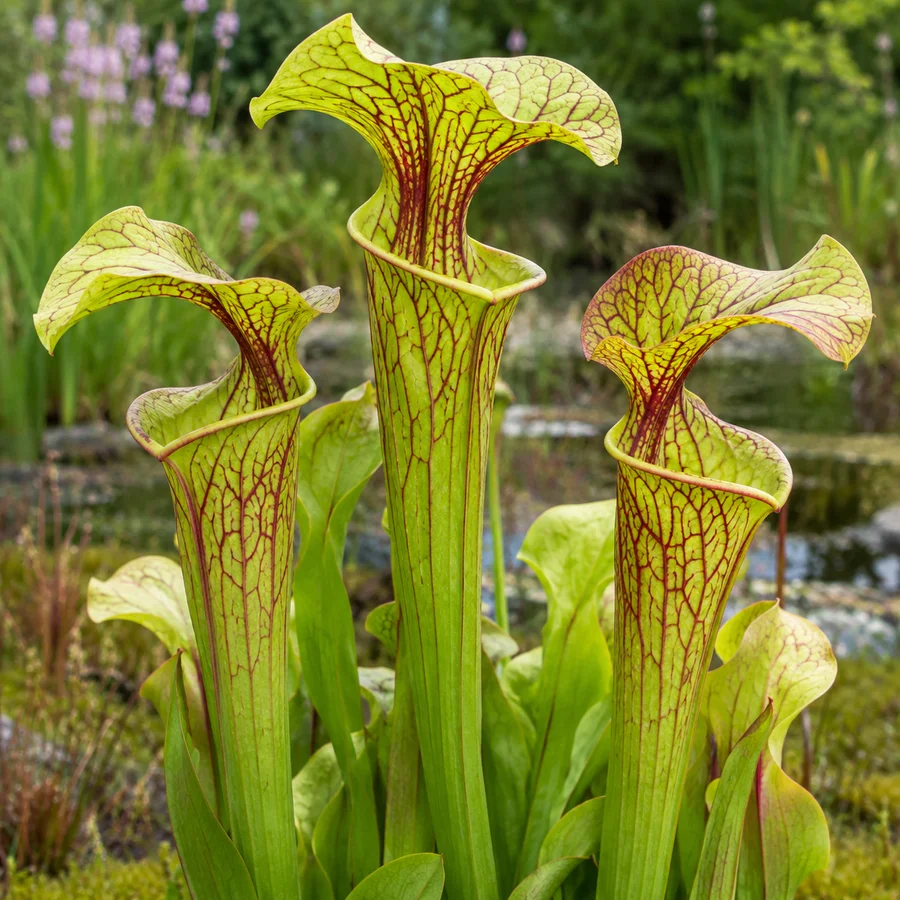
Pitcher plant
Sarracenia
Carnivorous plant with pitcher-shaped leaves in red, yellow, or purple. Traps and digests insects. Requires acidic soil, high air humidity, and a winter dormancy period. Ideal for moist garden locations or cool greenhouses. Not edible: the pitchers hold digestive fluid with enzymes and insects, and some species contain the alkaloid coniine — keep the plant away from children and pets.
Stages of growth
Calendar in the garden
How to care
Transplant into a pot with drainage holes, fill with acidic peat-perlite substrate
High humidity constantly; substrate always moist but not waterlogged
- •Use only distilled or rainwater
- •Do not fertilize for the first 2-3 weeks
- •Place in a bright location without direct sun
Difficulty growing
For experienced gardeners. Requires special conditions and attention.
Growing conditions
Soil preparation
Planting parameters
💡Preparation Tips
- •Dig the bed to a depth of 25-30 cm
- •Add compost or humus (5-10 kg per m²)
- •If necessary, adjust pH with lime or peat
Frequently asked questions(5)
This is normal at the end of the season. Old pitchers die off, new ones grow in spring. If they turned black in the middle of the season — possibly too low humidity or dry air. Maintain 70-90% humidity and water only with soft water.
Only distilled, rainwater, or well-settled water. Chlorine and mineral salts cause blackening and plant death. If using tap water — let it sit for 2-3 days in an open container before watering.
Yes, it is critically important. From November to February the plant should be at a temperature of 5-10°C in dormancy. Without wintering, pitcher plant may not bloom the following year. In open ground, frost protection is required (thick layer of mulch, covering material).
Once a month place a tiny piece (no bigger than a pin head) of raw meat or fish inside the trap. You can use special fertilizers for carnivorous plants. Don't overcomplicate it — pitcher plant can go without additional feeding for a long time.
Pitcher plant is not listed by ASPCA as toxic to cats and dogs, but it cannot be considered completely safe: some species (for example, Sarracenia flava) contain the alkaloid coniine in nectar and tissues, and inside the pitchers there is digestive fluid with enzymes and decomposing insects. Ingestion of leaves or fluid may cause mouth irritation, drooling, vomiting, and diarrhea. Do not let children and animals chew on pitchers and keep the plant on an inaccessible shelf.
Role in the garden
Benefit information coming soon
Do you like the plant card?
In the application you will receive personal tasks and a plan for the season specifically for your garden.


