
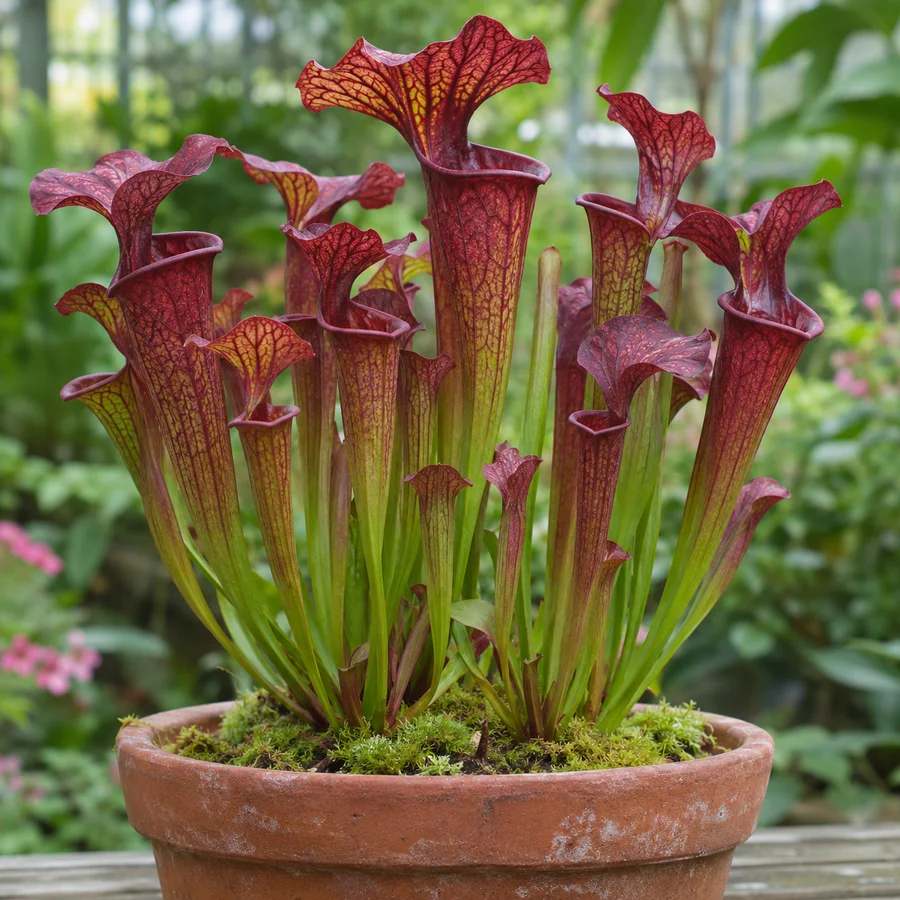
Pitcher Plant
Sarracenia
Exotic carnivorous plant with pitcher-shaped trap leaves. Attracts insects with sweet nectar and digestive enzymes inside the pitcher. Requires moist acidic soil, bright light, and cold winter dormancy. Popular plant for greenhouses and specialized collections. The plant is not edible: the pitchers hold digestive fluid and the nectar of some species contains traces of the alkaloid coniine — keep it away from children and pets.
Stages of growth
Calendar in the garden
How to care
Plant in specialized carnivorous plant substrate at the depth of the rhizome
Not required
Keep substrate constantly moist. Use only distilled or rainwater. Do not allow drying out.
- •Place the plant in a bright location for acclimation
- •Check air humidity (should be 60-80%)
- •Isolate from other plants for the first two weeks
Difficulty growing
For experienced gardeners. Requires special conditions and attention.
Growing conditions
Soil preparation
Planting parameters
💡Preparation Tips
- •Dig the bed to a depth of 25-30 cm
- •Add compost or humus (5-10 kg per m²)
- •If necessary, adjust pH with lime or peat
Frequently asked questions(5)
The main reason is insufficient air humidity or dry air from heating. Pitcher plants need 60-80% humidity. Also check if you are using soft water (distilled or rainwater) — hard water kills the plant. Ensure that watering is regular and the substrate stays constantly moist.
Yes, this is critical. Most pitcher plant species require cold dormancy (5-15°C) for 2-3 months. Without this, the plant will weaken and may die. In nature, they overwinter in ice-covered swamps. Provide a cold location (basement, cold greenhouse) or place near an unheated window.
Only distilled, deionized, or rainwater. Regular tap water contains salts and chlorine, to which pitcher plants are very sensitive. Hard water leads to plant death. This point is one of the most important for success.
Theoretically yes, but it is very difficult. You need to provide: (1) minimum 6 hours of bright light; (2) humidity of 60-80% (use water trays, misting); (3) cold dormancy; (4) only soft water; (5) good drainage. It is recommended to grow in a greenhouse or specialized terrarium for carnivorous plants.
Repot annually in early spring (March-April), before active growth begins. Use fresh specialized substrate (sphagnum peat + sphagnum + perlite). When repotting, carefully divide the rhizome if it has spread.
Role in the garden
Exotic carnivorous plant with pitcher-shaped trap leaves that attract insects with sweet nectar and digestive enzymes inside the pitcher. Requires moist acidic soil, bright location, and cold dormancy. Popular plant for greenhouses and specialized collections. Not used for food: the pitchers contain digestive juice, and nectar of some species contains traces of the alkaloid coniine — keep the plant away from children and pets.
*For reference: the plant is grown primarily as an ornamental.
Do you like the plant card?
In the application you will receive personal tasks and a plan for the season specifically for your garden.


