
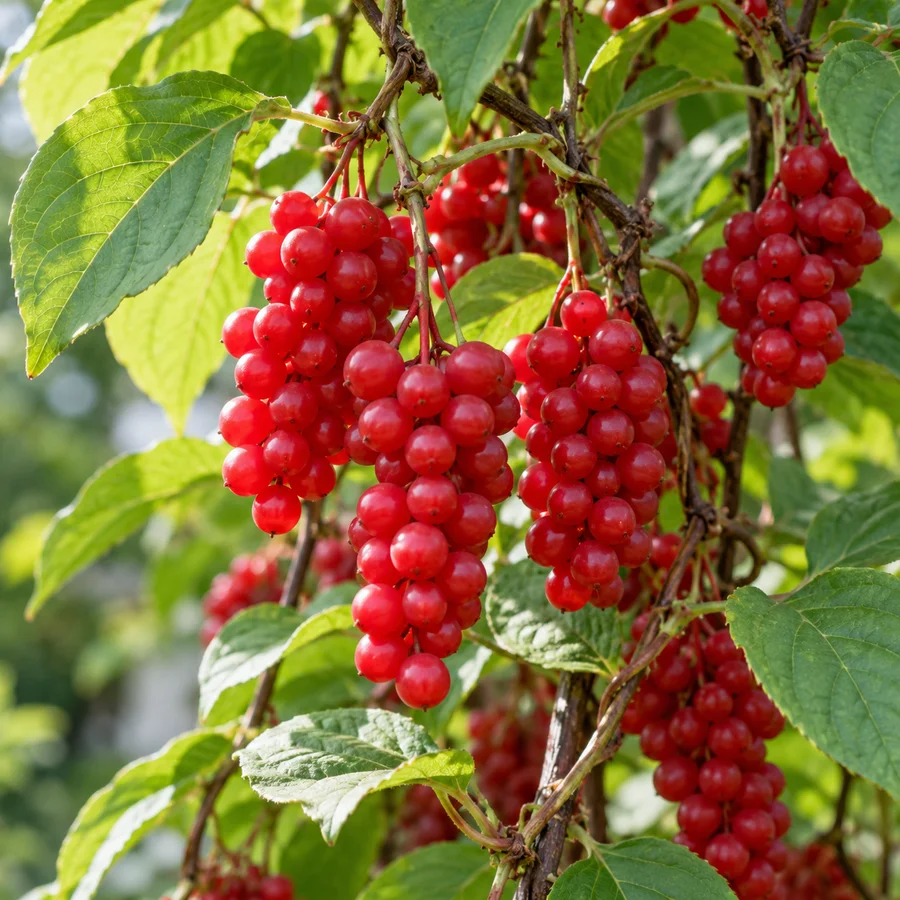
Chinese magnolia vine
Schisandra chinensis
A perennial vine with red berries and lemony aroma. Grows unpretentiously on supports, hardy in the temperate zone of the CIS. Berries are used fresh, in tea, and in traditional medicine. Note: the berries and especially the seeds are a powerful tonic adaptogen — eat only small amounts; they are contraindicated for children, pregnant and nursing women and in cases of hypertension, insomnia, epilepsy or heart disease, medicinal use only with a doctor's approval, and do not give them to pets.
Stages of growth
Planting calendar
How to care
Abundant watering immediately after planting and daily for the first 2 weeks
- •Plant in permanent location in spring (April–May) or fall (September–October)
- •Prepare a support or trellis 2–2.5 m high
- •Add humus and compost to the planting hole
- •Mulch the root zone with peat or sawdust 5 cm deep
Difficulty growing
Suitable for beginners. Minimal maintenance, error-resistant.
Growing conditions
Nice neighbors.
Soil preparation
Planting parameters
💡Preparation Tips
- •Dig the bed to a depth of 25-30 cm
- •Add compost or humus (5-10 kg per m²)
- •If necessary, adjust pH with lime or peat
Frequently asked questions(5)
Yes, schisandra is hardy to −30°C. However, young plants (under 3–4 years old) may freeze above the snow line in severe winters. Therefore, cover side shoots with spruce branches or non-woven fabric for the first 2–3 years. Mature plants usually overwinter without protection, but tops may freeze in the harshest winters.
The main reason is lack of pollination due to absence of male or female plant. Poor fruiting can also result from improper care (excess moisture, insufficient nutrition, overgrown bush). Check if there is enough light and feed with phosphorus-potassium fertilizer during flowering.
In summer (June–July), take young green cuttings (7–10 cm) with 2–3 leaves and place in water with rooting hormone added. When roots appear (2–3 weeks), plant in a pot with moist peat. You can also divide the bush in spring or fall, and sow seeds (requires 3–4 month stratification).
Spider mite (in heat and dryness), aphids, sawfly. With overwatering, fungal diseases are possible (powdery mildew, leafroller). Prevention: soil loosening, removal of fallen leaves, spraying with Bordeaux mixture in spring and fall. Use insecticides if necessary.
Harvest in late August–early September when berries turn bright red and smell like lemon. Pick entire bunches, not individual berries — they store better. Use fresh, in tea, dried, or process into juice. Fresh berries store in refrigerator for 2–3 weeks. Eat them in small amounts: schisandra is a powerful tonic and raises blood pressure; contraindicated for children, pregnant and nursing women, and those with hypertension, insomnia, epilepsy or heart disease; medicinal use only after consulting a doctor; do not give to pets.
Benefits and nutrition
Red berries with lemony aroma used fresh, in tea, and traditional medicine; hardy ornamental vine
*The information is for informational purposes only and does not constitute medical advice.
Do you like the plant card?
In the application you will receive personal tasks and a plan for the season specifically for your garden.


