
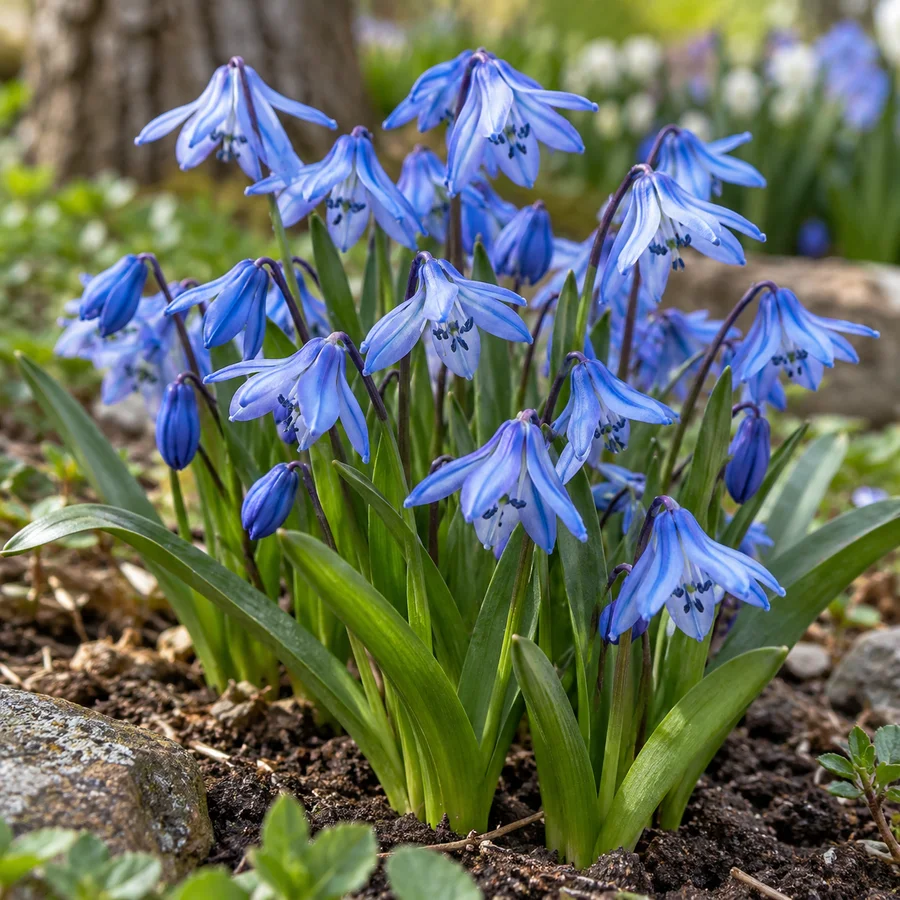
Squill
Scilla
Early-flowering bulbous plant with delicate blue, pale blue or white flowers appearing in early spring. Undemanding, cold-hardy, and excellent for naturalizing in lawns and rock gardens. Warning: all parts of the plant, especially the bulbs, are poisonous — they contain cardiac glycosides and saponins; never eat them and keep the plant away from children, cats, dogs and other animals.
Stages of growth
Calendar in the garden
How to care
Storage in dry form until planting
Not required
Do not water. Store bulbs in a dry, cool place.
- •Select firm, healthy bulbs without damage or signs of rot
- •Store at a temperature of 15–20°C in a well-ventilated space
Difficulty growing
Suitable for beginners. Minimal maintenance, error-resistant.
Growing conditions
Nice neighbors.
Soil preparation
Planting parameters
💡Preparation Tips
- •Dig the bed to a depth of 25-30 cm
- •Add compost or humus (5-10 kg per m²)
- •If necessary, adjust pH with lime or peat
Frequently asked questions(5)
Plant bulbs in September–October in temperate climates, allowing time for rooting before frost. In southern regions, you can delay until November; in northern areas, plant in August–September.
Plant at a depth equal to 2–3 times the bulb height, typically 5–7 cm. Space bulbs 10–15 cm apart. This provides stability and frost protection.
Possible causes: insufficient light (squill needs full sun), waterlogged soil with poor drainage, immature bulbs (small bulbs may not bloom in the first year), lack of nutrients.
No. Squill is a perennial; bulbs stay in the ground year-round. They overwinter and bloom year after year. Dig only for division or in wet climates with rot risk.
Light shade is tolerable, but flowering will be less abundant. Squill prefers full sun or open areas under trees where spring provides sufficient light before tree leaves expand.
Role in the garden
Cold-hardy, naturalizes well, attracts pollinators, low-maintenance spring interest
*For reference: the plant is grown primarily as an ornamental.
Do you like the plant card?
In the application you will receive personal tasks and a plan for the season specifically for your garden.


