
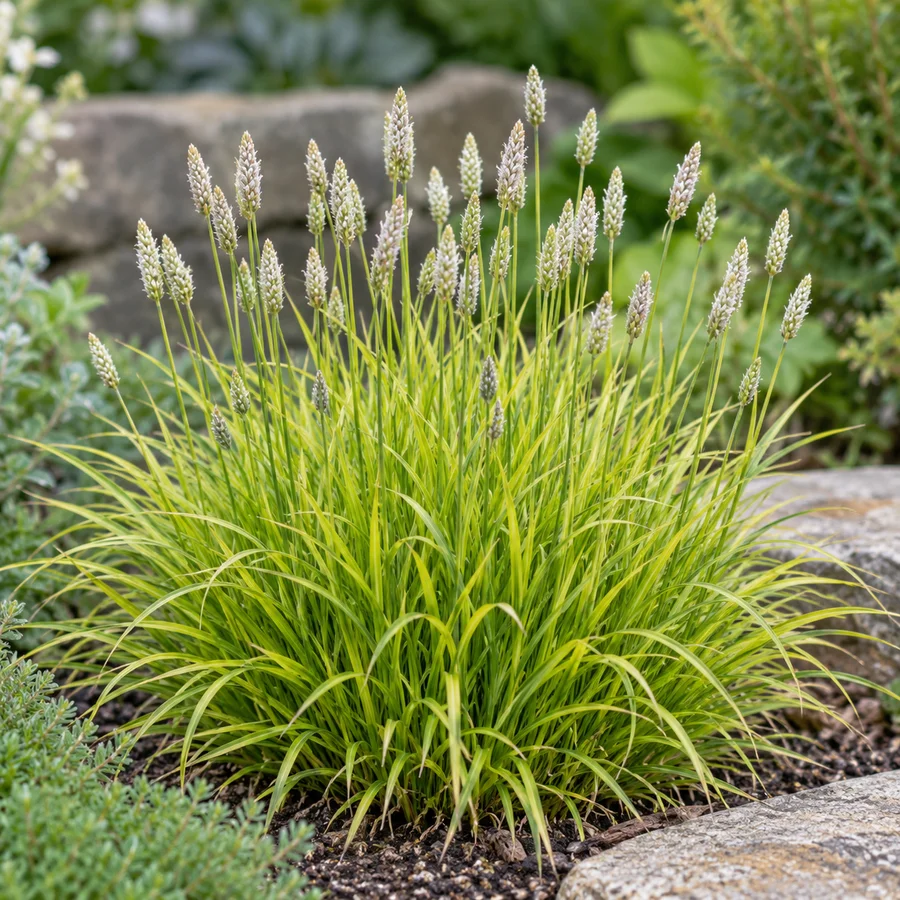
Autumn Moor-grass
Sesleria autumnalis
Ornamental grass from the bluegrass family. Low-growing cushion-forming grass 20–30 cm tall with narrow blue-green foliage. In autumn (August–October) it produces fine, delicate inflorescences of violet-brown hue. Ideal for alpine rock gardens, borders, and container displays. Extremely winter-hardy and undemanding about growing conditions.
Stages of growth
Calendar in the garden
How to care
Sow in light substrate (peat + sand) on the surface or cover to a depth of 2–3 mm. Grow seedlings at 15–18°C
Controlled watering when sowing; do not overwater
- •Seeds are small; can be sown under snow (natural stratification) or indoors in February–March
- •Seedlings emerge in 2–3 weeks at a temperature of 15–18°C
- •Avoid drying out the substrate during germination
Difficulty growing
Suitable for beginners. Minimal maintenance, error-resistant.
Growing conditions
Nice neighbors.
Soil preparation
Planting parameters
💡Preparation Tips
- •Dig the bed to a depth of 25-30 cm
- •Add compost or humus (5-10 kg per m²)
- •If necessary, adjust pH with lime or peat
Frequently asked questions(5)
Flowering begins in the second half of August and continues until the end of October. Flowering is most intense in September. The flower heads are colored in purple-brown tones and look particularly striking against an autumn landscape.
Yes, it tolerates partial shade, but develops more luxuriantly in full sun and produces brighter flower heads. In overly shaded areas, growth slows and plants become sparse and open.
It is undemanding regarding soil composition but prefers well-drained soil (loam, rocky, or sandy). It cannot tolerate waterlogging. On heavy clay soils, add sand and gravel to improve drainage.
Propagate by dividing clumps in March–April or September, or from seed. Sow seeds in February–March for seedlings or under snow in November–December. Clump division is the quickest method to obtain flowering plants in the current season.
It has excellent cold hardiness (to -35°C). No additional protection is required. In harsh winters with sparse snow cover, it is recommended to protect the planting area with a layer of leaves or evergreen branches, but in most CIS regions the plant survives winter without problems.
Role in the garden
Benefit information coming soon
Do you like the plant card?
In the application you will receive personal tasks and a plan for the season specifically for your garden.


