
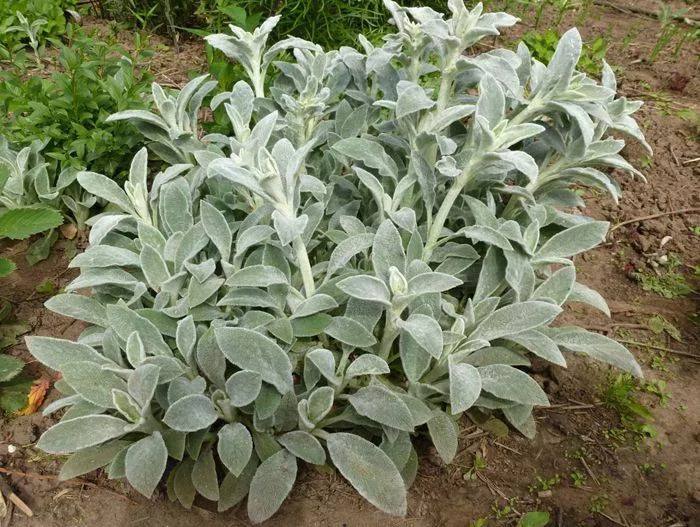
Lamb's Ear, Woolly Betony
Stachys byzantina
A perennial herbaceous plant with soft silvery-green felted leaves resembling donkey ears. Blooms in summer with small pink-purple flowers on spike-like inflorescences. An excellent groundcover and striking foliage accent for borders due to its distinctive velvety texture.
Stages of growth
Calendar in the garden
How to care
Keep the soil moist but not waterlogged. Mist with a spray bottle.
- •Seeds are very fine; mix them with sand for even sowing
- •Do not bury seeds — they germinate in light
- •Optimal germination temperature: 18-20°C
- •Germination takes 10-14 days
Difficulty growing
Suitable for beginners. Minimal maintenance, error-resistant.
Growing conditions
Nice neighbors.
Soil preparation
Planting parameters
💡Preparation Tips
- •Dig the bed to a depth of 25-30 cm
- •Add compost or humus (5-10 kg per m²)
- •If necessary, adjust pH with lime or peat
Frequently asked questions(5)
Sow seeds for seedlings in March-April; plant in open ground in May after the last frost. Division of clumps can be done in spring (March-May) or autumn (August-September).
Lamb's ear cannot tolerate excessive moisture and poor drainage. Soil should be sandy or loamy and well-drained. Reduce watering and ensure soil aeration. On overly moist sites, the plant rots at the base.
During the growing season, fertilize with balanced fertilizer every 2-3 weeks using low nitrogen (to prevent leaf overgrowth at the expense of flowering). During blooming, use phosphate-potassium fertilizer.
Blooming lasts from June to August (2-3 months). Pink-purple flowers are arranged in spike-like inflorescences. Removing spent spikes stimulates new flower formation.
Yes, it's a hardy plant (zone 3-9). The clump tolerates frosts down to -25°C. In late summer, cut back the flower stems, leaving the silvery foliage rosette. In spring, remove old leaves; new ones will grow as it warms.
Role in the garden
Benefit information coming soon
Do you like the plant card?
In the application you will receive personal tasks and a plan for the season specifically for your garden.


