
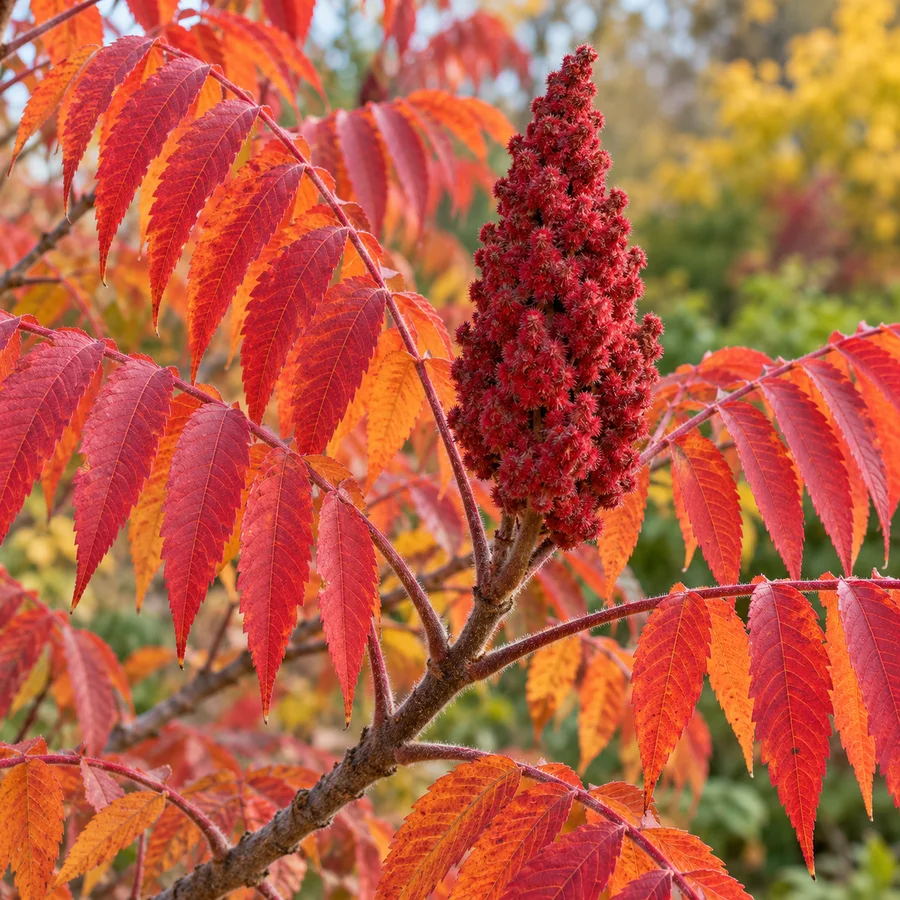
Staghorn Sumac
Rhus typhina
A decorative shrub or small tree 3–8 m tall with velvety shoots resembling deer antlers. In autumn, leaves turn bright red and orange, and by late summer, fuzzy red berry-like fruits appear, persisting on branches throughout winter. Hardy, undemanding, thrives on poor soils. The plant is not food: leaves, bark and fruits can upset the stomach of children and pets if eaten, and the resinous sap from cuts irritates the skin — wear gloves when pruning.
Stages of growth
Calendar in the garden
How to care
Generous watering at planting time and throughout the first week; then reduce watering as staghorn sumac is drought-tolerant
- •Dig a planting hole 60×60×60 cm and place gravel drainage at the bottom
- •Add humus and peat to the hole if the soil is very poor
- •After planting, water thoroughly and mulch with 5–7 cm of wood chips or bark to retain moisture
Difficulty growing
Suitable for beginners. Minimal maintenance, error-resistant.
Growing conditions
Nice neighbors.
Soil preparation
Planting parameters
💡Preparation Tips
- •Dig the bed to a depth of 25-30 cm
- •Add compost or humus (5-10 kg per m²)
- •If necessary, adjust pH with lime or peat
Frequently asked questions(6)
The optimal time is spring (March–April) or autumn (September–November). Spring planting is preferable in cold regions. Staghorn sumac is winter-hardy and will establish roots within a season.
Staghorn sumac reproduces via root suckers and can vigorously produce young stems around the parent plant. This is normal. If the suckers are undesirable, remove them throughout the season or cut shoots below ground level and treat the cuts with herbicide.
Staghorn sumac does not require strict pruning. Sanitary pruning in autumn (removal of dry and damaged branches) and formative pruning in early summer to regulate shape and density are sufficient. If you want to grow a single-trunk tree, keep one stem and remove other suckers.
The fruit clusters (red fuzzy bunches) form in late July–August. The plant produces small yellow-green flowers in June–July. The fruits persist on the branches throughout autumn and winter, creating an ornamental effect until spring.
Staghorn sumac fruits are inedible in their fresh form. The well-known spice 'sumac' is made from the fruits of a different species, Rhus coriaria (tannin sumac), which is purchased as a prepared seasoning, not harvested from an ornamental garden shrub. Staghorn sumac is grown solely for ornamental purposes.
Staghorn sumac is not acutely toxic, but it cannot be considered safe. There is a truly poisonous relative — poison sumac (Toxicodendron vernix, formerly Rhus vernix) — which contains urushiol and causes severe dermatitis. Rhus typhina contains almost no urushiol, but the milky-resinous sap on fresh cuts irritates skin and eyes and may cause dermatitis in sensitive individuals, especially those allergic to poison ivy, so always prune while wearing gloves. The leaves, bark and fruits contain high levels of tannins: ingestion may cause nausea, vomiting and diarrhoea in children and domestic animals (cats, dogs, horses, rodents) — do not use the plant for food.
Role in the garden
Benefit information coming soon
Do you like the plant card?
In the application you will receive personal tasks and a plan for the season specifically for your garden.


