
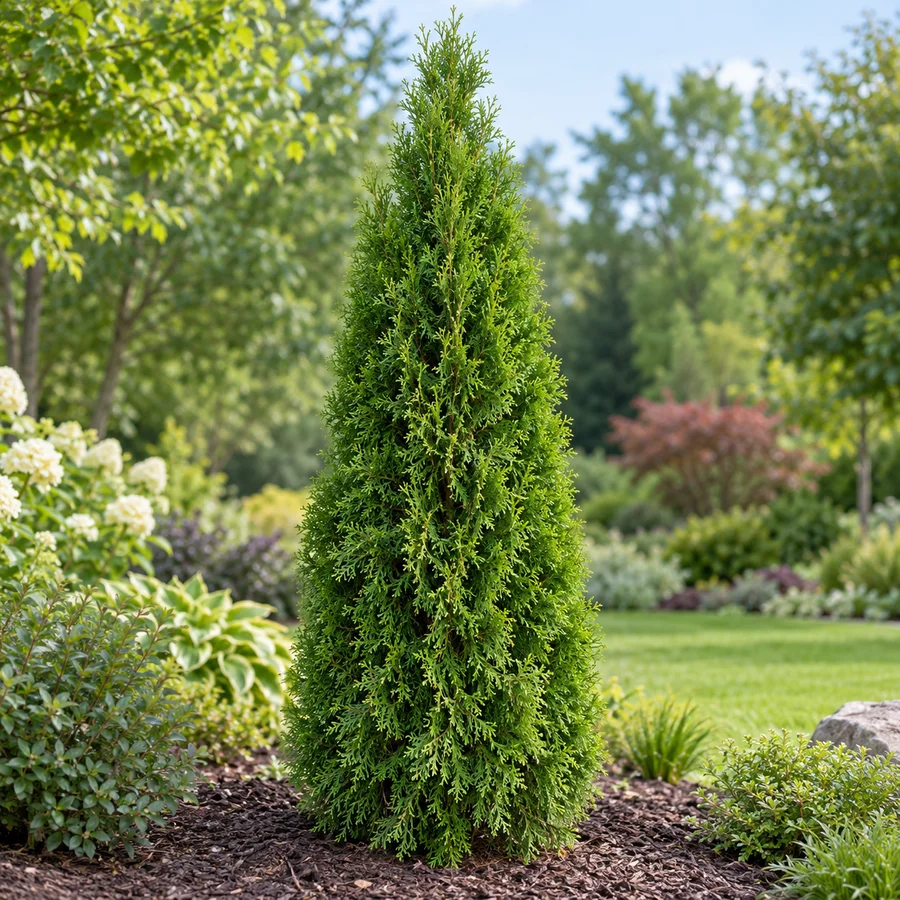
American Arborvitae 'Brabant'
Thuja occidentalis 'Brabant'
Compact narrow coniferous shrub up to 5 m tall with columnar shape. Bright green foliage retains color through winter. Ideal for hedges, columns, and vertical garden accents. Undemanding, tolerates air pollution well. Warning: the foliage and shoots of arborvitae are toxic if eaten (essential oil containing thujone) — never use them as food or medicinal tea, and keep the plant away from children, cats, dogs and other animals.
Stages of growth
Calendar in the garden
How to care
Bare-root sapling – plant immediately. Container-grown – do not disturb the soil ball; plant at container rim level.
Abundant watering on planting day and for the first 2 weeks. Soil should remain consistently moist but not waterlogged.
- •Dig a hole 2–3 times wider than the root ball
- •Add drainage layer (gravel, sand) 10–15 cm deep at the bottom
- •Use loose fertile soil with peat and perlite additions
- •Install support for tall saplings
Difficulty growing
Suitable for beginners. Minimal maintenance, error-resistant.
Growing conditions
Soil preparation
Planting parameters
💡Preparation Tips
- •Dig the bed to a depth of 25-30 cm
- •Add compost or humus (5-10 kg per m²)
- •If necessary, adjust pH with lime or peat
Frequently asked questions(5)
Optimal timing is spring (March–April) and early autumn (September–October). Spring planting is safer for root establishment before winter.
The usual cause is soil drought with hot winds. Thuja prefers moderately moist soil. Check drainage, mulch, and water more frequently. Fungal disease (phytophthora) is also possible – avoid waterlogging and improve air circulation.
It tolerates pruning well. Formative pruning – 1–2 times per season (June and August) to compact the crown. Sanitary pruning of dry branches – as needed. Avoid cutting below live needles, or they won't regrow.
A hardy cultivar for zones 3–8 (tolerates frosts to −35 °C). Young plants in their first winter should be wrapped in burlap or spunbond to protect from sun scald.
Height 4–5 m, width 1–1.5 m. Growth is slow: about 20–30 cm taller and 5–7 cm wider per year. Ideal for narrow spaces and hedges.
Role in the garden
Benefit information coming soon
Do you like the plant card?
In the application you will receive personal tasks and a plan for the season specifically for your garden.


