
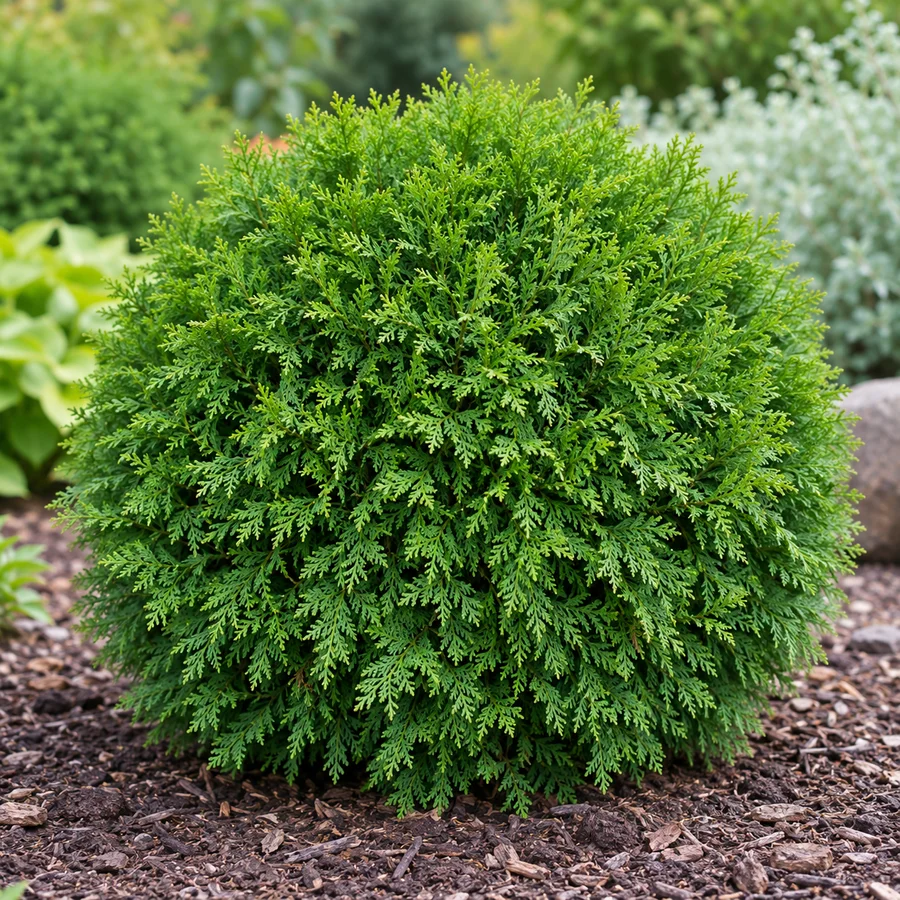
Western Arborvitae 'Hoseri'
Thuja occidentalis 'Hoseri'
Compact evergreen conifer with a spherical crown, reaching 1–1.5 m in height and width. Foliage is dense and bright green in summer, turning bronze-copper in winter. Notable for frost, drought, and pollution tolerance. Ideal for hedges, rock gardens, container plantings, and landscaping tight spaces. Warning: the foliage, shoots and cones are toxic — they contain thujone; if eaten they are dangerous to children and pets (cats, dogs, birds, rodents, horses) and must never be used as food or in medicinal teas.
Stages of growth
Calendar in the garden
How to care
Thuja is planted in spring (March–May) or autumn (August–October) into soil with an intact root ball, without deepening the root collar.
Water regularly (at least twice weekly) during the first month, maintaining soil moisture. Avoid both drying out and waterlogging.
- •After planting, mulch the root zone with conifer bark to a depth of 5–8 cm
- •Protect the young plant from direct sun (shade) during the first month
- •Check drainage in the planting hole—waterlogging is critical
Difficulty growing
Suitable for beginners. Minimal maintenance, error-resistant.
Growing conditions
Soil preparation
Planting parameters
💡Preparation Tips
- •Dig the bed to a depth of 25-30 cm
- •Add compost or humus (5-10 kg per m²)
- •If necessary, adjust pH with lime or peat
Frequently asked questions(6)
Spring (March–May, after soil thaws) or early autumn (August–September) are ideal. Spring planting is preferable as it allows the plant to adapt to conditions before winter.
This is a normal physiological process. 'Hoseri' produces anthocyanins at low temperatures, which protect cells from frost damage. In spring, the foliage will turn green again.
In the first year after planting, water weekly (more frequently during dry spells) until the end of September, maintaining soil moisture. In the latter half of autumn, reduce watering.
Minimal pruning is needed—only light formative trimming of young shoot tips (May–June) to thicken the crown. Thuja tolerates radical deep pruning poorly.
Thuja prefers loamy, fertile soil with neutral acidity (pH 6–7.5) and mandatory drainage. Waterlogging and water stagnation lead to root rot and crown rot.
Yes, it can be planted in hedgerows with other conifers or near low perennials (sedums, althea, euphorbia). Avoid very aggressive groundcovers that would suppress the young shrub.
Role in the garden
Benefit information coming soon
Do you like the plant card?
In the application you will receive personal tasks and a plan for the season specifically for your garden.


