
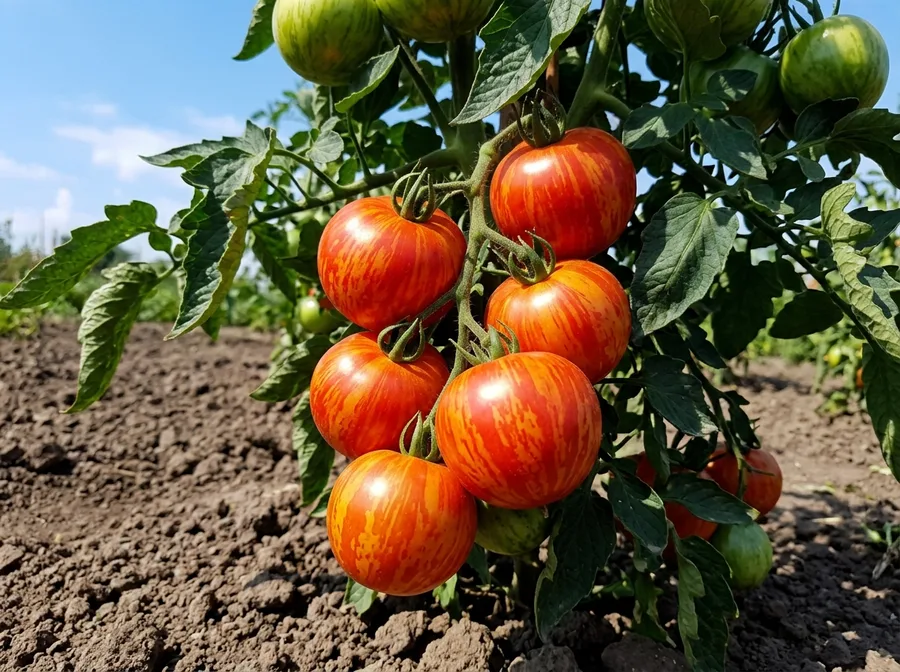
Solanum lycopersicum 'Tigrenok'
Solanum lycopersicum 'Tigrenok'
Indeterminate variety with striped fruits (red background with yellow-green or orange stripes), weighing approximately 40–100 g, clusters of up to 12 fruits. The growing season according to the manufacturer is 95–115 days; bush height up to ~2 m in a greenhouse - requires staking and pinching.
Stages of growth
Planting calendar
How to care
Moisten the soil before germination; do not over-moisten
- •For a greenhouse, sowing often begins in February; for open ground - closer to March (guideline 60–65 days before planting).
- •Before sowing, the seeds can be soaked for 12–24 hours (not necessary, but it speeds up germination).
Difficulty growing
Requires basic knowledge and regular care.
Growing conditions
Nice neighbors.
Unwanted Neighbors
Soil preparation
Planting parameters
💡Preparation Tips
- •Dig the bed to a depth of 25-30 cm
- •Add compost or humus (5-10 kg per m²)
- •If necessary, adjust pH with lime or peat
Frequently asked questions(5)
This is a decorative striped variety: yellow-green or orange stripes are visible on a red background. The pulp is juicy, with a slight sourness; fruits are set in clusters (up to ~12 pieces per cluster according to the manufacturer).
The variety card indicates a growing season of 95–115 days from sowing to ripening (depending on conditions and region). In open ground, the timing is usually closer to the upper limit; in a greenhouse it can be shorter.
Yes. The variety is indeterminate: without pinching and gartering, the bush thickens, illumination and tying deteriorate. Typically leave 1-2 main stems and remove side shoots regularly.
Often this is the natural aging of the lower tier during fruiting. If the yellowness is rapid and goes upward, check the watering (both waterlogging and drought), nutrition (nitrogen, magnesium deficiency), pests and diseases. If infection is suspected, remove severely affected leaves and do not water from above.
In the descriptions of the variety they give a guideline of up to ~10 kg per 1 m² with good care; in practice, the result depends on planting density, climate, greenhouse and nutrition.
Benefits and nutrition
Like other tomatoes, it is rich in lycopene (a carotenoid), vitamin C, potassium and antioxidants; supports dietary diversity. Specific “medicinal” effects are not a substitute for medical advice.
*The information is for informational purposes only and does not constitute medical advice.
Nutritional value
(per 100 g)| Calories | 18 kcal | 0,9% |
| Carbohydrates | 3.9 g | 3% |
| Squirrels | 0.9 g | 1,8% |
| Fats | 0.2 g | 0,3% |
| Fiber | 1.2 g | 4% |
| Vitamin C | 14 mg | 16% of daily value (guideline) |
| Potassium | 237 mg | 5% of the daily value (guideline) |
% of daily value
Do you like the plant card?
In the application you will receive personal tasks and a plan for the season specifically for your garden.