
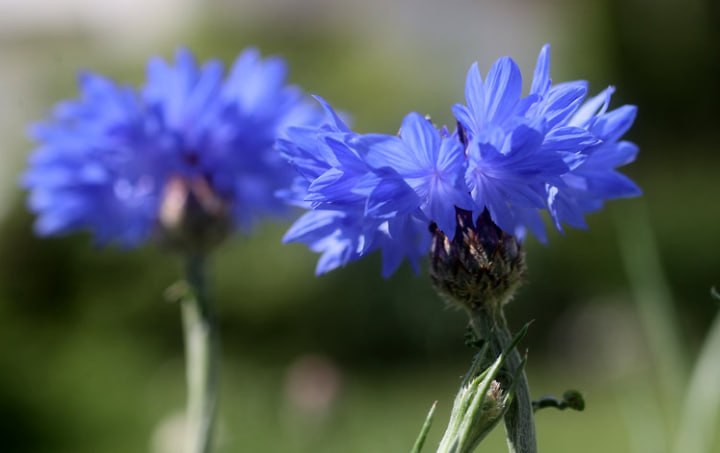
Cornflower
Centaurea cyanus
Undemanding annual flower with bright blue daisy-like blooms. Perfect for cutting, attracts bees and butterflies, thrives on any soil. Ideal for garden beds and bouquets.
Stages of growth
Calendar in the garden
How to care
Not required
Keep soil moist, avoid waterlogging
- •Sow seeds directly into well-prepared soil in April-May
- •Surface sowing, lightly press seeds into soil
- •Seedlings emerge in 5-7 days
Difficulty growing
Suitable for beginners. Minimal maintenance, error-resistant.
Growing conditions
Nice neighbors.
Soil preparation
Planting parameters
💡Preparation Tips
- •Dig the bed to a depth of 25-30 cm
- •Add compost or humus (5-10 kg per m²)
- •If necessary, adjust pH with lime or peat
Frequently asked questions(5)
Sow seeds directly into open soil in April-May when soil warms up. Can also be sown in autumn (September-October) for earlier blooming. For seedling cultivation, sow seeds indoors in March.
Insufficient light is the main cause. Cornflowers require full sun (minimum 6 hours daily). Also check if soil is not waterlogged. Excess nitrogen also stimulates leaf growth at the expense of flowering.
Regularly remove spent flowers (deadheading). This stimulates the plant to produce more blooms. Feed with phosphorus-potassium fertilizers. Ensure adequate watering during hot weather.
Yes! Cut flowers when fully open early in the morning. Tie into a bundle and hang upside down in a dark, well-ventilated place for 2-3 weeks. Dried cornflowers retain their color and are used for dry arrangements.
Cornflower is an annual plant, so it must be resown each year. However, it self-seeds readily, so if you allow plants to mature seeds, new cornflowers will sprout in spring from fallen seeds.
Role in the garden
Benefit information coming soon
Do you like the plant card?
In the application you will receive personal tasks and a plan for the season specifically for your garden.