
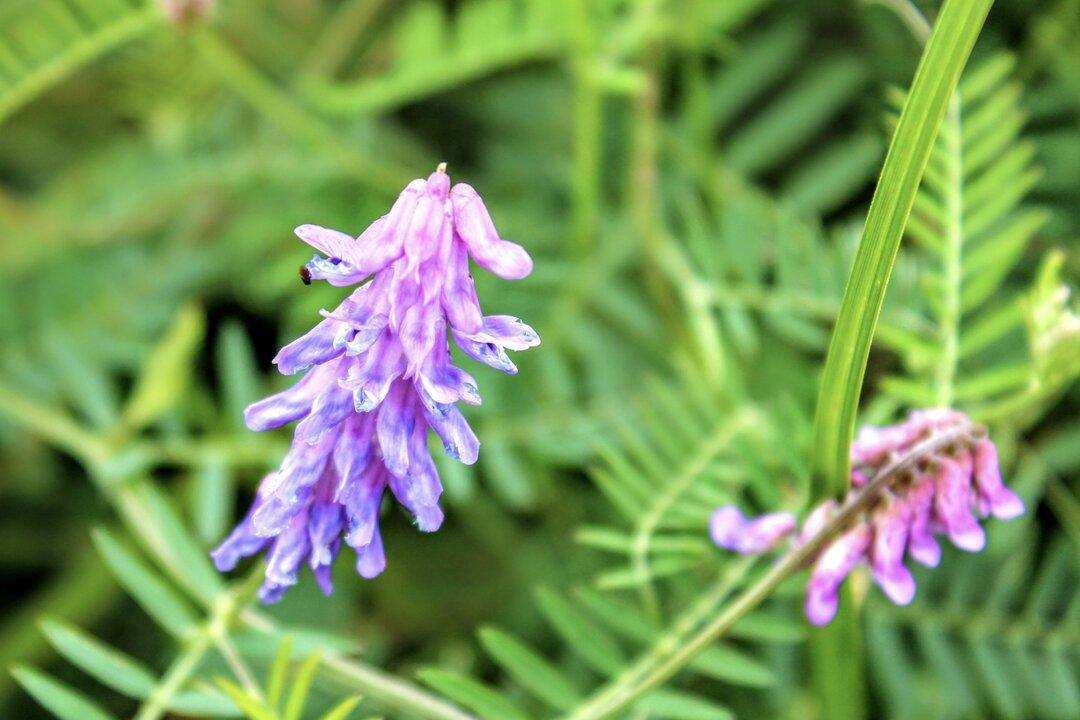
Common Vetch
Vicia sativa
Annual herbaceous plant with climbing stems bearing small pink-purple flowers. Grown as a green manure crop to enrich soil with nitrogen, forage crop, and protein source for livestock. Undemanding about soil and frost-hardy. Caution: vetch seeds contain cyanogenic glycosides and the neurotoxic amino acid β-cyanoalanine — they are not edible for humans and are dangerous to horses, pigs and poultry; feed only to ruminants and in limited amounts.
Stages of growth
Planting calendar
How to care
Not required, grown in place
Moderate watering, keeping soil moist without waterlogging
- •Bury seeds 2-3 cm deep
- •Tamp soil for moisture contact
- •Sow in loose, weed-free soil
Difficulty growing
Suitable for beginners. Minimal maintenance, error-resistant.
Growing conditions
Nice neighbors.
Soil preparation
Planting parameters
💡Preparation Tips
- •Dig the bed to a depth of 25-30 cm
- •Add compost or humus (5-10 kg per m²)
- •If necessary, adjust pH with lime or peat
Frequently asked questions(5)
Vetch is sown in spring (March–May) or in autumn (September–October). Spring varieties—when soil warms to +5–7°C. Winter forms—4-6 weeks before frost. Winter varieties give higher yields.
Vetch is an excellent green manure crop: its roots and foliage fix nitrogen from the air and enrich the soil. Used as a forage crop for ruminant livestock (horses, pigs and poultry cannot feed on it—seeds are toxic); provides nutritious green fertilizer. After cutting and incorporating into soil, it increases fertility for 2-3 years.
Cut foliage at flowering stage (30–40 cm height), let it dry on the field 1-2 days, then incorporate 15–20 cm deep with a heavy cultivator. Best done in autumn so plant matter decomposes by spring.
For short growing season, supports are optional. But to maximize forage or seed yield, trellising increases light availability and facilitates harvesting.
Store in dry, cool place with air humidity below 10%. Seeds remain viable 3-4 years under these conditions. Keep in paper packets or cloth bags in basement or attic.
Benefits and nutrition
Nitrogen-fixing green manure crop that enriches soil fertility for multiple growing seasons. High-protein forage source for livestock (ruminants only).
*The information is for informational purposes only and does not constitute medical advice.
Do you like the plant card?
In the application you will receive personal tasks and a plan for the season specifically for your garden.


